English
 Español
 عربى
عربى 中文简体
中文简体

Introduction to Tea Bar Machines
The global hospitality and foodservice industries are undergoing a quiet yet profound transformation, driven by rising expectations for greater consistency, speed, and personalization in beverage service. Coffee automation has shaped commercial environments for decades, and now a similar wave is rapidly reshaping how tea, the world’s most consumed beverage after water, is prepared and served.
At the center of this shift is the tea bar machine, an advanced beverage dispensing system that is redefining operational efficiency and quality control across a wide range of commercial settings. This development is not simply about increasing speed. It is about elevating the tea-brewing process to a repeatable, scalable, and reliably high-quality standard, ensuring that every cup delivers the same level of craftsmanship and flavor.
Briefly introduce the concept of tea bar machines and their purpose.
At its core, a tea bar machine is an advanced, self-contained appliance designed to automate the complex and delicate process of brewing and dispensing tea and tea-based beverages. It goes far beyond the role of a basic hot water kettle or a traditional tea urn. Its purpose is singular and essential: to produce high-quality, perfectly extracted tea consistently, repeatedly, and quickly, while reducing the need for specialized manual labor and ensuring that every cup meets strict quality standards. In essence, it is a commercial-grade automated tea brewer.
Brewing great tea depends on controlling three critical variables: water temperature, steeping time, and the ratio of water to tea. Traditional manual methods rely heavily on human judgment, which almost always introduces inconsistencies. A slight change in temperature can lead to burnt or bitter flavors if the water is too hot, or weak and flat results if it is too cool. Even a small deviation in steeping time can turn an enjoyable infusion into something overly harsh. The tea bar machine is engineered to eliminate these inconsistencies. With precise digital controls, it ensures that each type of tea is brewed at the exact conditions it requires. This level of accuracy is essential in today’s market, where consumers expect specialty teas to be prepared with proper technique. Ultimately, the machine acts as a guardian of quality, turning the delicate craft of tea brewing into a reliable, high-volume workflow.
This precision is further supported by its dispensing system. Once the brewing cycle is complete, the machine can deliver either a concentrated brew or a finished drink with a single touch, whether serving one cup or producing a larger batch. This combination of controlled brewing and fast dispensing makes the tea bar machine indispensable in busy environments, allowing service to keep pace with demand without compromising the final product. The efficiency gains brought by this specialized equipment significantly reshape the labor model of cafes, quick-service restaurants, and large corporate dining operations.
Highlight the increasing popularity of automated beverage solutions in the hospitality and commercial sectors.
The surge in popularity of automated beverage solutions, and specifically the tea bar machine, is a direct response to powerful, interwoven market forces sweeping across the hospitality and commercial sectors. This trend is driven by economic necessity, evolving consumer preferences, and technological capability.
The Rise of Specialty Tea and Customization: Global tea consumption is diversifying rapidly. Customers are moving beyond simple black tea bags and embracing complex specialty teas, including exotic blends, cold brews, and customized milk-tea beverages. This shift requires sophisticated tea brewing equipment that can handle various leaf types and execute complex, multi-step recipes. The smart tea bar machine excels here, as it can store dozens of pre-programmed recipes, automatically adjusting for factors like tea type, desired serving temperature, and volume. This capability allows a business to offer a vast and detailed menu of customized drinks with the confidence that the flavor profile will be identical whether served in New York or London.
Economic Pressure and Labor Optimization: In the high-pressure, low-margin foodservice industry, labor costs are a dominant factor. The commercial tea machine provides an immediate and dramatic return on investment by significantly reducing the labor required for tea preparation. Manual brewing requires staff time for heating water, measuring tea, monitoring steep times, and cleaning up multiple pieces of equipment. An automated tea brewer allows a single employee to initiate a complex brewing cycle and then focus on other tasks, such as serving customers or preparing food. In the context of a beverage dispensing system, the machine acts as a reliable, highly efficient, and consistently accurate 'tea expert' available 24/7, thereby justifying the initial capital outlay through streamlined operations and reduced operating expenses.
Demand for Consistency Across Chains: For multi-site food chains and global franchises, brand consistency is paramount. A customer expects the same quality of drink regardless of location. The tea bar machine ensures this uniformity by standardizing the extraction process. The machine's programmable logic dictates every micro-step, making the human element irrelevant to the final taste. The rise of the smart tea bar machine, which often links to central management software via the Internet of Things, allows headquarters to push new recipes and monitor quality performance across all locations in real-time, reinforcing the corporate quality standard globally.
Hygiene and Efficiency in High-Volume Settings: Automated systems inherently offer enhanced hygiene and operational efficiency. In hotel buffets, corporate breakrooms, or self-service kiosks, the traditional method of leaving tea bags and hot water pots accessible presents sanitation risks and inconsistency. A sealed tea dispenser system, integrated within a tea bar machine, minimizes direct human contact with the brewing process and ingredients, providing a cleaner, safer, and more controlled self-service environment. This efficiency extends to inventory management: modern smart tea bar machine systems can track usage per tea type, automatically signaling when inventory is low, a feature invaluable for large-scale catering services and busy commercial kitchens.
Types of Tea Bar Machines
The commercial landscape for tea service is highly varied, demanding a range of specialized solutions to meet different volumetric, space, and functionality needs. The evolution of the tea bar machine has consequently resulted in several distinct types of beverage dispensing system equipment, each engineered to optimize performance for specific commercial environments, from bustling cafes to space-constrained office breakrooms. While all machines function as an automated tea brewer, their structural design and technological sophistication categorize them into highly specialized tools for efficient and consistent production. Understanding these variations is key to selecting the right commercial tea machine that maximizes both operational workflow and customer satisfaction.
Tea Bar Machine
The foundational Tea Bar Machine is the workhorse of the industry, representing the essential functionality required for high-volume, consistent tea preparation. This category typically includes semi-automatic or fully automatic batch brewers designed to produce large quantities of concentrated tea base or ready-to-serve tea rapidly. Its core value lies in reliable mechanical performance and robust construction, often featuring a durable stainless tea brewing equipment exterior and internal components built to withstand continuous industrial use.
These standard models excel at simplifying the core brewing process. Operators input the tea type and the desired volume, and the machine manages the heating of water, the precise delivery of that water to a brewing basket or chamber containing loose-leaf tea, and the timed steeping process. Crucially, the final step involves a controlled filtration and release of the brew into a holding vessel or directly into a server. The precision in temperature control ensures that the tea is extracted optimally every time, eliminating the burnt taste associated with uncontrolled boiling or the weakness of under-steeping. Their robust output capacity makes them the standard choice for large-scale tea dispenser applications, such as supplying iced tea concentrate for a busy drive-thru restaurant or providing hot tea base for a bubble tea preparation line. They offer consistent quality without unnecessary technological complexity, fulfilling the basic mandate of an efficient automated tea brewer system. These machines focus on speed and volume, delivering a dependable tea product quickly and repeatedly for high-throughput, foundational beverage programs.
Smart Tea Bar Machines
Representing the pinnacle of modern tea brewing equipment, the Smart Tea Bar Machine incorporates advanced digital technology, connectivity, and data analytics to provide unmatched customization and control. This class of machine transcends simple automation; it integrates into the digital infrastructure of a business, transforming tea service into an intelligent operation.
The defining feature of a smart tea bar machine is its sophisticated human-machine interface, typically a large, high-resolution touchscreen display. This interface allows baristas or customers, in a self-service mode, to access a vast library of pre-programmed recipes. More than just simple settings, these programs can adjust numerous micro-parameters for each type of tea, including pre-infusion time, pulse brewing cycles, multiple temperature stages for delicate teas, and precise water hardness compensation. Furthermore, the smart tea bar machine often features IoT Internet of Things connectivity. This capability allows business owners and quality control managers to monitor machine performance remotely, update software, and push new, standardized recipes instantaneously across an entire chain of locations. This remote standardization guarantees that the "signature blend" tastes identical in every outlet, reinforcing brand quality and consistency. The tea dispenser functionality is also enhanced with smart dosing, allowing for exact portion control for different cup sizes and drink types, minimizing waste and ensuring accurate cost-of-goods calculation. The beverage dispensing system also collects valuable operational data, such as peak usage times, popular recipes, and maintenance alerts, transforming the commercial tea machine from a simple tool into a data-gathering asset that drives business decisions and optimizes workflow, truly justifying the term 'smart' in its designation.
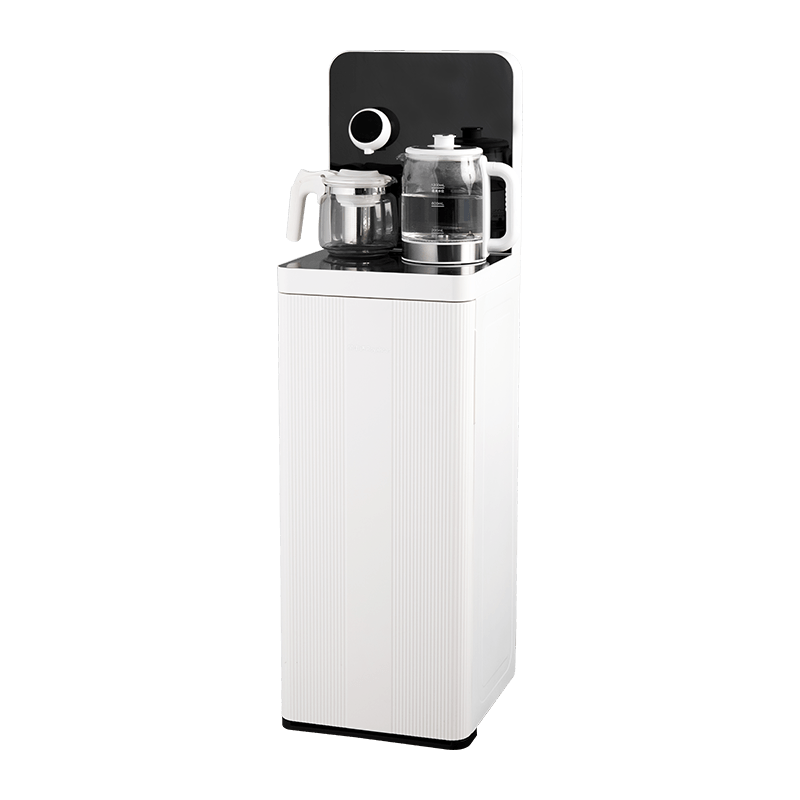
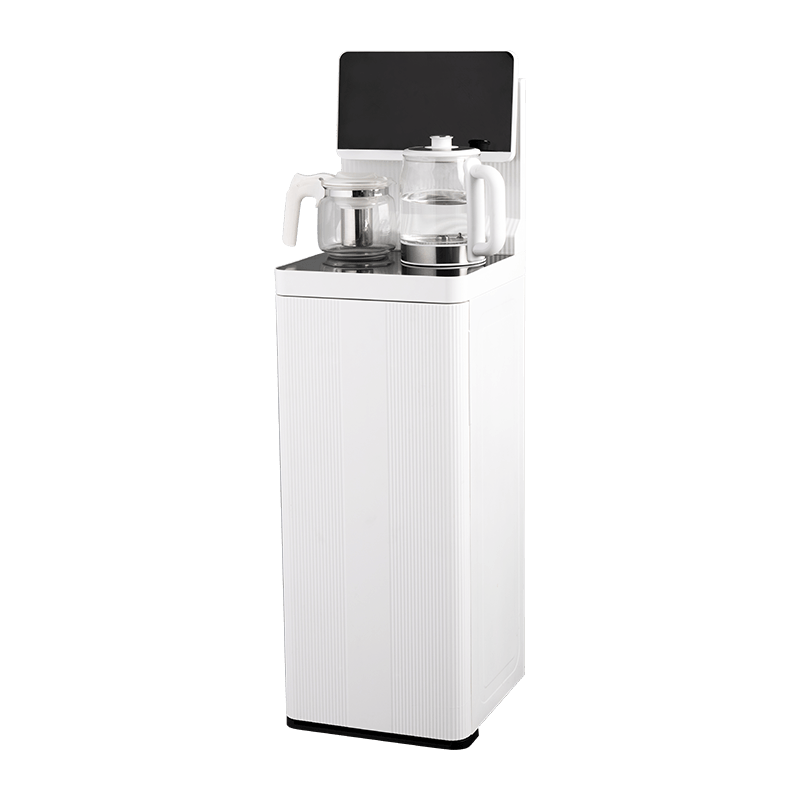
Tea Bar Machine with Double Kettle
The Tea Bar Machine with Double Kettle is a specialized configuration designed to solve the critical operational challenge of simultaneously preparing and holding different types of tea that require fundamentally different brewing conditions. This model is essentially two independent automated tea brewer systems housed within a single chassis, making it a highly efficient multi-product tea dispensing system.
Tea variety demands range from delicate green teas, which require water temperatures around 175°F 80°C, to robust black teas and herbal infusions, which often need near-boiling water at 205°F 96°C. Attempting to brew both types in a single kettle or chamber results in compromise and quality degradation. The Tea Bar Machine with Double Kettle eliminates this conflict by featuring two separate, independently controlled heating elements and reservoirs. One kettle can be dedicated to maintaining water at the optimal lower temperature for green or white teas, while the second handles the high temperatures required for black or iced tea concentrates. This setup is indispensable for businesses with diverse tea menus or those serving both hot and cold beverages that need different concentration levels. For instance, a cafe specializing in bubble tea can use one kettle for highly concentrated black tea base for milk tea and the second kettle for a lighter, fragrant oolong tea base for fruit teas. This dual functionality allows for maximum throughput and menu flexibility without the footprint of two separate tea bar machine units. The ability to handle diverse temperature profiles simultaneously ensures that every tea is extracted at its optimal point, guaranteeing a higher standard of consistent product quality, a hallmark of superior tea brewing equipment.
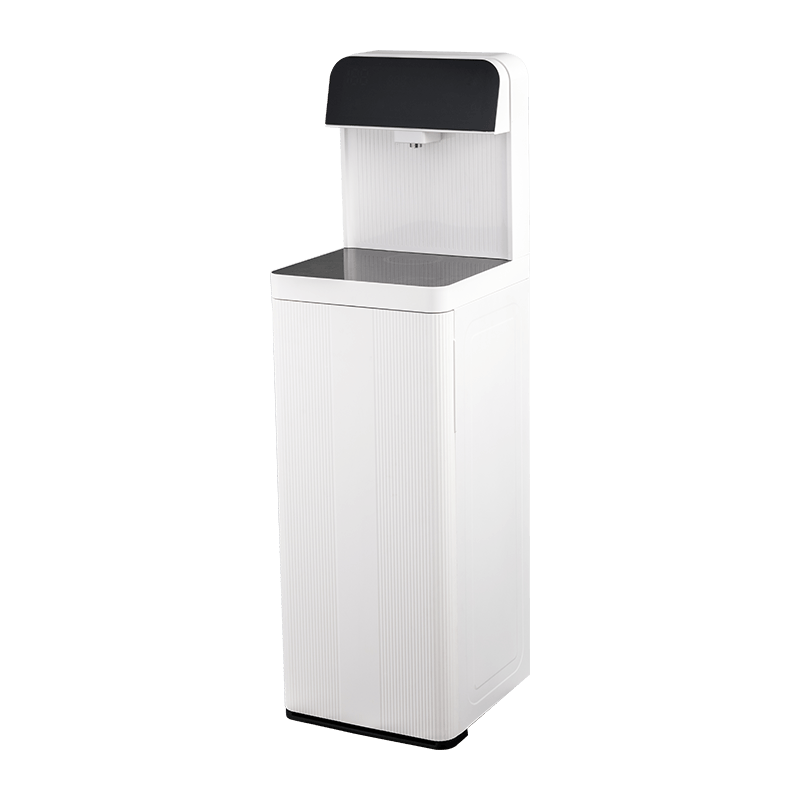
Bottom Mounted Tea Bar Machine
Space utilization is a major constraint in high-rent commercial areas like city-center cafes, hotel bars, and high-end restaurants. The Bottom Mounted Tea Bar Machine addresses this challenge by cleverly redesigning the traditional tea dispenser footprint. In this configuration, the bulk of the machine is installed discreetly beneath the counter or bar.
What remains visible to the customer and staff is a sleek, minimalist faucet and an elegant control panel or touchscreen interface mounted on the countertop. This design provides significant aesthetic and functional advantages. Aesthetically, it creates a cleaner, more open counter space, which is highly valued in modern retail design. Functionally, it allows staff to serve tea without the physical obstruction of a large appliance, streamlining the workflow during busy periods. The visible tea dispenser faucet is often designed to resemble a high-end beer tap or water dispenser, enhancing the perceived quality of the beverage dispensing system. Despite the hidden components, the Bottom Mounted Tea Bar Machine retains the essential precision of a commercial tea machine. It relies on the same precise temperature and volume controls, often managed by a programmable smart tea bar machine interface, ensuring that the water delivered to the brewing mechanism is exact. This type of automated tea brewer system is particularly favored in high-end environments where the visual presentation of the service area is as important as the quality of the beverage itself. It delivers powerful, consistent performance while maintaining a discreet, sophisticated presence, making it a highly specialized choice for premium food and beverage settings where space is at a premium and aesthetics matter.
Key Features and Benefits of Tea Bar Machines
The adoption of a modern tea bar machine is fundamentally a strategic decision for any commercial operation. It is not merely a replacement for manual labor; it is an upgrade to a high-precision manufacturing process for beverages. The superior performance and immediate return on investment of these systems are rooted in a combination of advanced features that translate directly into significant operational and qualitative benefits. Understanding these key components is essential for appreciating how the commercial tea machine transforms a simple service into a streamlined, consistent, and profitable revenue stream.
Automated tea dispensing and brewing
The cornerstone of the tea bar machine is its comprehensive automation of the entire brewing cycle. This involves multiple, precisely controlled steps that begin with water heating and conclude with the final product ready for serving. Automation eliminates the single largest source of quality variation in tea preparation: human error. This automated tea brewer utilizes pre-calibrated sensors and controls to manage the process from start to finish. For instance, the machine automatically measures the exact volume of water required for a specific batch size, transports it to the heating element, and then monitors the temperature with thermal probes accurate to within a single degree Celsius. Once the programmed temperature is reached, the system often employs a shower head or immersion process to ensure the loose tea leaves are uniformly saturated, a critical step for complete and even flavor extraction.
The benefit of this automated process extends directly to throughput. In a busy cafe, manual tea preparation can tie up valuable staff and cause delays. A dedicated tea bar machine performs this complex sequence autonomously, allowing staff to focus on customer interaction and preparation of other items. This speed and efficiency are crucial for managing peak rush hours. Furthermore, the machine’s internal logic can be programmed to perform sequential brewing, starting a new batch immediately after the current one is complete, ensuring a constant supply of fresh tea concentrate. This uninterrupted cycle, managed by the beverage dispensing system, minimizes wait times for bulk orders and supports a high-volume operation without requiring continuous supervision. The result is a substantial increase in overall service capacity and a reduction in the labor hours allocated to basic beverage production, making the tea bar machine an indispensable asset.
Precise temperature control for optimal tea extraction
Temperature control is the most critical variable in tea quality, and it is where the tea bar machine truly outperforms manual methods. Different tea types demand dramatically different temperatures for optimal flavor extraction. Black teas need high heat to release their full body and color, while delicate green and white teas can be ruined by boiling water, which extracts bitter tannins and creates a grassy, harsh flavor. The tea bar machine is engineered with PID proportional integral derivative controllers and specialized thermal insulation that ensures water is held and delivered at the exact specified temperature, typically adjustable in one-degree increments.
This precision is foundational to the machine’s value as a high-quality tea brewing equipment. For a specialty smart tea bar machine, the stored recipes automatically dictate the precise temperature for each tea variety, removing all guesswork. The immediate benefit is superior flavor quality and consistency. By preventing overheating, the machine preserves the subtle floral and complex notes of high-end teas, maximizing the consumer experience and justifying a premium price point. Conversely, for iced tea production, maintaining a stable hot temperature is necessary for rapid, concentrated brewing before chilling. This precise thermal management across the entire spectrum of hot and cold tea preparation is a non-negotiable requirement for any commercial tea machine aiming for world-class beverage quality, ensuring the integrity of every cup dispensed through the tea dispenser.
Customizable beverage options and portion sizes
The smart tea bar machine, in particular, offers unparalleled flexibility through its programmable software. Operators can create and store dozens, sometimes hundreds, of distinct recipes. These recipes can dictate not only the brewing parameters temperature, time, water volume but also the specific output volume for different serving sizes, such as small, medium, or large cups.
Beyond simple volume control, customization extends to multi-step drink preparation. The beverage dispensing system can be programmed to handle infusions, concentrates, and even dilution. For example, a single machine can be programmed to brew a highly concentrated shot of espresso-like tea for a latte base, a standard brew for hot service, and a cold brew concentrate requiring an extended steep time. This versatility allows a business to quickly expand its menu offerings, from classic hot tea to complex milk tea, specialty iced beverages, and seasonal fruit infusions, all from a single unit of tea brewing equipment. The benefit is increased revenue potential through menu diversification and the ability to cater to evolving consumer trends, making the tea bar machine a versatile engine for profit growth. Accurate portion control is a direct result of this customization, ensuring every drink dispensed by the tea dispenser uses the exact programmed amount of liquid, leading to tighter inventory control and reduced ingredient waste.
User-friendly interfaces and programmable settings
Despite their internal complexity, contemporary tea bar machine models are designed with highly intuitive, user-friendly interfaces. The goal is to minimize the training time required for new staff and reduce the potential for operational errors. Most modern units feature large touchscreen displays similar to tablets, providing guided workflows and visual confirmation of settings.
Programmable settings allow managers to lock in optimal brewing parameters and assign them simple names like “Assam Hot” or “Green Iced Base.” Staff members simply select the desired option, press start, and the automated tea brewer executes the complex recipe flawlessly. For smart tea bar machine versions, this user-friendliness is amplified by cloud connectivity, allowing for remote diagnostics and updates. The benefit of this design is significant operational consistency. A high-turnover environment, such as quick-service restaurants, relies on equipment that delivers perfect results regardless of the operator's experience level. The intuitive interface acts as a protective barrier against poor quality, ensuring that the commercial tea machine is always operating at peak efficiency. This ease of use accelerates service speed and empowers staff, reducing stress and improving overall service quality.
Time-saving and labor-reducing capabilities
The labor reduction is equally significant. A single employee can manage multiple tasks while the automated tea brewer works autonomously. In a manual setting, preparing a complex tea beverage requires continuous focus. With the tea bar machine, the staff member loads the tea, presses a button, and is free to handle food orders, run the register, or serve other customers. The machine, functioning as a reliable tea dispenser and brewer, effectively acts as a tireless, expert assistant. This optimized labor allocation allows businesses to operate efficiently with fewer staff members during off-peak times or reassign skilled staff to more value-added activities, thereby maximizing the return on labor investment. This makes the commercial tea machine an essential tool for cost control.
Consistent beverage quality and taste
This guaranteed consistency is achieved across large volumes and high numbers of cycles. The tea brewing equipment is calibrated to precise standards, and the result is a flavor profile that is identical batch after batch. This reliability is especially crucial for franchised operations where brand integrity relies entirely on uniformity. The ability of the smart tea bar machine to monitor and adjust internal parameters ensures that even external factors like ambient temperature or temporary pressure drops do not compromise the final product quality. This consistency not only builds customer loyalty but also reduces waste from rejected or improperly brewed batches, directly improving the profitability of the tea bar machine.
Improved hygiene and sanitation
The tea bar machine is a closed beverage dispensing system. The brewing chamber is internal, and the final tea concentrate is typically dispensed through a sealed tea dispenser spout directly into the serving vessel or a clean holding urn. Advanced models feature automated cleaning cycles, where the machine uses hot water and descaling solutions to clean the internal plumbing and brewing mechanisms at programmed intervals. This self-cleaning capability minimizes manual scrubbing and reduces the risk of scale and bacterial buildup. The use of durable, non-porous stainless steel in the construction of the commercial tea machine further inhibits bacterial growth, simplifying external cleaning. This improved sanitation process not only ensures regulatory compliance but also protects the health and safety of customers, reinforcing the overall quality and trustworthiness of the establishment using the tea bar machine.
Applications of Tea Bar Machines
The versatility and consistency of the modern tea bar machine have secured its place as a critical piece of tea brewing equipment across multiple sectors of the commercial and hospitality industries. Far from being confined to specialty tea houses, this advanced beverage dispensing system is now driving efficiency and improving quality in diverse environments where speed, consistency, and menu variety are paramount. The machine’s capability to automate complex brewing protocols allows businesses of all sizes to elevate their tea offerings while optimizing labor resources. This wide-ranging applicability underscores why the commercial tea machine is seen as a strategic investment rather than a mere appliance.
Restaurants and Cafes: Streamlining tea service and expanding beverage menus
The programmable nature of the smart tea bar machine allows cafes to significantly expand their tea menu without increasing operational complexity. They can easily offer a wider range of teas requiring distinct temperatures and steep times, such as delicate Japanese Sencha, robust English Breakfast, or complex herbal infusions. The machine ensures that these specialty items are prepared consistently, protecting the high quality expected by customers. This capability to guarantee a perfect cup every time turns the tea menu from a standard offering into a strong competitive differentiator, drawing in a segment of the market that demands high-grade tea. The precision of the tea dispenser also ensures accurate portioning, which is crucial when integrating the tea service with the POS system for exact cost analysis, solidifying the commercial tea machine’s role as an indispensable tool for profitability and menu expansion.
Hotels and Resorts: Providing convenient tea options for guests
The application is visible in two main areas, each requiring different features of the tea brewing equipment. In the back-of-house or service kitchens, the tea bar machine is used for rapid batch brewing to fill insulated servers for large events, conferences, and breakfast service. This ensures that large volumes of tea are prepared quickly and consistently, meeting the sudden, high demands of high-capacity catering. This eliminates the uncertainty of traditional large urn brewing where temperature and steeping time are often uncontrolled. The second area is in guest-facing areas, such as executive lounges or premium room service. Here, the use of a sleek bottom mounted tea bar machine with a refined tea dispenser faucet provides a touch of elegance while maintaining operational ease. The ability to program the commercial tea machine for both individual cups and large batches makes it perfectly suited for the varied needs of a hotel environment, from a quiet morning room service order to a high-volume afternoon tea service. This reliable, 24/7 access to quality tea, powered by the automated tea brewer, is a key component of modern guest convenience and ensures that tea service is not an afterthought but a point of excellence. The efficiency also allows hotel staff to manage other critical guest requests without being tied up with constant tea preparation.
Office Breakrooms: Enhancing employee satisfaction with automated tea brewing
For employees, the tea bar machine provides instant access to expertly brewed tea at the exact temperature required for their preferred blend. Whether an employee wants a morning energy boost from a strong black tea or a relaxing afternoon break with a green tea, the smart tea bar machine offers a customizable, consistent product with the simple press of a button. This is a crucial distinction from traditional methods, which are often messy, inconsistent, and time-consuming, leading to diluted flavor or bitter results. The ease of use and the diversity of options provided by the tea brewing equipment contribute directly to employee welfare, turning the breakroom into a true amenity that supports a positive work culture and can even boost engagement. From a management perspective, the commercial tea machine promotes better hygiene by eliminating shared kettles and wet countertops, reduces clutter, and provides a cost-effective alternative to frequent trips to external cafes. Furthermore, the machine’s controlled dispensing minimizes waste, and its reliance on loose leaf tea or concentrated formats can be more sustainable than single-use pods. The system’s ease of maintenance means facility staff can manage it quickly, further reducing operational overhead.
Catering Services: Ensuring consistent tea quality and efficient service at events
The tea bar machine ensures that a hundred cups of Earl Grey taste identical, a standard virtually impossible to achieve with portable manual equipment or rudimentary urns. Its high-capacity batch brewing capabilities allow catering staff to rapidly produce and replenish large volumes of tea concentrate that can be transported and held in bulk servers. This efficiency is critical for maintaining rapid service lines and preventing queues. The robustness and portability of some commercial models also mean they can be easily transported to various event locations, providing professional-grade brewing capabilities even in temporary or non-standard kitchen settings. Furthermore, the use of a specialized tea dispenser in the service line ensures controlled and mess-free distribution, maintaining a professional appearance. This reliance on the automated tea brewer eliminates the variability inherent in unfamiliar or temporary event kitchens, guaranteeing that the beverage service meets the client’s high expectations, regardless of the venue's limitations. The assurance of consistent, high-quality tea elevates the perceived professionalism of the catering company.
Self-Service Kiosks: Offering customizable tea options in various locations
In a self-service environment, the user interface of the smart tea bar machine must be extremely intuitive. Customers navigate a touchscreen menu, select their tea type, desired strength, and even flavor additions, and the machine executes the full brewing and dispensing cycle autonomously. This advanced level of automation is made possible by the integration of the beverage dispensing system with payment and inventory tracking systems. The tea dispenser function must be reliable and precise to handle constant, varied customer inputs without error or spillage. This application demonstrates the machine's ability to create an entirely new retail footprint, turning unused space into a profitable, 24/7 automated tea service point. The consistency of the commercial tea machine ensures high customer satisfaction even without staff present, making it a powerful driver in the automated retail space. The tea bar machine here acts as a revenue-generating asset that requires only periodic maintenance and resupply, capitalizing on high-foot-traffic areas where space and labor are too expensive for traditional cafe models. The machine's ability to track inventory and usage data remotely is essential for maximizing uptime and profitability in these remote, unattended locations.
Summary of Applications and Operational Impact
| Application Sector | Primary Operational Need | Key Benefit of Tea Bar Machine | Preferred Machine Type |
| Restaurants and Cafes | Speed and Menu Versatility | Accelerates service during peak hours, guarantees specialty tea quality. | Standard, Smart Tea Bar Machine |
| Hotels and Resorts | 24/7 Guest Convenience, High Quality | Consistent, high-end tea supply for large events and individual guests. | Double Kettle, Bottom Mounted |
| Office Breakrooms | Employee Amenity, Hygiene | Offers diverse, high-quality, self-service options, reducing clutter. | Smart Tea Bar Machine |
| Catering Services | Batch Consistency and Portability | Ensures uniform taste for hundreds of servings in temporary venues. | Standard, Double Kettle |
| Self-Service Kiosks | Automation and User Interface | Creates profitable, unattended retail points with full customization. | Smart Tea Bar Machine, Tea Dispenser |
Factors to Consider When Choosing a Tea Bar Machine
Investing in a tea bar machine is a significant decision, requiring a balance between cost, operational needs, and long-term value. The right machine should enhance efficiency, integrate smoothly into existing workflows, and deliver a clear return on investment. To make an informed choice, buyers must look past appearance and evaluate the core technical and functional features that determine real performance.
Beverage volume and capacity requirements
Matching a machine’s capacity to the business’s peak demand and average daily volume is essential. Overestimating needs leads to unnecessary spending, while choosing a machine that can’t keep up results in slow service and lost sales. Businesses should assess both hourly peak output and total daily consumption.
Smaller cafes or office breakrooms may only need a compact single-kettle brewer. Larger operations require high-capacity models that can brew multiple concentrates at once or handle rapid consecutive batches. Recovery time, or how quickly the machine can restart after a large dispense, is also key. A fast-heating commercial tea machine prevents bottlenecks and ensures consistent quality during peak service times.
Available counter space and installation considerations
The machine’s physical size and installation needs have a direct impact on workflow. Space-limited environments must measure counter space carefully to ensure the machine fits without disrupting operations.
For tight spaces with design considerations, a Bottom Mounted Tea Bar Machine is ideal because it hides bulkier components under the counter. Traditional countertop units are better when frequent access for refilling or cleaning is required. Installation planning should also include electrical requirements, plumbing for water supply and drainage, and ventilation needs. Smart tea bar machines may require internet connectivity for monitoring and updates. Proper site preparation prevents costly adjustments later.
Ease of cleaning and maintenance
Cleaning and maintenance play a major role in operational efficiency and hygiene. Machines that are difficult to clean lead to inconsistent upkeep, higher labor costs, and potential sanitation issues.
Useful features include removable brewing components, accessible internal parts, and smooth stainless steel surfaces. Many modern models include automated cleaning or descaling programs, which simplify routine upkeep. Routine tasks like replacing filters or calibrating sensors should be easy for staff to perform without specialized training. Simple, user-friendly maintenance reduces downtime and protects beverage quality.
Warranty and service support
Since a tea bar machine is central to beverage operations, strong warranty protection and reliable service support are essential. Warranties should cover key components for at least one year.
Equally important is the manufacturer’s service network. Buyers should confirm technician availability, repair response times, and access to spare parts. Machines that rely on hard-to-source components can cause costly downtime. Choosing a supplier known for dependable support ensures quick resolution of issues and protects business continuity. For high-volume operations, extended service plans may be a worthwhile investment.