English
 Español
 عربى
 中文简体


A dispenser that pours lukewarm “cold” water usually has a cooling problem, not a water problem. The machine is built around two small reservoirs: one chilled, one heated, each with its own control loop. Once you understand those loops, the clicks, hums, indicator lights, and recovery delays make sense.
Hot and cold water dispensers do not chill or heat water at the faucet. They store pre-conditioned water in insulated tanks and refill those tanks as you draw water. The cold side removes heat through a compressor circuit or a thermoelectric module; the hot side adds heat through an immersion element controlled by a thermostat. A float valve, pump, or pressure regulator keeps both tanks full.
That basic architecture explains most buying decisions, too. A compressor model handles heavy daily draw better than a Peltier unit. A gravity top-load machine is simpler to service than a bottom-load pump system. A 2 L hot tank recovers faster than a 1 L tank, but it also holds more stored heat. The sections below follow the water path and the heat path through a typical dispenser.
The Two-Tank Rule: Why Hot and Cold Water Dispensers Work Differently
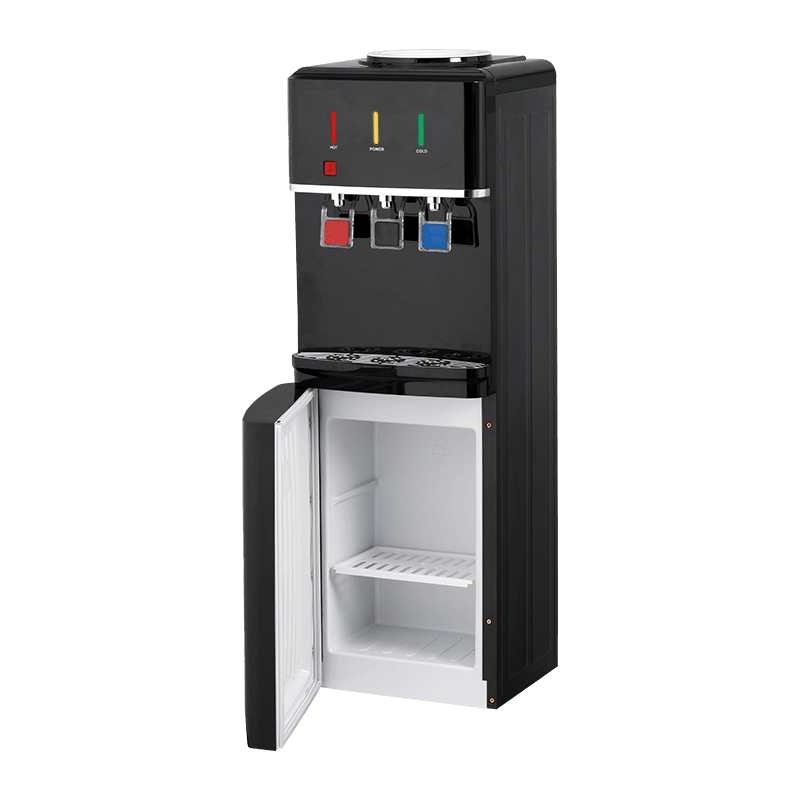
Most freestanding hot and cold dispensers use separate cold and hot tanks. The cold tank is usually a stainless-steel or food-grade reservoir wrapped with an evaporator coil. The hot tank is a smaller insulated vessel with an immersion heater, a thermostat, and at least one safety cut-off. Water enters through a float valve or solenoid, and each faucet draws from its own tank.
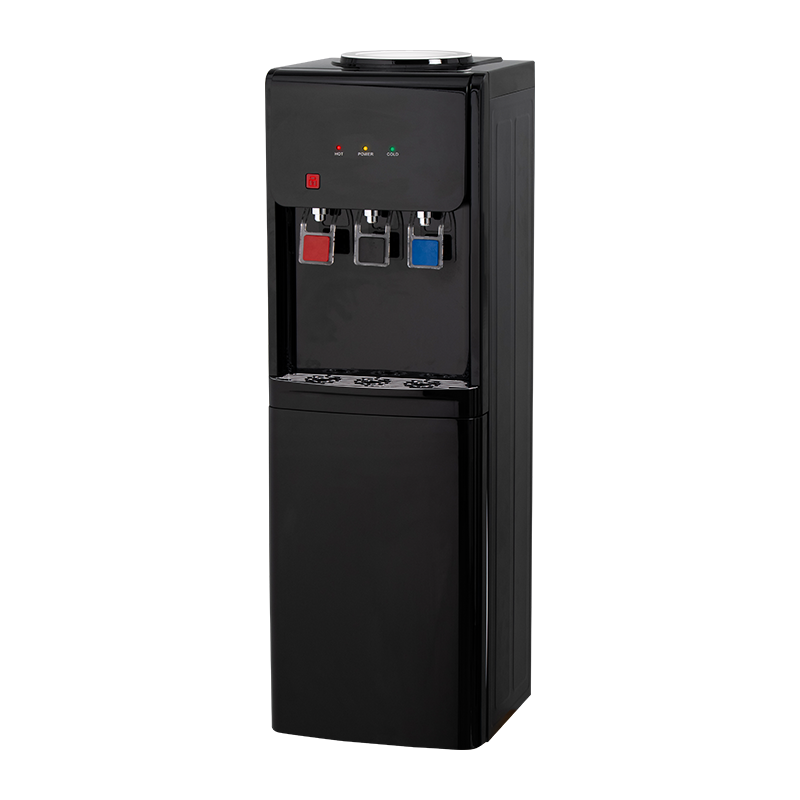
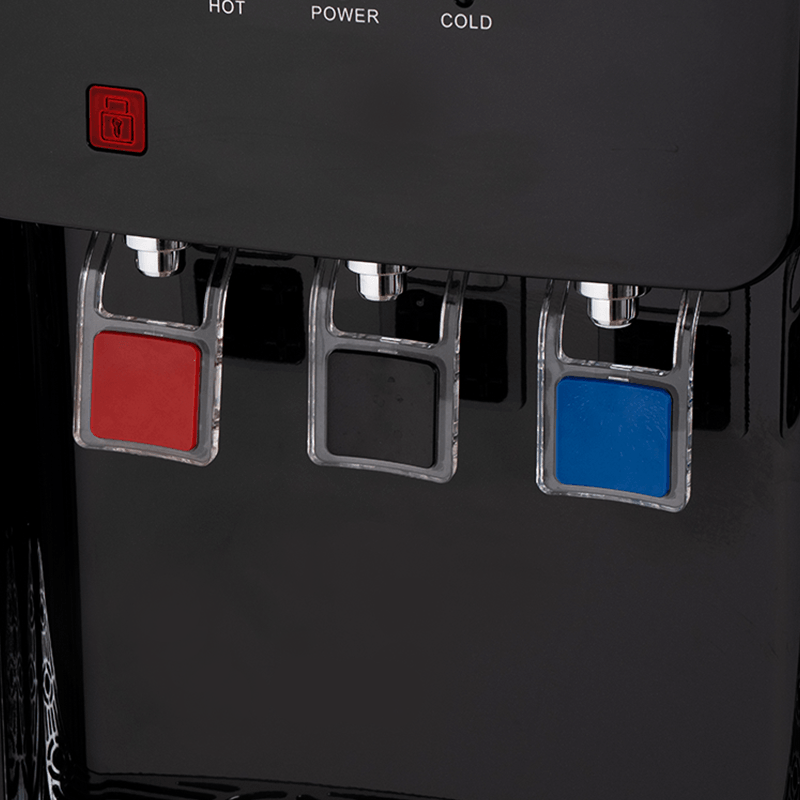
The separation matters because heating and cooling have different recovery behavior. A cold tank may hold 2–4 L and recover slowly after several glasses are drawn. A hot tank may hold 1–2 L but reheats quickly because the heating element is in direct contact with the water. The red faucet is not a mixed “warm” outlet; it is fed from the hot tank. The blue faucet is fed from the cold tank. A white or ambient faucet, when present, usually bypasses both tanks or draws from a third room-temperature line.
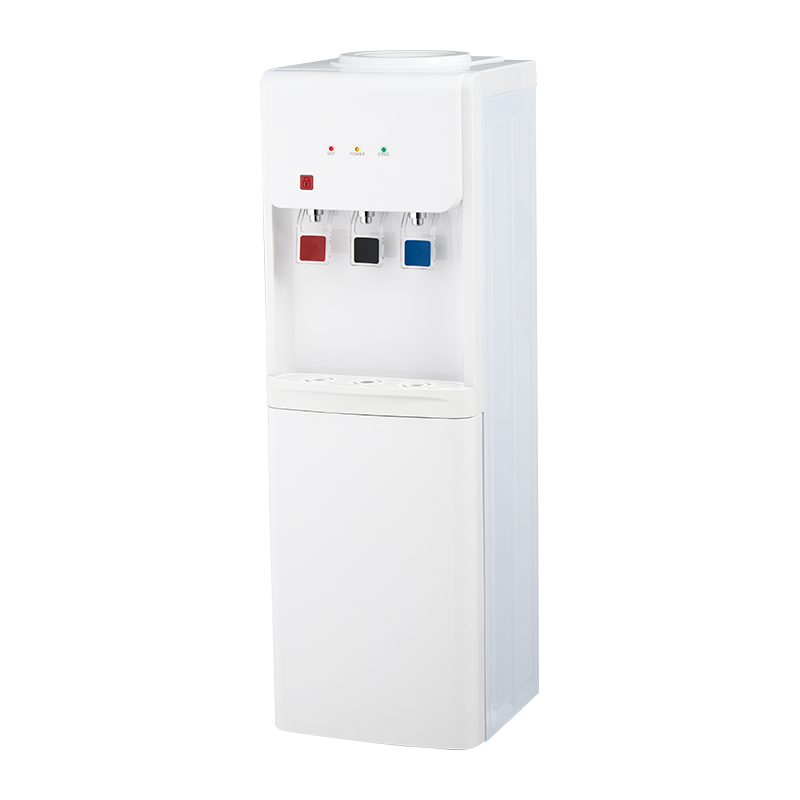
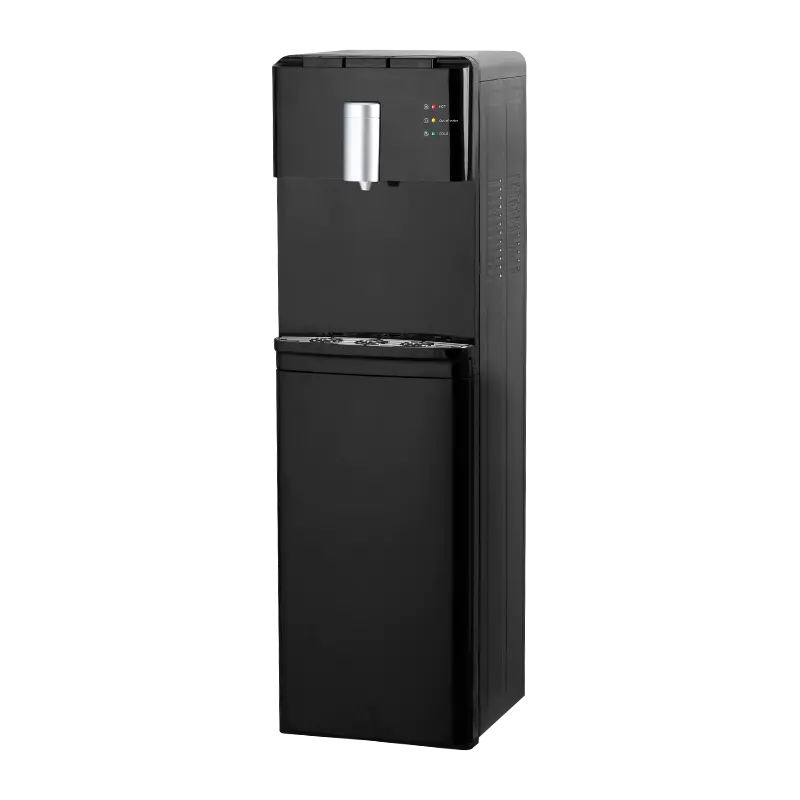
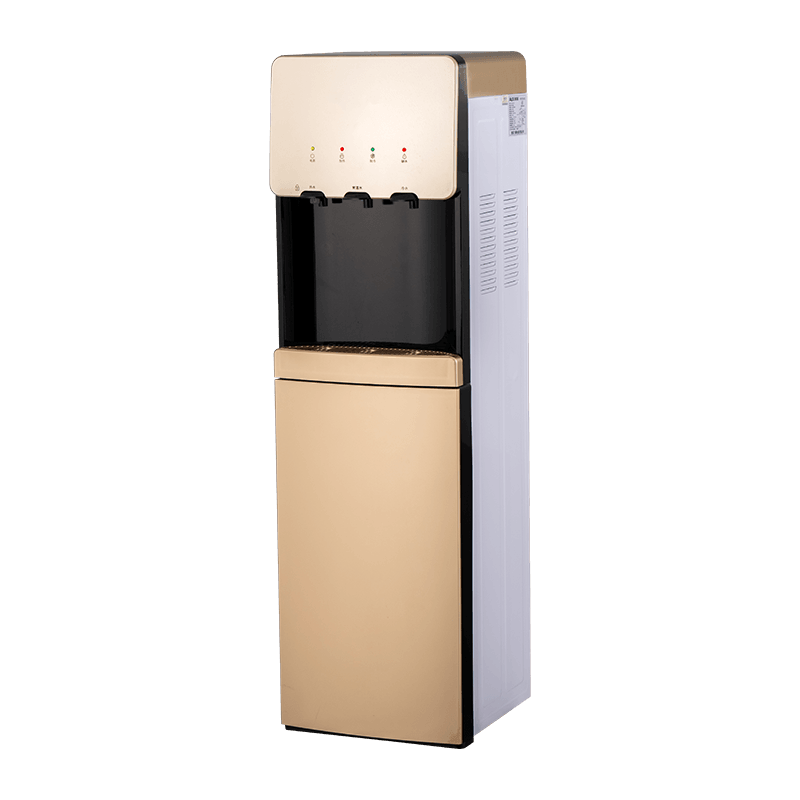
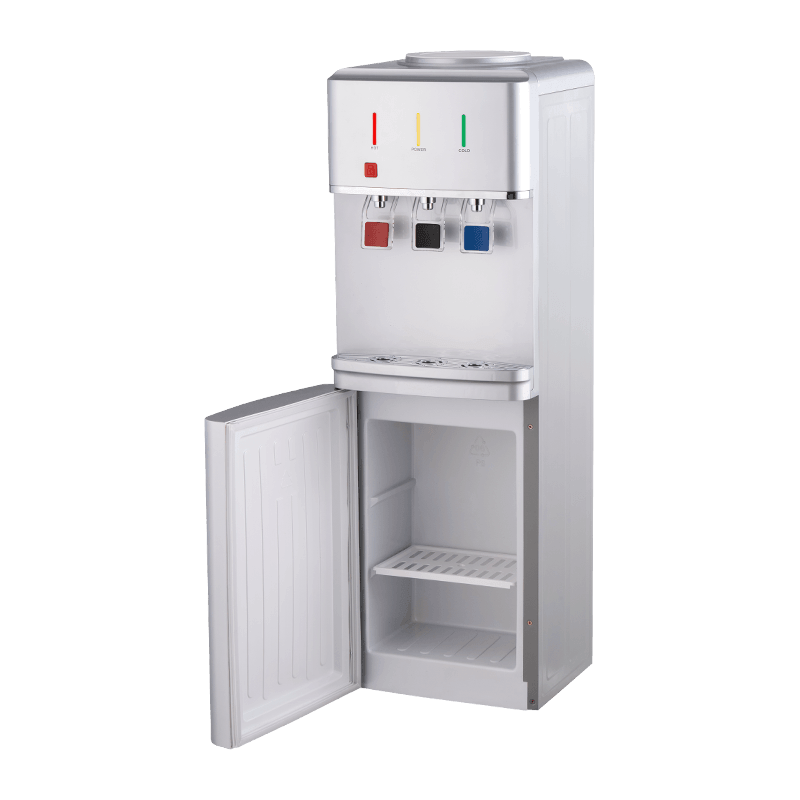
 YR-2506 Series Vertical Hot and Cold Water DispenserCompare three vertical models with hot, ambient, and cold water; cooling method and freezer option differ for varied use levels.View Product →
On a vertical cooler, the bottle or supply connection sits above the tanks, while the faucets sit at the front. The physical layout is simple, but the tank insulation, thermostat placement, and venting determine whether the unit holds temperature during a busy morning. A dispenser that cycles every few minutes in a 30°C room is not necessarily defective; it may simply have a small cold tank, thin insulation, or a thermostat with a wide differential.
How the Cold Side Works: Compressor vs. Thermoelectric Cooling
A compressor cooling system works like a small refrigerator. Refrigerant is compressed, condensed, expanded through a capillary tube, and evaporated in a coil wrapped around the cold tank. As the refrigerant evaporates, it absorbs heat from the water. The compressor then pumps the vapor back into the condenser, where the heat is released into the room. A thermostat or NTC sensor starts and stops the compressor to hold the cold tank within a set range, often around 4–10°C.
A thermoelectric system uses a Peltier module. When current passes through the module, one side becomes cold and the other becomes hot. The cold side is bonded to the tank or a cold sink; the hot side is attached to a finned heat sink and fan. There is no compressor, no refrigerant, and no compressor hum, but cooling capacity is lower and efficiency drops as ambient temperature rises. Peltier units suit small desktop dispensers, quiet offices, or low-volume rooms where a few chilled glasses per hour are enough.
The practical difference appears in recovery time. A compressor unit may deliver several liters of cold water per hour and hold temperature well during repeated draws. A small thermoelectric unit may need a longer pause after two or three glasses. For higher-demand settings, the fast-cooling compressor dispenser design is usually the more stable choice because the cooling circuit is sized for a larger heat load, not just a smaller tank.
| Cooling method | How cold water is produced | Best fit | Watch-outs |
|---|---|---|---|
| Compressor | Refrigerant absorbs heat from the cold tank through an evaporator coil; the compressor rejects heat at the rear or base. | Offices, families, commercial reception areas, and daily draw above a few liters. | Needs ventilation, has a running hum, and should not be boxed into a tight cabinet. |
| Thermoelectric | A Peltier module creates a cold side and a hot side; a fan removes heat from the hot-side sink. | Small desktop units, quiet rooms, and low-volume use. | Lower recovery capacity; performance falls in warm rooms and with blocked fans. |
How the Hot Side Works: Heater, Thermostat, and Safety Cut-offs
The hot tank is simpler in principle: an immersion heater raises the water temperature, a thermostat opens the circuit at the set point, and a thermal cut-off protects against runaway heating. A typical hot faucet delivers water around 85–95°C, not always a rolling 100°C boil. That is deliberate. Lower stored temperature reduces steam, scale formation, and scald risk while still making tea, coffee, and instant foods practical.
Three details separate a basic heater from a safer hot-water system. First, the thermostat should have a narrow enough differential to avoid long waits after a draw; a 5°C dead band feels slower than a 2°C band. Second, the tank needs a vent or expansion space so steam and expanding water do not stress seals. Third, the unit should include dry-boil protection and a resettable or non-resettable thermal fuse. Child locks on the hot faucet are a separate feature, but they matter in homes with young children.
Scale is the quiet enemy of the hot side. In hard-water areas, calcium deposits insulate the element, slow heat transfer, and create noisy boiling. A dispenser with a removable or accessible hot tank is easier to descale than a sealed unit. If the hot water starts tasting flat or the recovery time lengthens, the heater may be coated rather than failing electrically.
From Bottle to Faucet: Gravity, Pump, and Plumbed Water Paths
Top-load dispensers rely on gravity. The bottle sits upside down on a spike or probe, water flows into a small upper reservoir, and a float valve admits water into the cold and hot tanks as the level drops. There is no transfer pump, so the system is mechanically simple. The trade-off is lifting and flipping a heavy bottle, plus the need to keep the probe and reservoir clean.
 YX-2507/YLX-2507 Bottom-Load Water DispenserBottom-mounted bucket design avoids lifting and supplies hot, room-temperature, and cold water; electronic or compressor cooling suits different environments.View Product →
Bottom-load dispensers place the bottle in a cabinet at the base. An electric pump lifts water to the tanks, and a level sensor or float switch stops the pump when the tanks are full. This removes the lifting problem and keeps the bottle out of sight, but it adds a pump, tubing, and a check valve that can fail or become noisy. A bottom-load unit should be checked for pump priming, tube routing, and access to the filter or strainer.
Plumbed or bottleless dispensers connect to a potable water line. A pressure regulator, shut-off valve, and filter set control incoming water before it reaches the tanks. These units never run out of water during normal use, but they depend on line pressure and filtration maintenance. If the supply pressure is too high, the float valve or solenoid can chatter; if it is too low, the tank refills slowly and the cold side loses recovery speed.
What the Controls, Indicators, and Tolerances Tell You
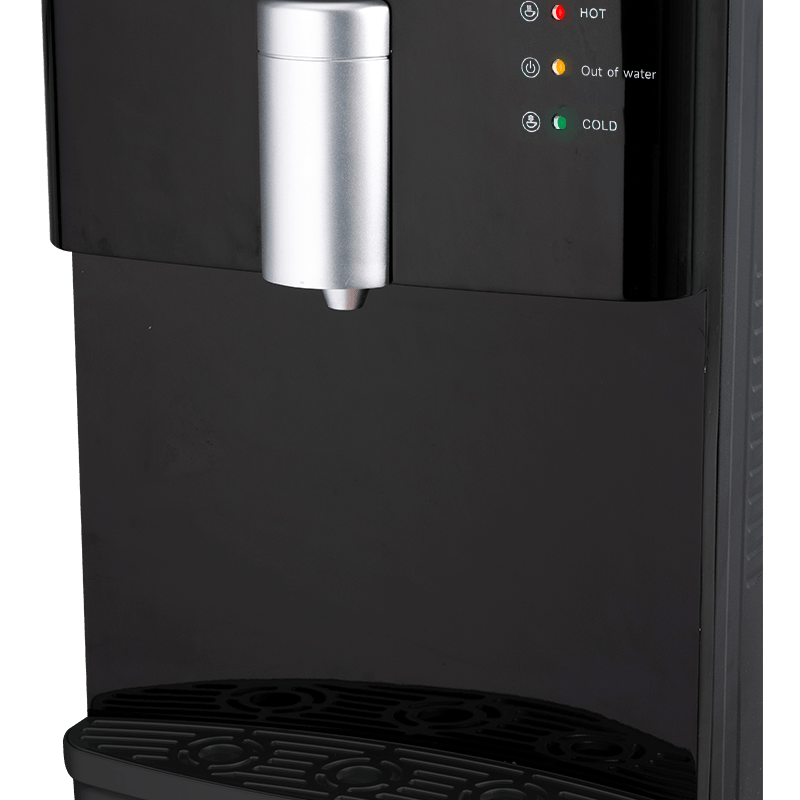
The control board is where the mechanical story becomes visible. A cold-side sensor reports tank temperature; the board decides whether to run the compressor or Peltier module. A hot-side sensor or thermostat does the same for the heater. Float switches or level probes confirm that the tanks are full before heating or cooling starts. Indicator lights are usually simple status signals: red for heating, green or blue for cooling, and sometimes amber for standby or fault.
Tolerances are worth asking about because two dispensers with the same tank size can feel very different. A cold tank that cycles between 4°C and 10°C may pour 8°C water on the first glass and 12°C water after a busy draw. A hot tank set to 90°C with a 5°C differential may drop to 85°C before reheating. These are normal control bands, not necessarily defects. The key is whether the recovery time matches the room’s use pattern.
Altitude changes the hot side. At elevations above roughly 1,500 m, water boils below 95°C, so a standard thermostat setting may behave differently and steam production can increase. A high-altitude optimized dispenser adjusts the heating set point and venting so the unit does not overheat or cycle erratically. At sea level, the same unit should be checked for stable cut-off and no continuous boiling noise.
Energy Use, Recovery Time, and Real-World Capacity
A hot and cold dispenser is a stored-energy appliance. It does not heat or cool water instantly at the faucet; it keeps a small reserve ready. That is why nameplate wattage can mislead. A compressor unit may draw several hundred watts while running, but the average consumption over 24 hours is lower because the thermostat cycles. A heater may draw 500–1,000 W during recovery, then switch off. Standby losses depend on insulation, tank size, ambient temperature, and how often the faucets are used.
Recovery capacity is the more useful buying number. For a compressor cooler, ask how many liters of cold water it can recover per hour and at what ambient temperature. For a hot tank, ask the heating time from room temperature to set point and the refill recovery after drawing 1 L. A large tank is not automatically better; a 4 L cold tank in a small office may sit half-used and lose temperature at the faucet, while a well-insulated 2 L tank with a stronger compressor may perform better during peak demand.
Use pattern matters more than room size. A 20-person office that draws water in two short bursts needs fast recovery, not continuous cooling. A reception area with steady all-day use needs a compressor with good ventilation and a cold tank that can hold temperature between draws. A home office with one or two glasses a day can use a smaller thermoelectric or desktop unit without sacrificing much convenience.
Maintenance and Sizing Checks Before You Buy
Most dispenser failures are water-path or airflow problems rather than electronics. Scale blocks the hot side, dust blocks the condenser, a worn float valve causes overflow, and a dirty faucet affects taste. A sensible maintenance plan is short but regular:
- Descale the hot tank every 3–6 months in hard-water areas, or when heating noise increases.
- Clean the cold tank and faucets with a food-safe sanitizer, then flush thoroughly.
- Vacuum or brush the condenser coils and rear vents every 3–6 months.
- Replace inline filters at the manufacturer’s interval, not only when flow slows.
- Check the bottle probe, float valve, and drip tray for cracks or mineral buildup.
Before choosing a model, confirm the installation clearances, the water source, and the actual draw pattern. A compressor dispenser needs rear or side ventilation; a bottom-load unit needs cabinet access for the bottle and pump; a plumbed unit needs a shut-off valve and a filter location. Also confirm the hot-water safety features, the tank material, and whether the cold tank is insulated with foam or a vacuum panel. Those details affect recovery, noise, and long-term service access more than a glossy front panel.
Matching the Mechanism to the Room
A small desk or home office rarely needs a commercial compressor. A desktop hot and cold dispenser with a modest cold tank and a simple heater is easier to place, quieter, and adequate for a few cups a day. A family kitchen or a busy office reception area is different: the dispenser may be asked to deliver several liters in a short period, so compressor cooling, a larger hot tank, and a child-safe faucet become more important than a slim footprint.
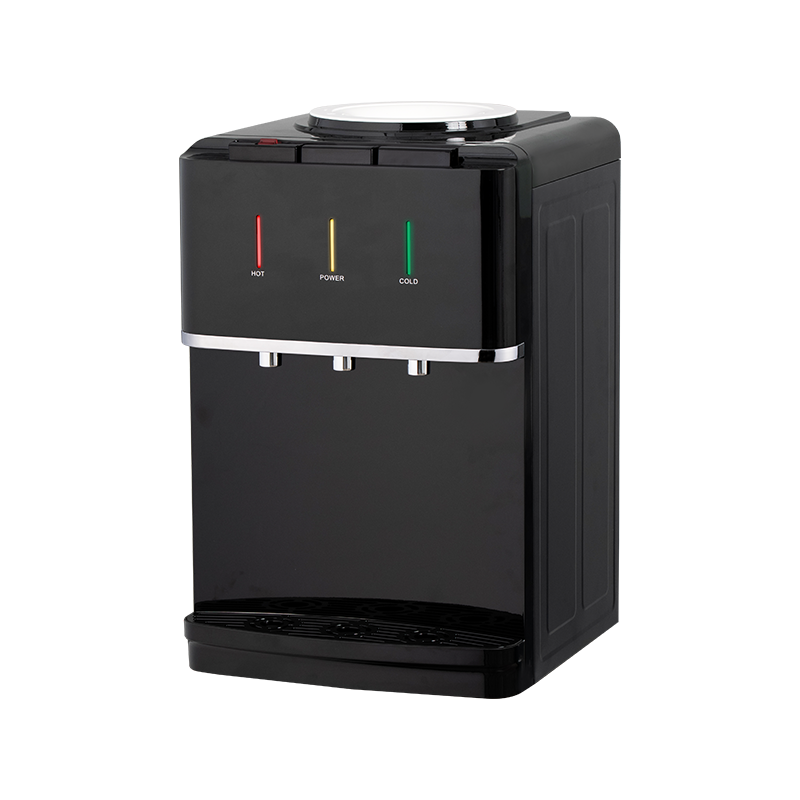
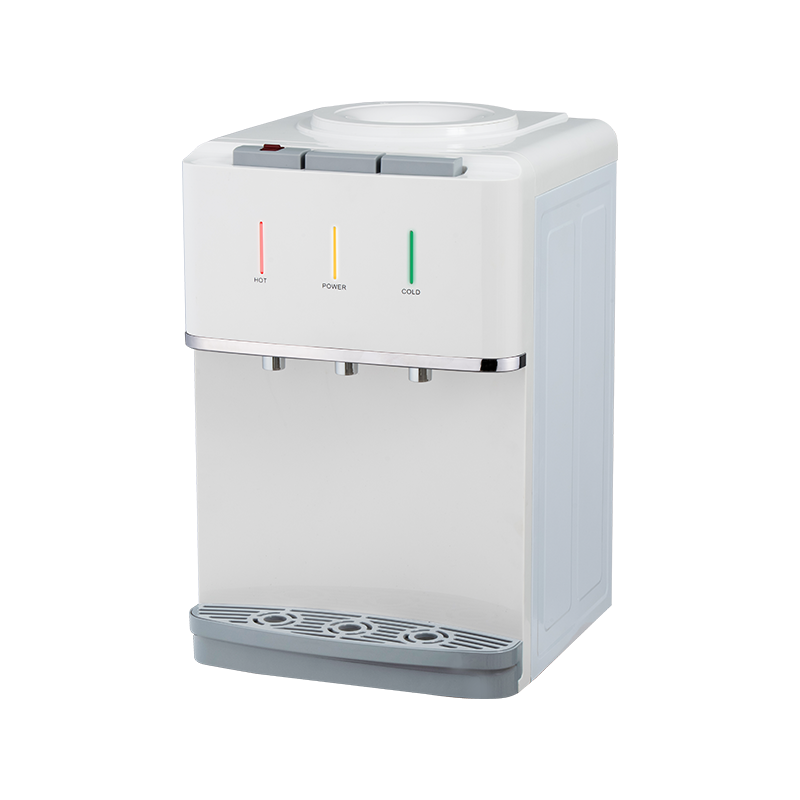
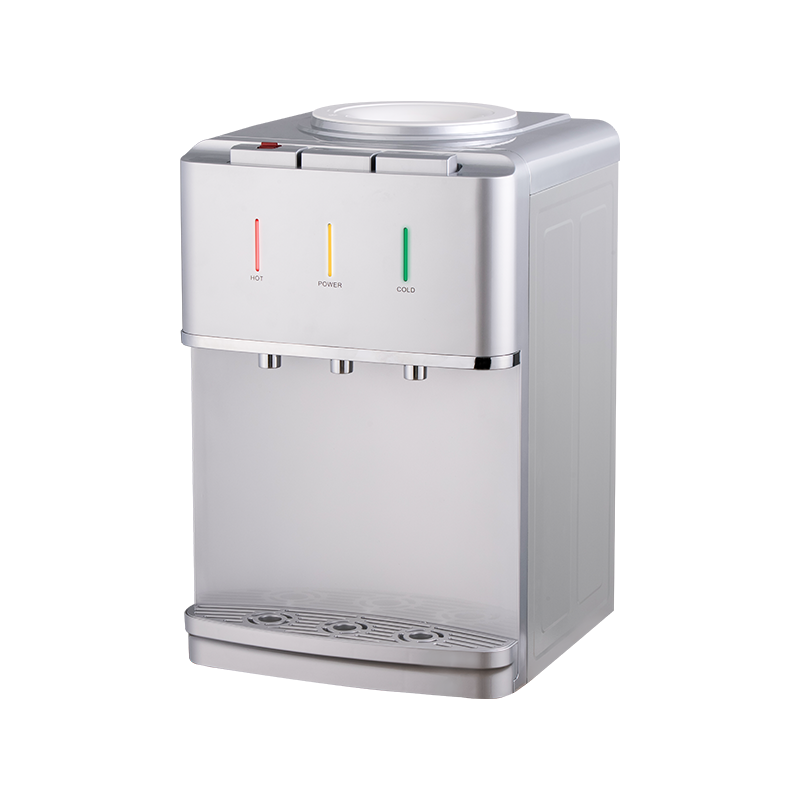
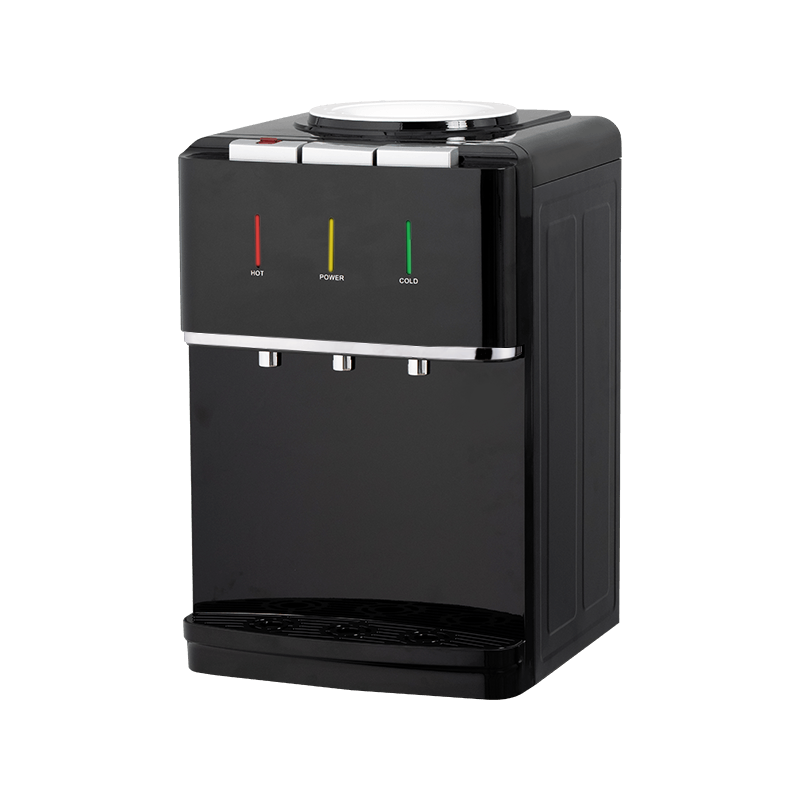
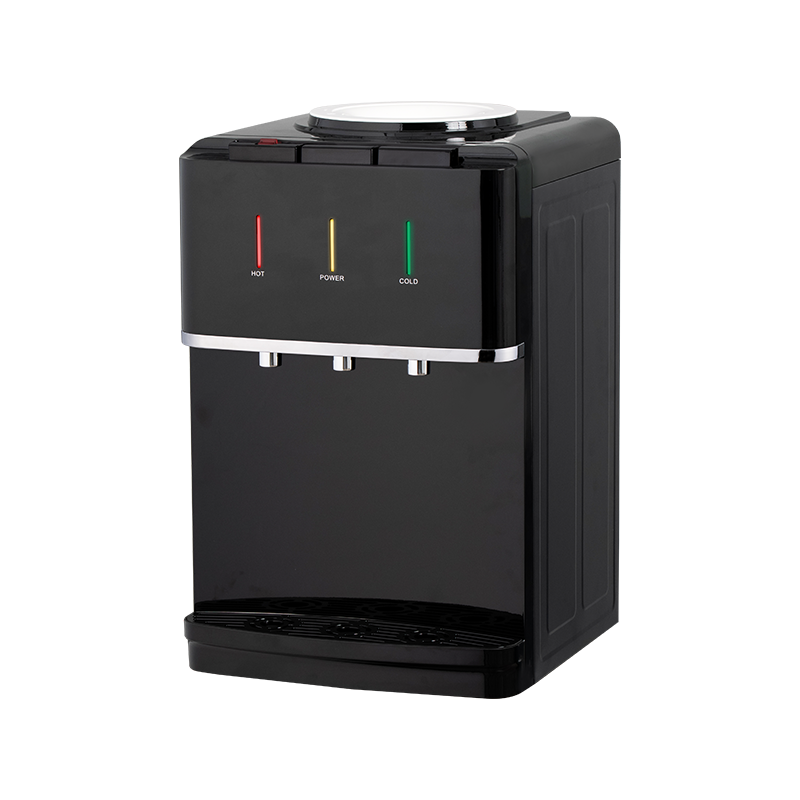 YR-2508T/YLR-2508T Desktop Hot and Cold Water DispenserCompact desktop model supplies hot, room-temperature, and cold water; choose quiet electronic cooling or faster compressor chilling for heavier use.View Product →
For a meeting room or a staff pantry, place the unit where air can move around the rear and base. Do not enclose it in a tight cabinet. Keep the hot faucet away from the edge of a counter, and check that the drip tray can be removed without moving the whole machine. If the unit is plumbed, label the shut-off valve and leave access for filter changes. If it is bottle-fed, confirm that the bottle can be changed without lifting it above shoulder height, especially for bottom-load models.
The short answer is that a hot and cold water dispenser works by storing water in two insulated tanks and using separate temperature-control systems to keep one cold and one hot. The cold side removes heat with a compressor or Peltier module; the hot side adds heat with a thermostat-controlled element and safety cut-offs. A float valve, pump, or pressure regulator keeps the tanks filled, and the faucets simply draw from the tank that matches the color of the handle.
The longer answer is that performance depends on tank size, insulation, recovery capacity, ambient temperature, and maintenance. A dispenser that looks similar on the outside may behave very differently after the third glass. Check the cooling method, the hot-water safety chain, the water path, and the service access before comparing price alone. That is how a simple two-tank appliance becomes a reliable part of a kitchen, office, or reception area rather than a machine that only looks ready.