English
 Español
 عربى
 中文简体


A 40-person office orders a bottom-load cooler, the delivery crew leaves a 5-gallon bottle at the door, and the office manager asks the practical question: if the bottle sits at floor level, how does the water reach the tap? The short answer is a small electric pump. The bottle stays upright inside the lower cabinet, a probe connects to the bottle, and the pump lifts water into a reservoir above the taps. Gravity takes over from there. That single design choice explains most of the convenience, maintenance, and procurement differences buyers notice later.
The short answer: a pump replaces the lift
Top-load dispensers rely on gravity. A heavy bottle is inverted onto a spike, water drains into a reservoir, and a float valve stops the flow when the tank is full. Bottom-load dispensers cannot use that method because the bottle is upright and below the tap. Instead, a suction line goes into the bottle, a pump pulls water upward, and a level sensor or float switch tells the pump when to stop. The water then passes through a cold tank, a hot tank, or both, depending on the model.
This is why a bottom-load unit can look like a simple cabinet with a tap. The working parts are hidden: pump, probe, check valve, level sensor, cold tank, hot tank, and control board. The pump is usually a small low-voltage or mains-powered unit because it only needs to lift water a few feet and refill a reservoir, not pressurize a building supply.
From bottle to tap: the actual water path
- Loading: the bottle slides into the lower cabinet and stays upright. A probe or lance engages the cap. Some systems use a cap adapter; others pierce a hygiene seal. The connection must seal, or the pump will draw air instead of water.
- Priming: the pump pulls water through the suction line and purges air. Good units include dry-run protection so the pump does not burn out when the bottle is empty or the probe is not seated.
- Reservoir fill: water enters the cold tank. A float switch or electronic level sensor stops the pump at a set point. The control uses hysteresis, meaning it refills at a lower level and stops at a higher level, so the pump does not cycle rapidly.
- Chilling: a compressor or thermoelectric module cools the water. Compressor systems usually recover faster under heavy use; thermoelectric systems are often quieter and simpler but slower.
- Dispensing: the tap opens, and gravity feeds water from the reservoir. Hot water comes from a separate heated tank with its own thermostat and safety cutout.
The key point is that most bottom-load designs are not “pump on every pour.” The pump fills a reservoir, and dispensing is gravity-fed. That matters because pump noise happens during refill, not every time someone fills a cup, and reservoir size affects recovery time during meetings or lunch breaks.
Why bottom-load changes the buying decision
Conclusion: bottom-load is better for people who cannot lift 40-50 lb bottles, but it adds a pump and probe that top-load units do not have. Buyers should treat it as a trade: less lifting and less spill risk in exchange for one more mechanical system to maintain.
| Consideration | Top-load dispenser | Bottom-load dispenser | Practical effect |
|---|---|---|---|
| Bottle position | Inverted on top | Upright in lower cabinet | Bottom-load removes the overhead lift. |
| Water path | Gravity feed | Pump feed to reservoir | Bottom-load adds a pump, probe, and level control. |
| Bottle weight | About 40-50 lb lifted to shoulder height | Slid or rolled into the base | Lower injury and drop risk. |
| Spill exposure | Possible glugging and top spill | Most spill risk is at loading and probe connection | Keep a tray and inspect the cap seal. |
| Service access | Top spike, float, and reservoir | Lower pump, probe, tubing, and sensor | Confirm the cabinet allows service without moving the unit. |
| Failure points | Spike seal and float valve | Pump, probe seal, level sensor, and tubing | Bottom-load needs spare-part availability. |
| Best fit | Low-cost, strong users, simple service | Offices, homes, clinics, older users, low-lift environments | Match the design to the people who change bottles. |
The components that decide reliability
The pump
The pump must self-prime, run quietly, and tolerate short dry runs. Diaphragm and gear pumps are both used. Ask about replacement availability, because a failed pump usually means no water until it is serviced. A check valve keeps water from draining back into the bottle and forcing the pump to re-prime on every cycle.
The probe and cap seal
The probe is where air enters if the seal fails. O-rings, cap adapters, and bottle-cap style matter more than many buyers expect. The bottle also needs venting; otherwise, the pump creates a vacuum and struggles to draw water. A worn O-ring can cause noisy pumping, weak flow, or a pump that runs without filling the tank.
Level sensor and reservoir
Float switches are mechanical and easy to understand. Electronic probes can be more compact but may need clean water and periodic wiping. Scale on a probe can cause overfill or no-fill. Cold tank insulation and capacity determine how long the unit can serve a group before the compressor needs to recover.
Cooling system
Compressor cooling is the better choice for frequent draws, hot rooms, and offices with 20 or more people. Thermoelectric cooling suits low-use homes, quiet rooms, and smaller footprints. If hot water is required, check the hot tank material, thermostat, and child-lock feature rather than assuming every bottom-load model includes them.
Installation and operating tolerances buyers should verify
- Bottle size: 3, 4, and 5-gallon bottles are common, but neck diameter and cap style vary. Confirm the probe fits the bottles your supplier delivers.
- Clearance: the lower cabinet door must open fully, and the unit needs ventilation. Compressor models need airflow around the cabinet, so do not box them into a tight pantry.
- Floor load: a full bottle plus the cooler concentrates weight in a small footprint. Check raised floors and weak cabinet bases.
- Power: compressor startup can trip a shared circuit. Avoid extension cords and confirm the outlet location before delivery.
- Water quality: high mineral content can scale the cold tank and probe. Filtration or softened water may help, but check the manufacturer’s position before adding filters.
- Noise: the pump runs during refill, not every pour. For open offices, a quiet-operation bottom-load machine is worth specifying.
- Ambient temperature: compressor performance drops in very hot rooms, and thermoelectric units cool less effectively. Freeze risk matters in unheated spaces.
Maintenance and hygiene routines
Bottom-load still needs cleaning. The lower cabinet can be dark and warm, and spilled water stays out of sight. At every bottle change, inspect the probe, wipe the cap adapter, and check for drips. Monthly, flush the reservoir, clean the faucets, and descale according to the water hardness. Every three to six months, sanitize the tank and lines. A self-cleaning bottom-load cooler can reduce manual reservoir cleaning, but it does not remove the need to inspect the probe and cabinet.
Procurement risk is straightforward: if the pump or level sensor fails, the unit stops dispensing. Keep service kits, O-rings, and tubing available, and confirm warranty coverage for the pump rather than only the cabinet. Top-load units are simpler, but they put the heaviest task at the top of the machine. Bottom-load moves that task to floor level and accepts a pump in exchange.
Commercial use and procurement risks
For offices, clinics, waiting rooms, and homes with older users, bottom-load reduces lifting injuries and bottle drops. But high-use areas need recovery rate, not just bottle convenience. A 20-person office drinking 1.5 L per person per day uses about 30 L daily; a 5-gallon bottle holds about 18.9 L, so the team may change more than one bottle per day. If ten people draw water in ten minutes, the cold reservoir can deplete before the pump refills it. Compressor cooling, a larger cold tank, and a pump with adequate lift matter more than cabinet styling.
Check the pump voltage, dry-run protection, level-sensor type, cold tank material, hot tank safety, replacement-part availability, and warranty terms. Do not assume every bottom-load unit uses the same probe or cap adapter. Test with the bottles your supplier actually delivers. In dusty rooms, confirm whether the lower cabinet needs a filter or periodic vacuuming. In high-altitude locations, hot-water performance changes with boiling point, while cold dispensing remains largely unaffected.
Choosing the right bottom-load configuration
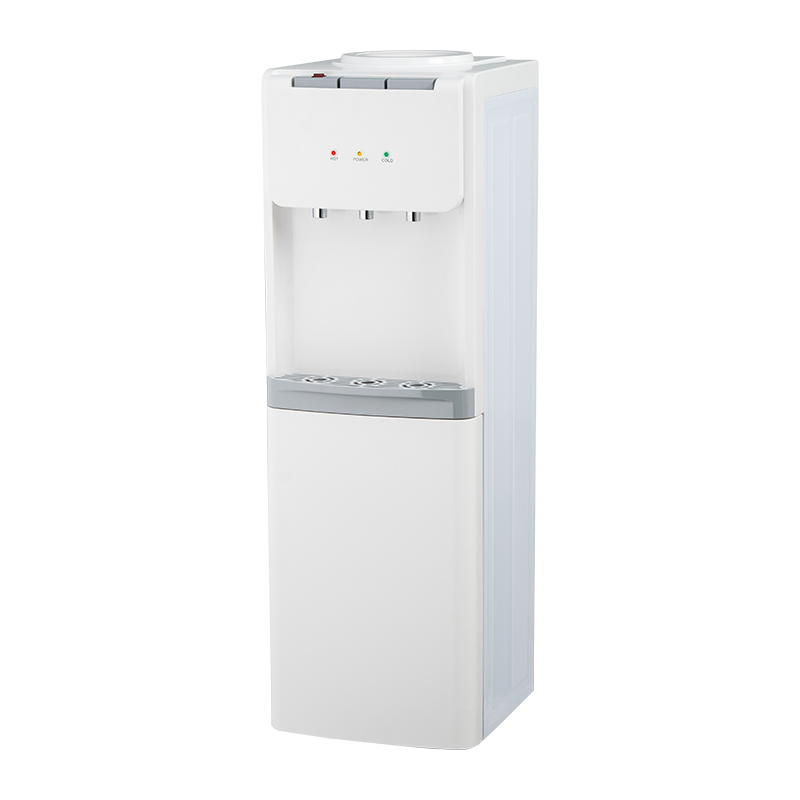
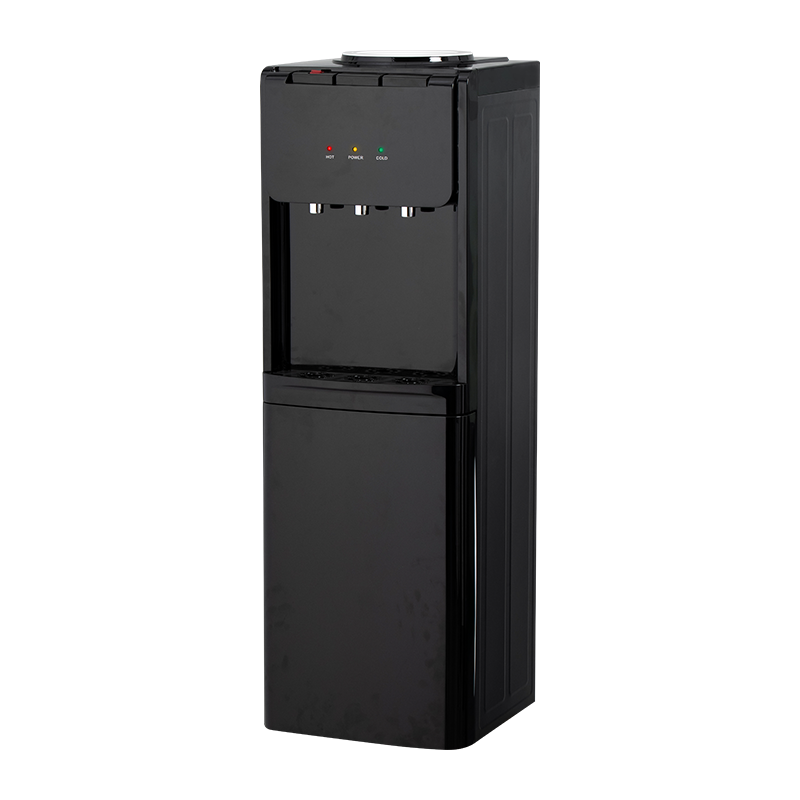
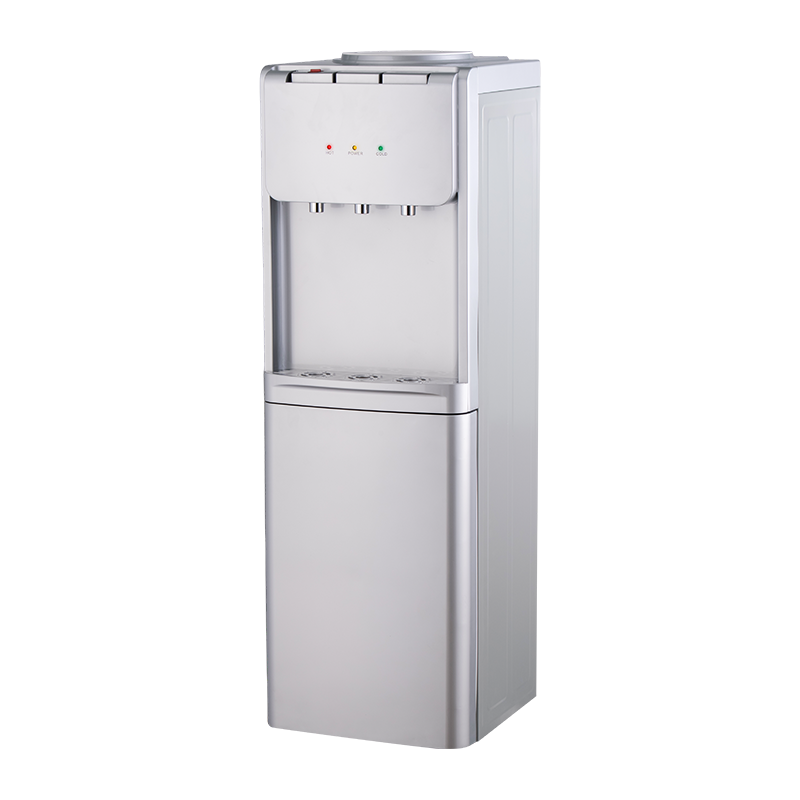
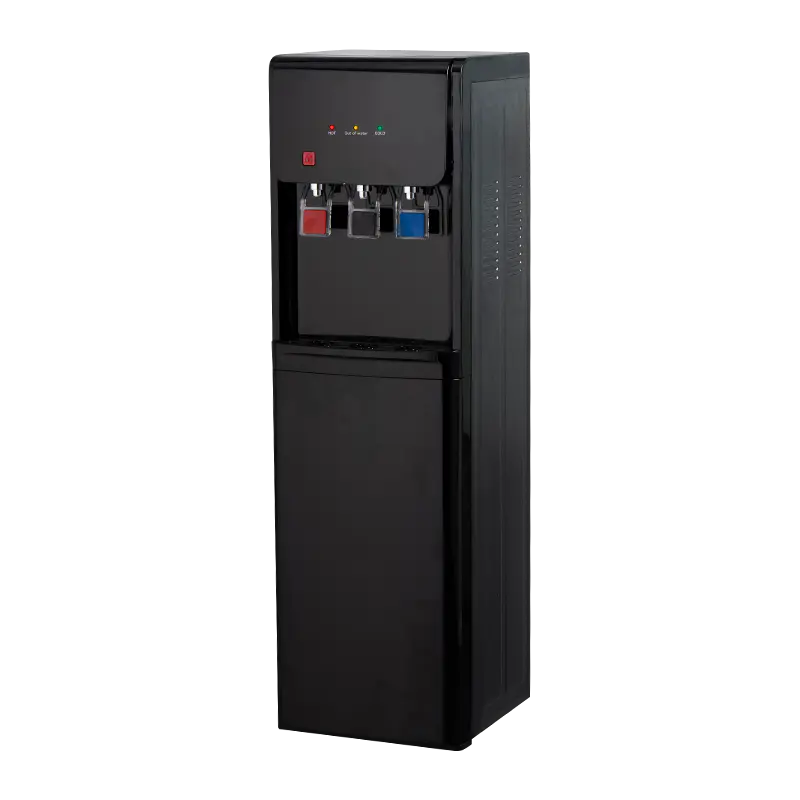
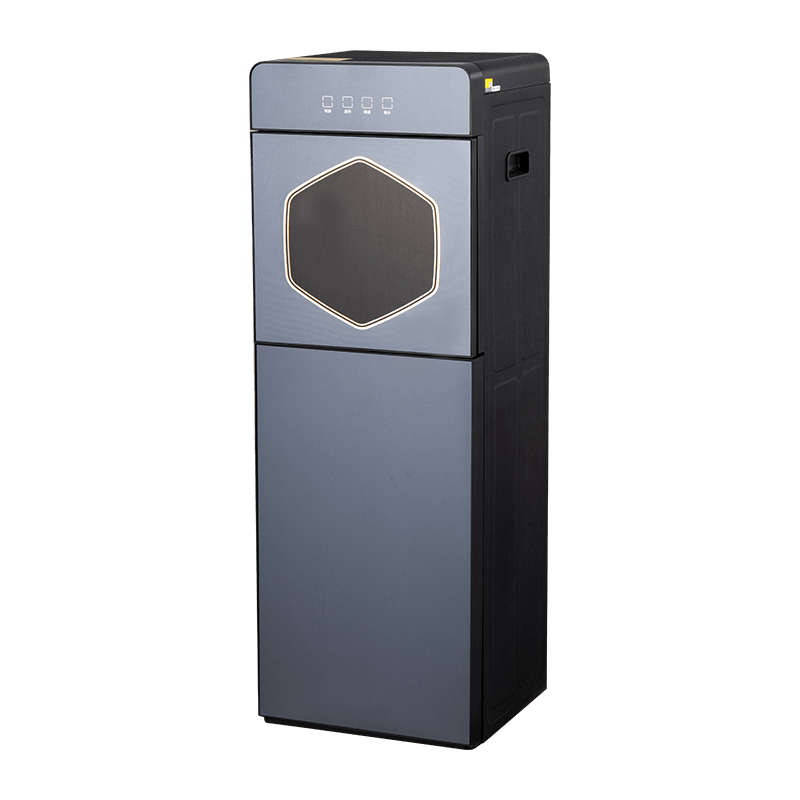
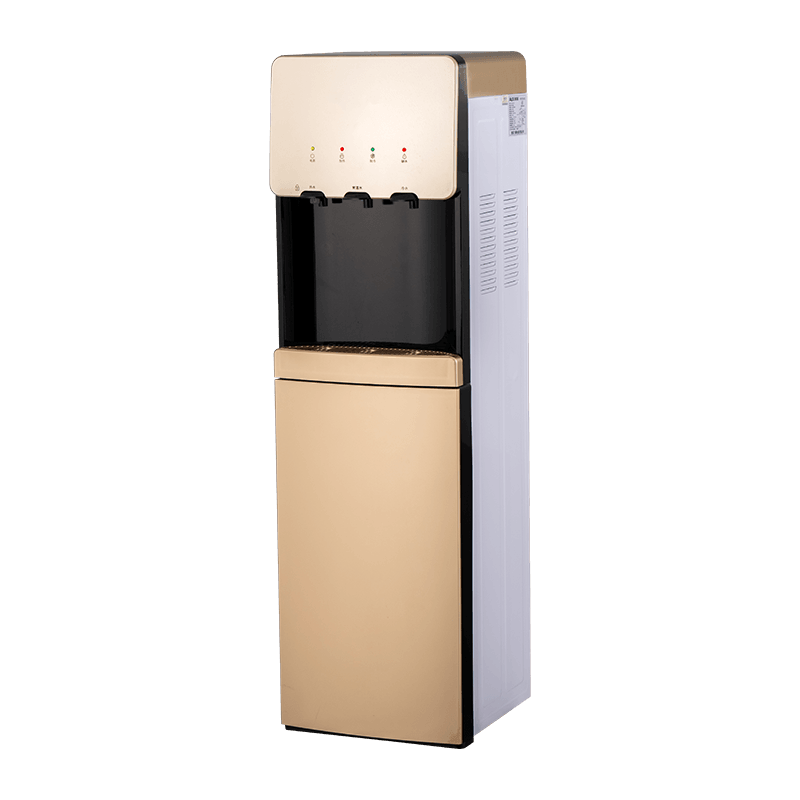
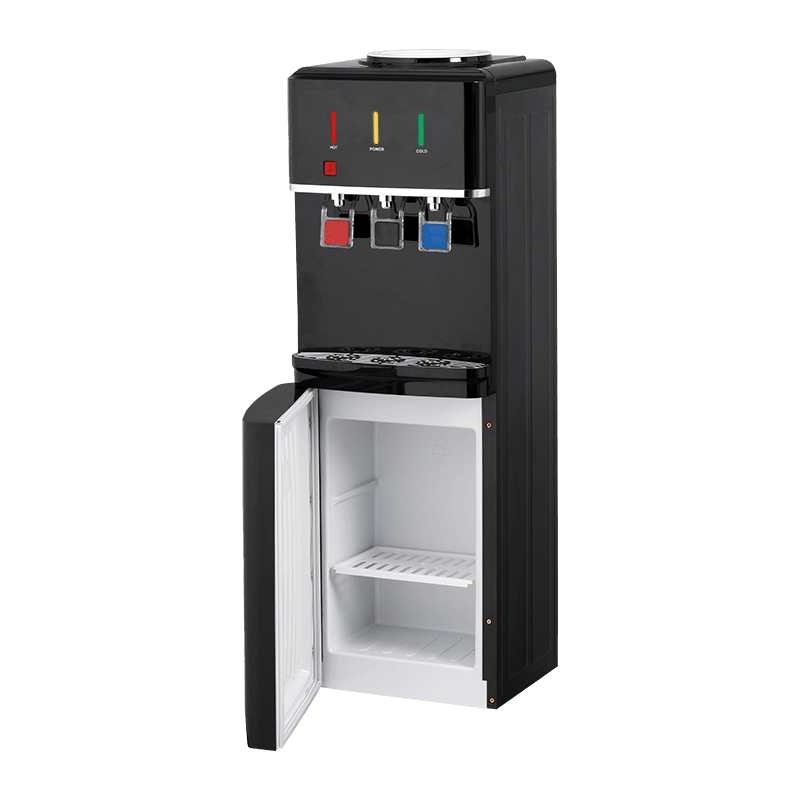
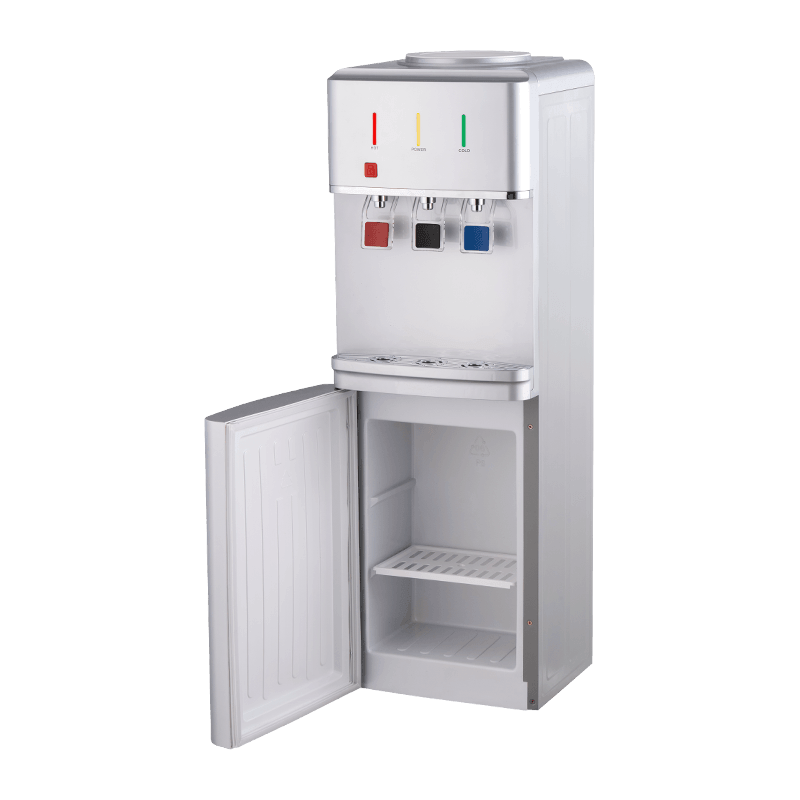
Start with placement. A freestanding vertical bottom-load dispenser is the simplest choice for homes and offices because it needs no counter cutout. For a freestanding unit, the YLR2505 series is a bottom-load vertical dispenser with the bottle concealed in the lower cabinet.
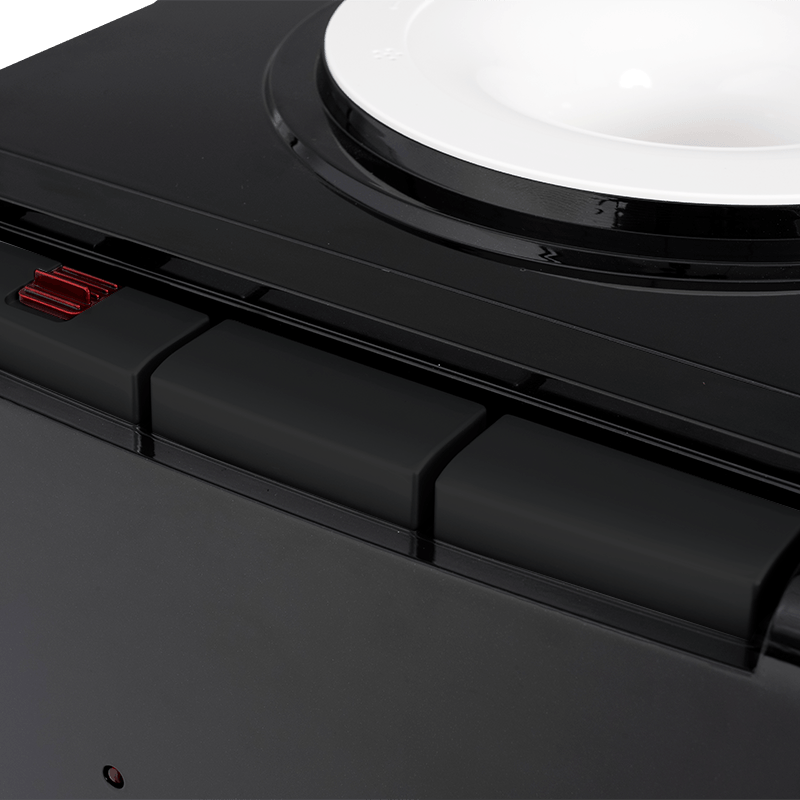 YLR2505 Series Bottom-Load Vertical Water DispenserFreestanding bottom-load dispenser with hot, room-temperature, and cold water; YR-2505 uses electronic cooling, while YLR-2505/YLR-2505Y use compressor cooling.View Product →
If counter space is tight, an undercounter model such as the YLR1803/YLR1803Y keeps the bottle below the counter. Confirm cabinet dimensions, ventilation, and whether service can reach the pump without removing the unit.
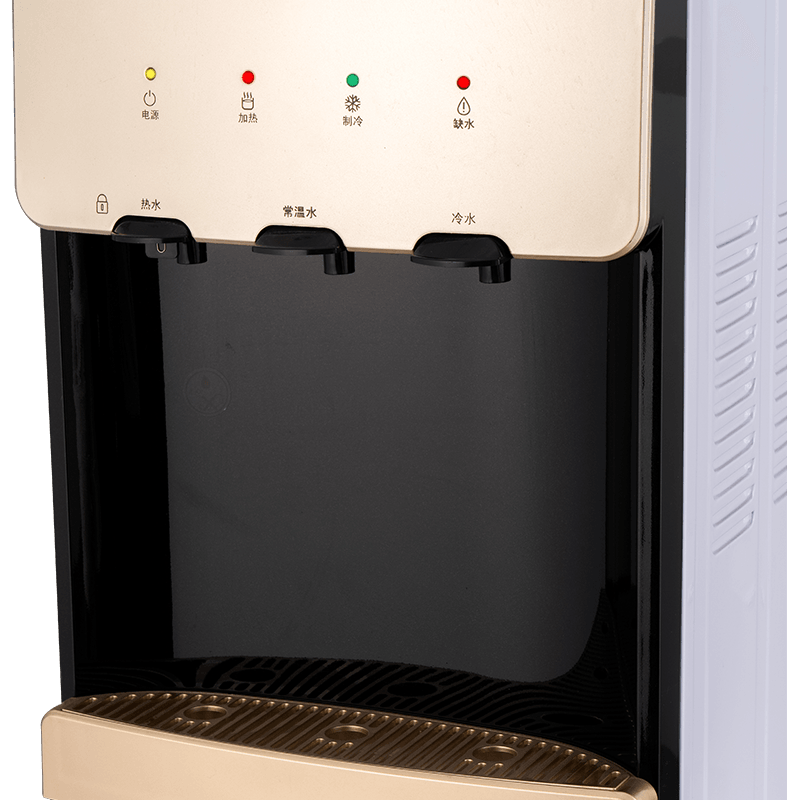 YLR-1803/YLR-1803Y Undercounter Bottom-Load Water DispenserUndercounter compressor-cooled dispenser providing hot, warm, and cold water; check cabinet dimensions and ventilation before installing beneath a counter.View Product →
Then match cooling to use: compressor for frequent draws, thermoelectric for low use and quiet rooms. Check hot water, child lock, drip tray, and bottle-cap compatibility. The working principle is simple once the parts are clear: a pump lifts water, a probe watches the bottle, a level sensor protects the reservoir, and the cooling system does the rest. Buyers who verify those details avoid most of the surprise that comes after installation.