English
 Español
 عربى
 中文简体


At 9:05 on a Monday, someone fills a cup at the office water dispenser and expects cold water immediately. At 9:07, after four more cups, the same dispenser may deliver water that is noticeably less cold. Nothing mystical has happened. The machine has not “run out of cold.” It has simply used the chilled water stored in its cold tank faster than its refrigeration system can replace the heat removal.
That distinction matters for buyers, facility managers, and anyone comparing dispensers. A water dispenser makes water cold by removing heat from the water and rejecting that heat into the room. Most full-size dispensers do this with a small vapor-compression refrigeration circuit, the same basic principle used in a refrigerator or air conditioner. Some desktop models use a thermoelectric module instead, which is quieter and simpler but generally slower and less powerful. The cold tank, thermostat, insulation, condenser airflow, and usage pattern all determine whether the water in your cup is genuinely chilled or merely cooler than room temperature.
If you are specifying a dispenser, the useful question is not simply “does it have a cooling function?” It is “how much heat can it remove, from how much water, at what ambient temperature, and how quickly can it recover after repeated draws?” That is where real performance lives.
The Short Answer: A Dispenser Removes Heat, Not Adds Cold
Cold is not a substance that can be poured into water. In cooling terms, cold water is water with less thermal energy than its surroundings. A dispenser chills water by creating a heat flow path from the water to the surrounding air. The water loses heat; the room gains it. The refrigeration system is simply a pump that moves heat against the natural direction it would prefer to travel.
In a compressor-cooled dispenser, the main parts are the compressor, condenser, expansion device, evaporator, cold tank, and thermostat. The compressor circulates refrigerant. The condenser releases heat to the room. The expansion device drops the refrigerant pressure and temperature. The evaporator absorbs heat from the water in the cold tank. The thermostat switches the compressor on and off to hold the water within a temperature band.
That is the whole principle in one paragraph. The practical differences between models come from component sizing, insulation, airflow, tank volume, control tolerances, and how the dispenser is installed. A dispenser with a large compressor but a poorly ventilated condenser will not cool well. A dispenser with a small compressor and a large, well-insulated cold tank may deliver excellent first-cup performance but recover slowly after a busy lunch period.
The Compressor Refrigeration Cycle, Step by Step
The vapor-compression cycle is a continuous loop. It does not create cold water directly; it creates a cold surface, and that surface absorbs heat from the water. The sequence below is the standard order, though small dispensers may combine or arrange components differently.
Compression: Raising Pressure and Temperature
The compressor takes low-pressure refrigerant vapor from the evaporator and compresses it. Compression raises both pressure and temperature. The refrigerant leaving the compressor is hot, often much hotter than the room. That heat has to go somewhere, which is why the back or side of a dispenser can feel warm when the compressor is running.
Compressor size affects cooling capacity and recovery speed. A larger compressor can remove heat faster, but it also draws more electrical current, produces more noise, and requires a condenser large enough to reject the heat. Oversizing the compressor without matching the condenser and evaporator can create a machine that is noisy and inefficient rather than powerfully cold.
Condensation: Rejecting Heat to the Room
The hot refrigerant vapor enters the condenser, usually a serpentine coil on the back or side of the dispenser. A fan may blow room air across the coil. As air passes over the hot coil, the refrigerant loses heat and condenses into a liquid. This is the point where the heat removed from the water is transferred to the room.
The condenser is one of the most practical service points in the entire machine. Dust, lint, pet hair, kitchen grease, and close-to-wall installation all reduce airflow. When the condenser cannot reject heat efficiently, the compressor has to work against higher pressure. Cooling performance drops, run time increases, energy use rises, and the compressor may become hot or noisy. A dispenser pushed into a tight cabinet with no clearance can behave like a poorly cooled refrigerator even if the refrigeration circuit itself is healthy.
Expansion: Dropping Pressure and Temperature
After the condenser, the liquid refrigerant passes through a capillary tube or expansion valve. This restriction drops the pressure sharply. Lower pressure allows the refrigerant to expand and become much colder. The exact temperature depends on the refrigerant, pressure, and load, but the purpose is always the same: prepare a cold low-pressure mixture to enter the evaporator.
Capillary tubes are common in small appliances because they are simple, inexpensive, and reliable when the system is correctly charged. They are also less flexible than adjustable expansion valves. If the refrigerant charge is wrong, the capillary is restricted, or the condenser airflow is poor, the cold side may not reach its intended temperature even though the compressor runs continuously.
Evaporation: Absorbing Heat from the Water
The cold refrigerant enters the evaporator, which is thermally connected to the cold tank. In many dispensers, the evaporator coil is wrapped around or pressed against the stainless-steel cold tank, or an evaporator coil is immersed in a water jacket. Heat from the water passes through the tank wall or coil surface into the refrigerant. As the refrigerant absorbs that heat, it boils back into vapor and returns to the compressor to repeat the cycle.
The evaporator explains why cold tank design matters. A coil must make good thermal contact. The tank wall must conduct heat well. The water inside must be able to circulate or mix so that warm water does not sit in a pocket while the thermostat senses only the cold layer near the evaporator. If the tank is oversized for the compressor, first-cup water may be cold but recovery will be slow. If the tank is undersized, the dispenser may struggle to keep up with a busy office.
| Stage | Refrigerant condition | Main function | Practical weak point |
|---|---|---|---|
| Compressor | Low-pressure vapor to high-pressure hot vapor | Circulates refrigerant and raises its temperature | Electrical start components, overheating, short cycling |
| Condenser | Hot vapor to liquid | Rejects heat from the water to room air | Dust, lint, restricted clearance, fan failure |
| Expansion device | High-pressure liquid to low-pressure mixture | Drops pressure and prepares the cold side | Capillary restriction, incorrect charge, moisture in system |
| Evaporator | Low-pressure mixture to vapor | Absorbs heat from the cold tank water | Poor thermal contact, ice buildup, scale or corrosion |
| Thermostat and control | Signals compressor cycling | Holds water within a set temperature band | Sensor drift, wide differential, poor calibration |
What the Cold Tank Actually Does
The cold tank is not just a container. It is a thermal buffer. It stores a volume of already-chilled water so the dispenser can deliver cold water immediately, without waiting for the refrigeration circuit to cool every cup from room temperature. A typical office dispenser may hold a few liters in the cold tank; compact desktop models hold less. The tank volume, insulation, and evaporator contact determine first-draw performance and recovery.
Cold water is denser than warm water, so without mixing, a tank can stratify. The coldest water may sit near the evaporator while warmer water remains above it. Good designs encourage natural or forced circulation so the thermostat sees a representative water temperature. A thermostat with a wide differential may let the tank swing several degrees before restarting the compressor. That reduces compressor cycling and saves energy, but it can make the water feel less consistently cold. A narrow differential gives steadier temperature but may increase run time and noise.
The thermostat usually senses the cold tank or evaporator temperature rather than the cup temperature. That is why two dispensers rated for the same nominal temperature can feel different in use. One may hold a tight band; another may allow a wider swing. The rated temperature also depends on ambient conditions and draw pattern. A dispenser tested at a comfortable laboratory ambient temperature may not hold the same temperature in a warm kitchen or a sunlit office alcove.
The cold tank and evaporator also influence recovery. When you draw cold water, room-temperature water enters the tank to replace it. The incoming water mixes with the remaining chilled water and raises the tank temperature. The compressor restarts, but it now has to remove heat from both the new water and the tank walls. Recovery is the time needed to bring the tank back to its set point under a defined draw pattern. A large cold tank gives more first-cup capacity but takes longer to recover after it is emptied. A small tank recovers faster in theory but may not keep up with a crowd.
Insulation is the quiet partner here. A well-insulated tank loses less heat to the surrounding cabinet, so the compressor runs less between draws. Poor insulation, a loose lid, or a damaged tank gasket can make a dispenser cycle more often and still deliver water that is only lightly chilled. High-efficiency cold tank design is therefore not a marketing extra; it directly affects energy use and recovery. high-efficiency cold tank construction usually combines better insulation, good evaporator contact, and a tank geometry that supports even water temperature.
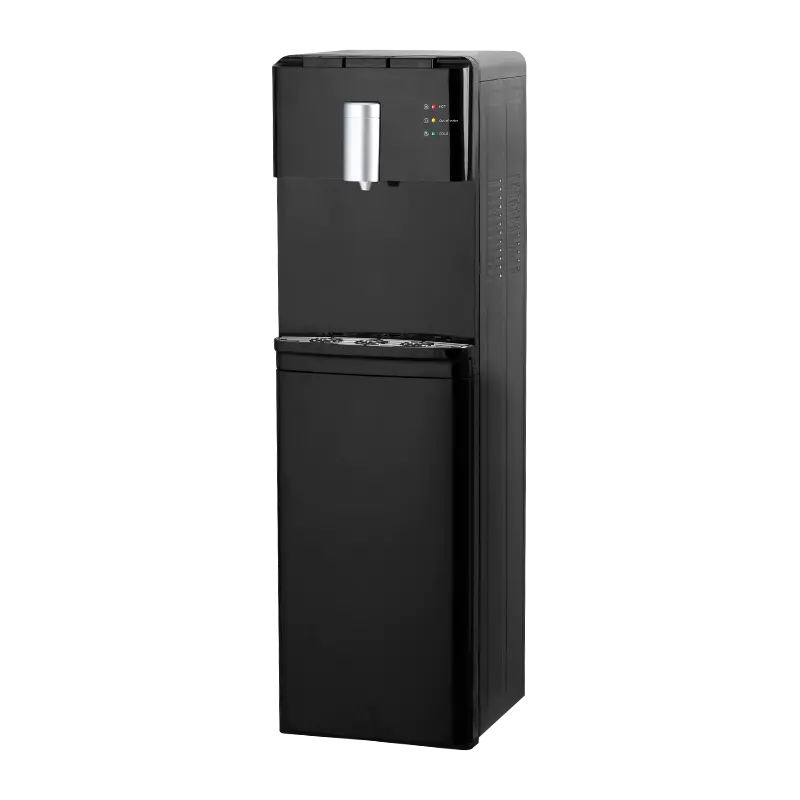
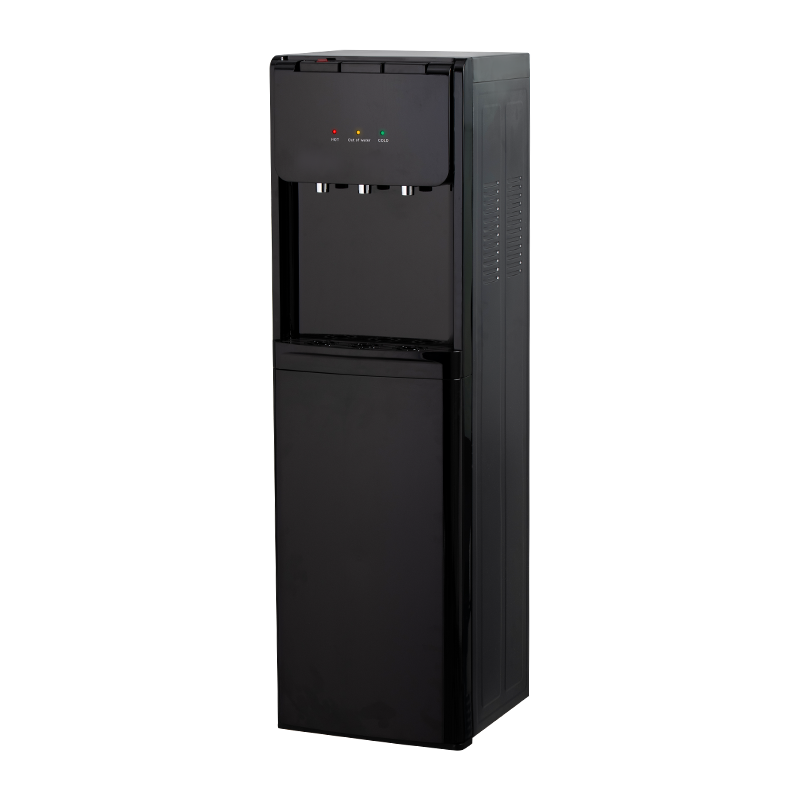 YX-2505 and YLX-2505 Bottom-Mounted Refrigerated Water DispensersTwo bottom-mounted models offer hot, room-temperature, and cold water; compare electronic versus compressor cooling, tank volume, and clearance for daily use.View Product →
A bottom-mounted refrigerated dispenser illustrates the same physics in a different layout. The bottle sits below the cabinet and a pump lifts water to the cold tank. The compressor and condenser may be arranged differently, but the cold water still comes from heat absorption at the evaporator and storage in an insulated tank. Buyers should compare tank volume, rated cooling capacity, and clearance requirements rather than assuming that bottle position alone determines cold-water performance.
Compressor Cooling vs Thermoelectric Cooling
Not every water dispenser uses a compressor. Many small desktop units use a thermoelectric, or Peltier, module. A thermoelectric cooler uses direct current through semiconductor junctions to create a cold side and a hot side. A fan and heat sink remove heat from the hot side, while the cold side draws heat from a metal block or water reservoir. There is no compressor, no refrigerant loop, and no expansion device.
Thermoelectric cooling is simple, compact, quiet, and free of refrigerant. Its limitations are capacity and efficiency. The cold side can only pump a modest amount of heat, and the hot side must reject heat into the same room. In a warm room, a thermoelectric dispenser may only cool water a limited number of degrees below ambient. It is suitable for a desk, a small waiting area, or a low-demand household, but it is usually not the right choice for a staff pantry with dozens of users.
Compressor cooling is more efficient at larger heat loads. It can hold a lower water temperature and recover faster, but it introduces compressor noise, refrigerant handling, condenser airflow, and more service complexity. The right choice depends on daily draw volume, ambient temperature, noise sensitivity, and maintenance capability. A quiet office may prefer a low-noise compressor unit over a thermoelectric unit if it needs real cold-water capacity; a single desk user may prefer the simplicity of thermoelectric cooling.
| Consideration | Compressor cooling | Thermoelectric cooling |
|---|---|---|
| Cooling principle | Vapor-compression refrigerant loop | Peltier semiconductor module |
| Typical strength | Higher capacity, faster recovery, lower water temperature | Compact, quiet, no refrigerant, simple construction |
| Typical limitation | More noise and weight, condenser clearance needed | Lower capacity, slower recovery, performance tied to ambient |
| Best fit | Offices, families, commercial pantries, frequent draws | Desks, small rooms, low daily use, limited space |
| Service focus | Condenser cleaning, airflow, refrigerant system integrity | Fan airflow, heat-sink dust, module power supply |
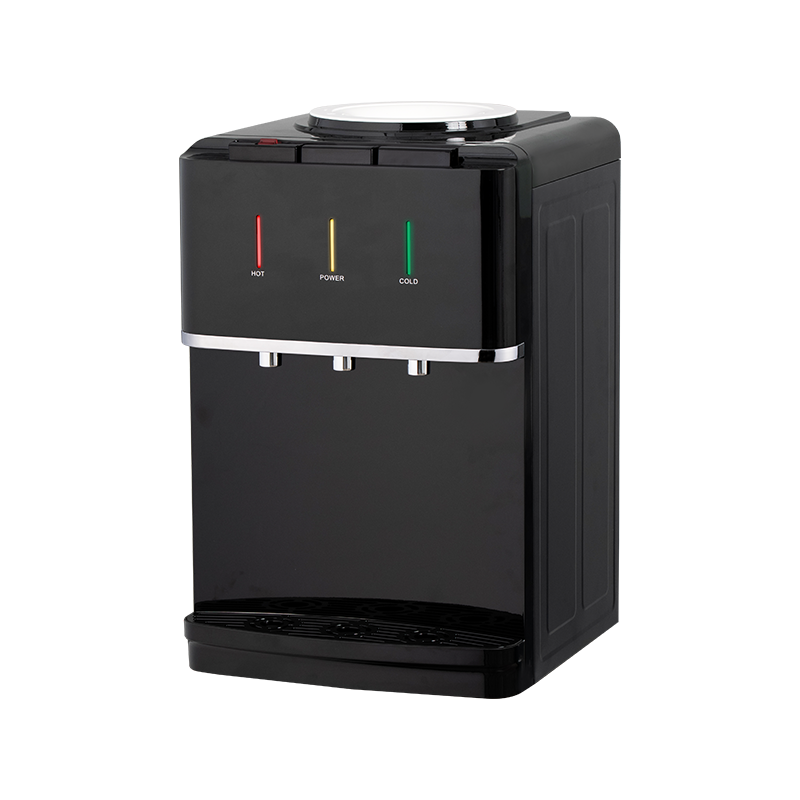
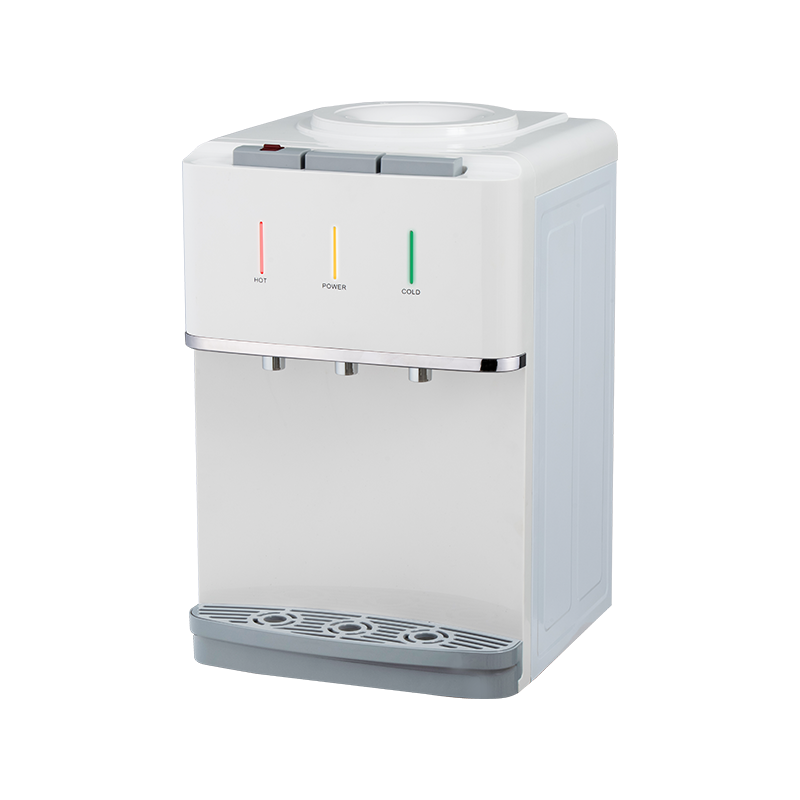
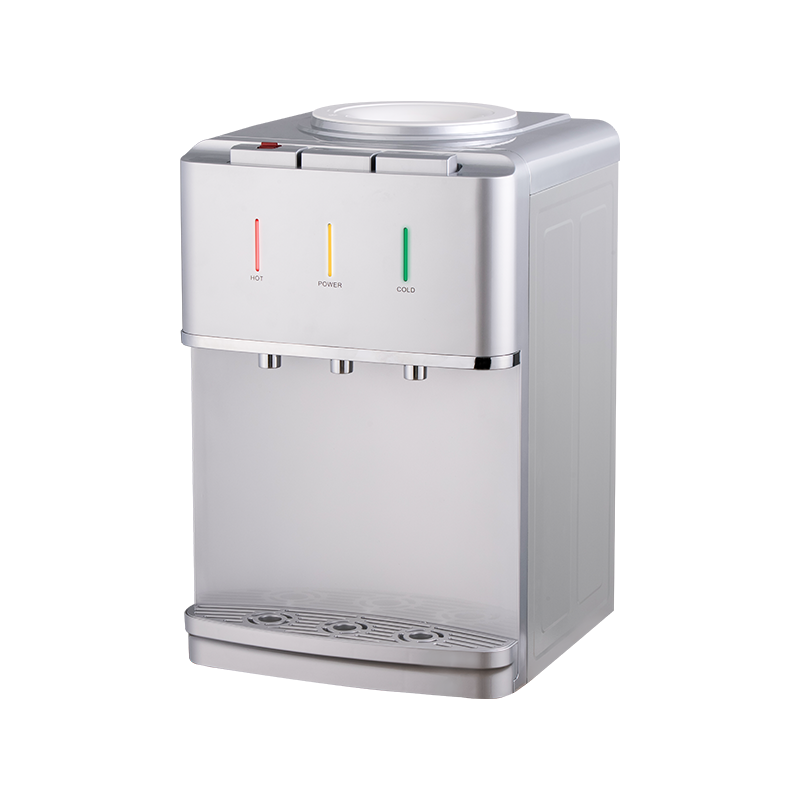
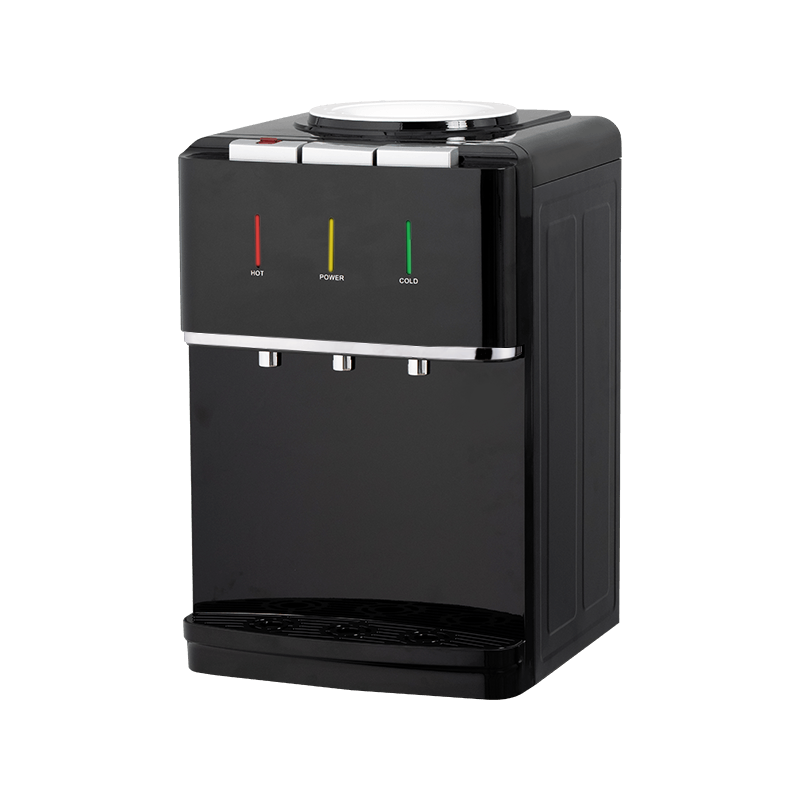
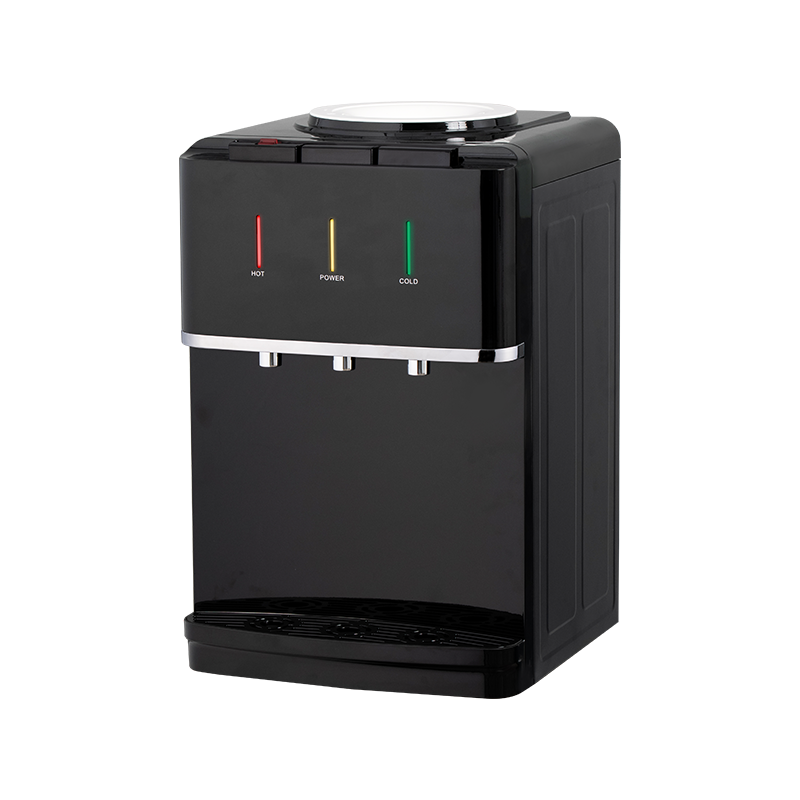 YR-2508T and YLR-2508T Hot-and-Cold Desktop Water DispensersCompact desktop models provide hot, room-temperature, and cold water; choose electronic refrigeration for quiet operation or compressor cooling for faster chilling and higher use.View Product →
A hot-and-cold desktop dispenser is a good example of a product where the cooling method should be matched to the room. If it sits beside a monitor in a small office, fan noise and heat rejection matter. If it sits in a busy reception area, recovery capacity matters more than compact size. The label “hot and cold” does not by itself tell you which cooling technology is inside or how many cups it can chill in an hour.
Why Cold Water Sometimes Takes So Long
Most complaints about weak cooling are not caused by a failed compressor. They come from expectations that do not match the heat load. A dispenser rated at a certain cooling capacity is tested under defined conditions, often a specific ambient temperature, inlet water temperature, and draw pattern. In real use, the incoming water may be warmer, the room may be hotter, the condenser may be partly blocked, and the cold tank may be emptied faster than the rated recovery allows.
Cooling capacity is often expressed as liters per hour at a specified temperature drop. That figure is not the same as “liters of cold water available instantly.” A unit rated at 2 liters per hour at a 20 K drop removes roughly 47 watts of heat from the water, ignoring losses. That is a small heat load compared with a busy kitchen. If five people draw one liter each in ten minutes, the tank may be emptied and refilled with room-temperature water before the compressor can recover. The first cup may be cold; the fifth may be cool.
First-fill time is another factor. When a dispenser is new, or after the tank has been drained for cleaning, the cold tank starts at room temperature. The compressor must chill the entire tank volume, not just the water drawn. A larger tank takes longer to reach its set point. A thermoelectric desktop unit may take several hours to reach its lowest temperature, and it may never reach it in a warm room. A compressor unit usually cools faster, but first-fill time still depends on tank size, compressor capacity, and insulation.
Condenser airflow is the most overlooked installation issue. Dispensers need clearance at the back and sides, and they should not be boxed into a closed cabinet. If the condenser cannot reject heat, the compressor runs longer and hotter, and the cold side loses performance. The same problem appears when dust and lint block the coil. A dispenser that worked well in a showroom may struggle in a carpeted office corner where the back is against a wall and the coil has not been cleaned in a year.
Thermostat differential and sensor placement also affect perception. If the thermostat allows a 3 K swing, the water may be 6°C after cycling and 9°C before restart. That is normal control behavior, not a fault. If the sensor is poorly placed or the tank stratifies, the thermostat may stop cooling before the whole tank is cold. A fast-cooling compressor design addresses this by matching compressor, evaporator, and tank geometry so heat is removed quickly and evenly. fast-cooling compressor water dispenser designs usually publish their test conditions, which is more useful than a vague claim of “ice-cold water.”
Top-Load, Bottom-Load, Desktop, and Under-Sink Layouts
Installation format changes where the bottle sits, how water reaches the cold tank, and how heat is rejected, but it does not change the basic refrigeration principle. A top-load dispenser uses gravity to feed water from the bottle into the tank. A bottom-load dispenser uses a pump to lift water from a bottle in the lower cabinet. A desktop unit packs the cooling system into a smaller shell. An under-sink unit separates the tap from a remote cooling unit, which may sit in a cabinet with its own ventilation requirements.
Top-load dispensers are simple and familiar, but the bottle must be lifted. That is a handling issue, not a cooling issue, although a poorly seated bottle can cause air ingestion and reduced water flow. Bottom-load dispensers remove the lifting task and often look cleaner in a reception area. The pump adds a mechanical component and a small amount of noise. The cold tank and refrigeration circuit still need ventilation, and the lower cabinet must not be treated as a sealed box.
Desktop dispensers have the smallest thermal mass and the least space for a condenser. A compressor desktop unit may be surprisingly capable, but it needs air gaps and should not be pushed against a wall. A thermoelectric desktop unit is quieter but slower. In both cases, the closer the unit is to a heat source, the harder it works. A desktop dispenser beside a printer or under a warm cabinet will perform differently from one on an open counter.
Under-sink systems move the cooling unit out of sight, which is attractive in design-led kitchens and offices. The trade-off is service access and ventilation. The cabinet must allow air movement, and the remote unit must be reachable for filter changes and coil cleaning. If the cabinet is tight, hot, and closed, the compressor may run continuously. A remote chiller is not automatically better than a freestanding dispenser; it simply moves the thermal problem to a different location.
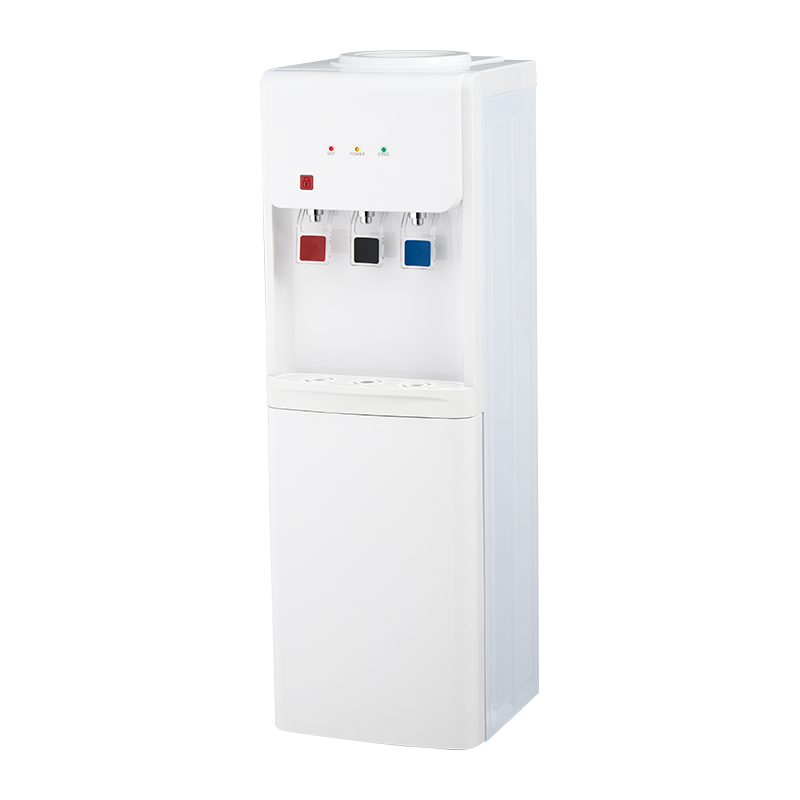
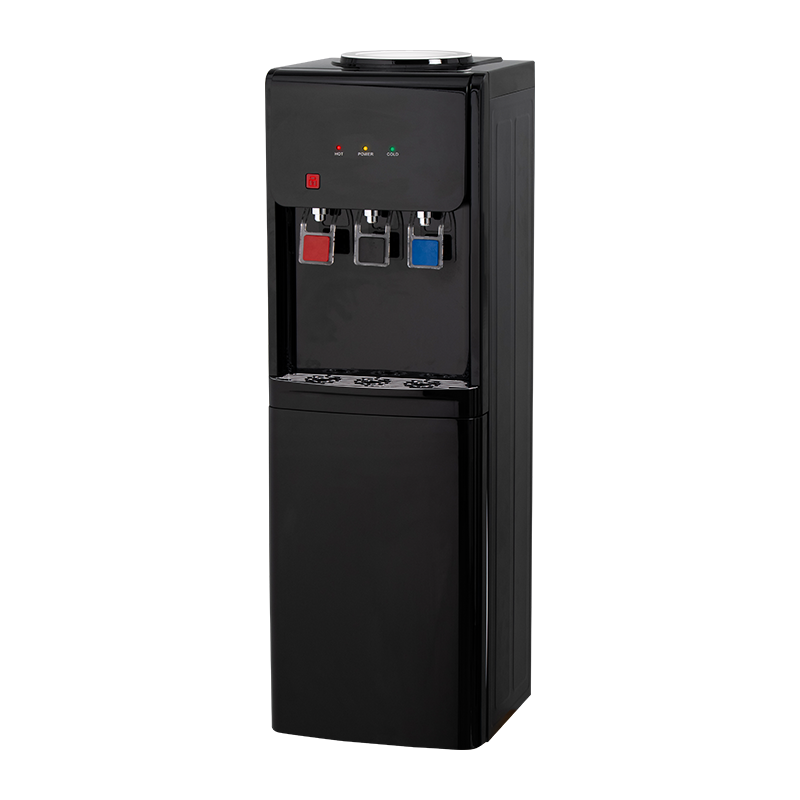
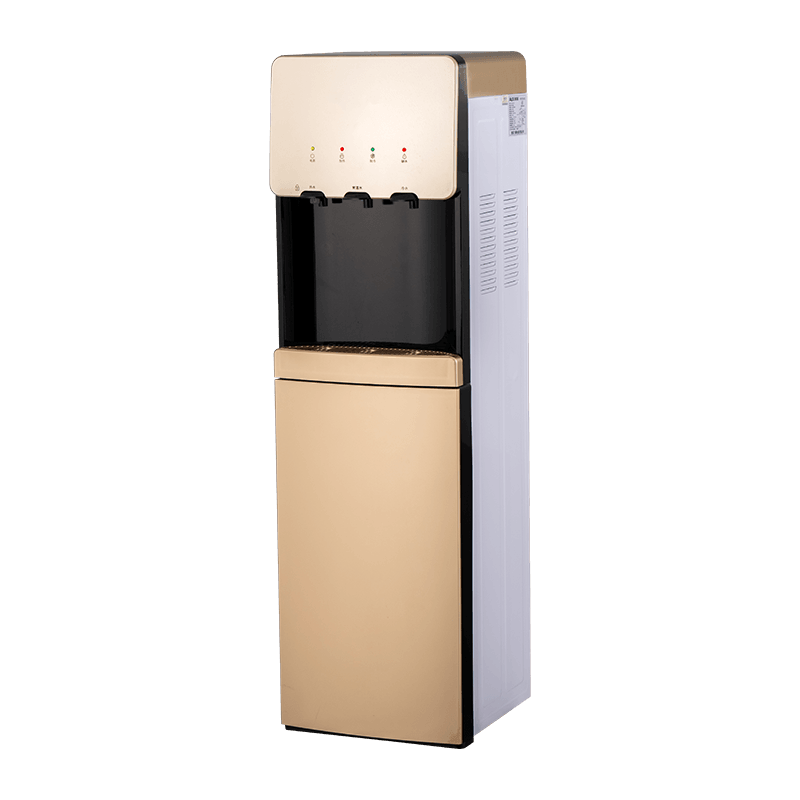
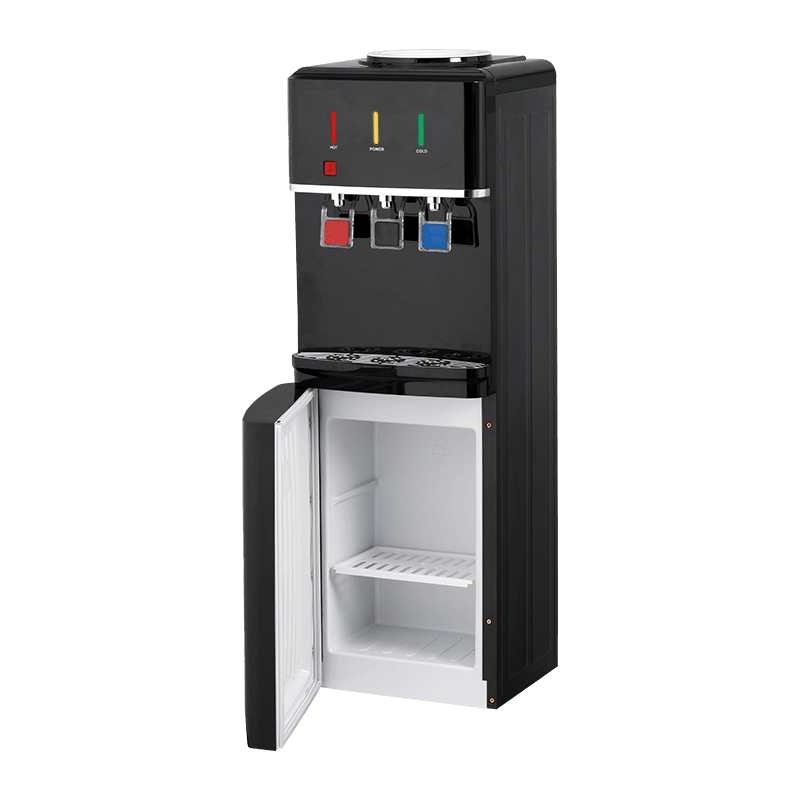
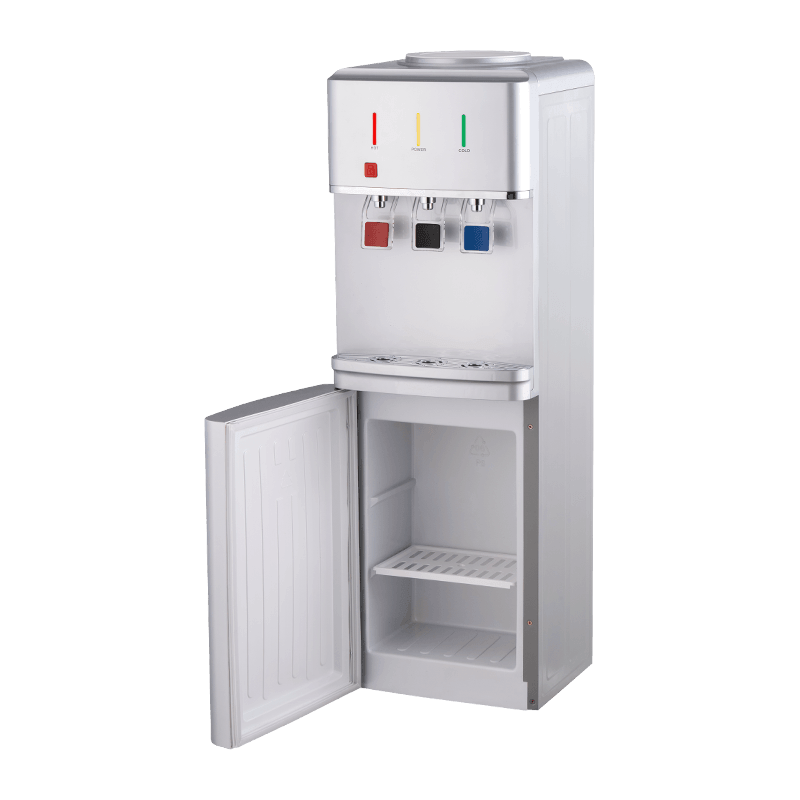
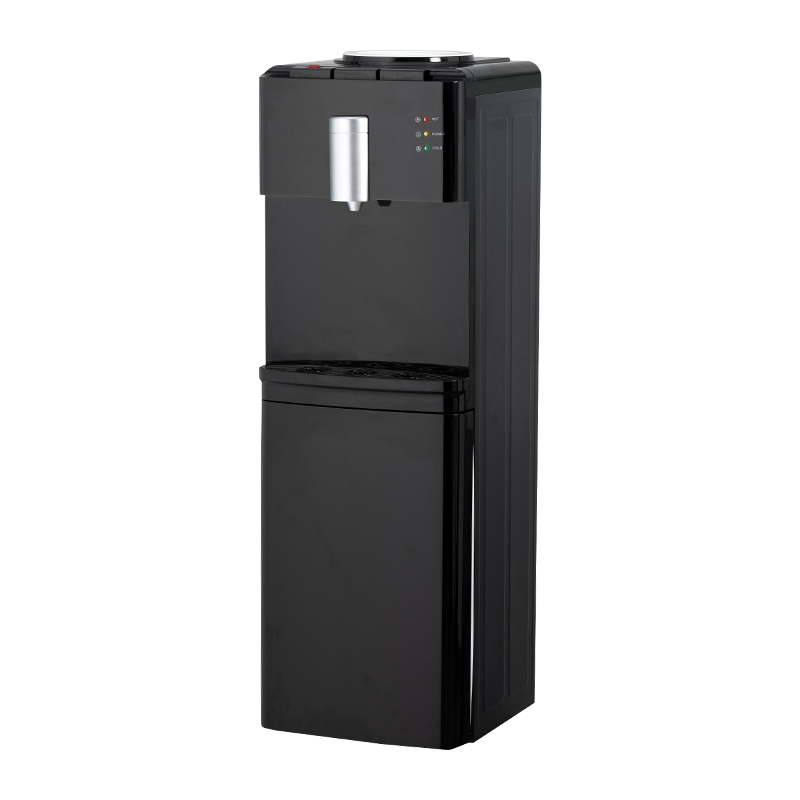 YR-2507, YLR-2507, and YLR-2507Y Refrigerable Vertical Water DispensersThree vertical models supply hot, room-temperature, and chilled water; compressor versions cool faster, while YLR-2507Y adds a freezer cabinet for extra storage.View Product →
A refrigerable vertical dispenser is a useful reference point because it combines a familiar floor-standing footprint with a dedicated cold circuit. The practical checks are still the same: cold tank volume, rated cooling capacity, required clearance, refrigerant type, noise level, and whether the thermostat holds a stable band under repeated draws. The color or cabinet style does not change the heat transfer physics.
What Buyers Should Check Before Specifying a Dispenser
Procurement teams often receive quotations that list “hot and cold” and little else. That is not enough to compare cooling performance. Ask for the cooling capacity in liters per hour at a stated temperature drop, the ambient temperature used for the rating, the cold tank volume, the achieved water temperature after a defined number of draws, and the recovery time. If the supplier cannot state the test conditions, the number is difficult to use.
Also check the refrigerant. Small dispensers may use R600a or R134a, depending on market and design. R600a is flammable in sufficient concentration, so the charge size, ventilation, and safety documentation matter. A sealed refrigeration system should be serviced only by trained personnel. Buyers should confirm that the refrigerant charge is marked, that the condenser is accessible for cleaning, and that the unit has the required electrical approvals for the destination market.
Water contact materials deserve equal attention. Cold tank and water line materials should be suitable for drinking water, resistant to corrosion, and cleanable. Stainless steel is common for cold tanks, but grade and weld quality matter. Plastic tanks can be acceptable if they are food-contact rated and properly molded, but they may have different thermal and cleaning characteristics. Filtration, if fitted, is separate from cooling. A filter does not make water colder, and a cold dispenser does not replace proper sanitizing.
Noise is another specification that is often ignored until installation. Compressor noise, fan noise, and pump noise are different. A bottom-load pump may add a short whine each time the tank refills. A condenser fan may run whenever the compressor runs. A thermoelectric unit may be almost silent except for its fan. Ask for a sound pressure level at a stated distance and operating condition, not just “quiet operation.”
| Field | What to ask for | Why it matters |
|---|---|---|
| Cooling capacity | Liters per hour at a stated temperature drop | Shows heat removal rate, not just tank size |
| Cold tank volume | Usable chilled water volume in liters | Determines first-draw capacity and recovery load |
| Temperature band | Set point and allowed swing, with ambient condition | Explains perceived coldness and compressor cycling |
| Recovery time | Time to return to set point after a defined draw | Predicts performance during breaks and meetings |
| Clearance | Minimum rear and side gaps for airflow | Prevents condenser overheating and short service life |
| Refrigerant | Type, charge, and safety documentation | Affects service, safety, and environmental compliance |
| Noise | Sound level at 1 m, compressor and fan separately if possible | Matters in offices, clinics, and quiet reception areas |
Operating Conditions That Change Real Performance
Ambient temperature is the largest external factor. A compressor dispenser rated at 25°C may lose capacity at 32°C because the condenser has to reject heat into hotter air. The compressor runs longer, the cold tank warms faster, and the delivered water temperature may rise. In a hot kitchen or a glass-walled office, a unit that performs well in a mild climate may feel underpowered.
Humidity matters less for water temperature but matters for condensation. A cold tank and cold water lines can sweat when room humidity is high. Drip trays and drainage should be checked. Moisture near electrical components is a safety issue, not just a cleaning annoyance. In damp climates, ventilation and drainage design deserve a place in the specification.
Inlet water temperature is another practical variable. Groundwater in summer may be warmer than in winter. A dispenser that recovers well with 20°C inlet water may struggle with 30°C inlet water because the tank receives more heat per refill. The rated capacity should state the inlet condition or at least the test standard. Without that, comparisons between models are incomplete.
Altitude affects air density and therefore air-cooled condenser performance. Lower air density reduces the mass of air flowing across the condenser for a given fan speed, which can reduce heat rejection. Boiling point changes matter for hot-water functions, but cold-water performance is mainly a heat-transfer and airflow issue. High-altitude optimized dispensers may adjust fan and control behavior, but the installation still needs clearance and clean coils.
Duty cycle is the final variable. A dispenser that serves two people a day and one that serves forty people a day are different thermal machines even if the cabinet looks the same. For high-traffic locations, specify recovery capacity and tank volume for the expected peak hour, not the average day. A large cold tank with a modest compressor may deliver a good first hour but recover poorly. A smaller tank with a strong compressor may recover faster but deliver less cold water at the start of a meeting.
Diagnosing Weak Cooling Without Guessing
When a dispenser stops delivering cold water, the safe approach is to separate water-side, air-side, control-side, and refrigerant-side causes. Water-side issues include no water in the cold tank, an air lock after bottle replacement, or a blocked inlet. Air-side issues include a dirty condenser, a failed fan, or restricted clearance. Control-side issues include a thermostat that is out of calibration, a sensor in the wrong position, or a control board that is not switching the compressor. Refrigerant-side issues include a leak, restriction, or incorrect charge.
Start with simple observations. Is the compressor running? Is the condenser fan running? Is the back of the unit warm? Is the cold tank actually full? Is the dispenser in direct sun or inside a closed cabinet? Has the condenser been cleaned since installation? A unit that runs continuously but never gets cold may have a refrigerant leak. A unit that clicks on and off rapidly may have a start component or control problem. A unit that is cold at first draw but warm after a few cups may simply be undersized for the traffic.
| Symptom | Likely area | First check |
|---|---|---|
| No cold water at all | Control, compressor, or refrigerant | Confirm power, thermostat setting, compressor operation, and tank water level |
| Cold at first draw, warm after several cups | Capacity or recovery | Compare draw volume with rated capacity and recovery time |
| Compressor runs continuously | Heat rejection or charge | Clean condenser, check fan, verify clearance, then call service |
| Water tastes or smells odd | Hygiene or water contact | Sanitize tank and lines, replace filter if fitted, check for stagnant water |
| Condensation or dripping | Humidity or drainage | Check drip tray, drain path, door seals, and room ventilation |
| Intermittent cooling | Thermostat or electrical | Check sensor placement, control settings, and compressor start components |
Maintenance That Preserves Cooling Performance
Cooling performance degrades quietly. A dispenser can still dispense water, still light up, and still sound normal while its condenser coil is half blocked and its cold tank is cycling more often than it should. Maintenance should therefore include thermal checks, not only cosmetic cleaning.
Clean the condenser coil according to the manufacturer’s instructions. Use a soft brush or vacuum suitable for the coil, and avoid bending fins. Check that the fan turns freely and that the rear clearance has not been blocked by boxes, files, or cleaning equipment. In offices, cleaning staff often push dispensers closer to the wall to save space; that can undo the cooling performance without anyone connecting the two events.
Sanitize the cold tank and water lines on the recommended schedule, especially after long idle periods. Use only approved cleaning agents and rinse thoroughly. Do not use abrasive pads on stainless steel tanks. Check the drip tray and drain path for standing water. Replace filters at the stated interval if the dispenser has filtration. A filter that is overdue may reduce flow and create stale-tasting water, but it will not usually change the refrigeration performance unless it causes the tank to run low.
Listen for changes. A compressor that becomes louder, a fan that scrapes, or a pump that cycles more often can be an early warning. Check for condensation around the cold tank or cabinet. If the unit has a sealed refrigerant system, do not attempt to add refrigerant without leak detection and proper recovery equipment. A refrigerant leak is both a performance problem and an environmental compliance issue. The correct repair is to find and fix the leak, evacuate, recharge to specification, and verify temperatures and pressures.
How to Write a Cold Water Performance Requirement
A good purchase specification turns a vague expectation into a testable requirement. Start with the usage pattern: peak number of users, cups per hour, preferred cup temperature, ambient temperature range, and whether the dispenser will be in a home, office, clinic, school, or commercial pantry. Then state the required cooling capacity and recovery time under those conditions.
Define the test method. For example, precondition the dispenser at a stated ambient temperature, fill the cold tank, allow it to stabilize, draw a stated volume at a stated interval, and record the water temperature after each draw. Then measure the time to return to the set point. If the supplier uses a different method, ask for the actual conditions and normalize the comparison. A claim of “cold water” without a test condition is not a performance specification.
Include acceptance tolerances. A reasonable purchase document may allow a small temperature tolerance and a recovery time tolerance, but it should state the sample size and the ambient conditions. For a first article inspection, test one unit fully and check a sample from the production lot. Record the cold tank volume, refrigerant charge, compressor model, thermostat set point, and condenser clearance. This gives maintenance teams a baseline for future service.
Also specify the water contact materials, cleaning access, filter compatibility, drainage, and electrical approvals. For export markets, confirm the plug, voltage, frequency, language of labels, and safety documentation. If the dispenser will be installed in a cabinet, state the minimum ventilation opening and the maximum allowable temperature rise inside the enclosure. The refrigeration system is only as good as the air path around it.
Finally, separate cooling requirements from hot-water and filtration requirements. A dispenser may have excellent hot-water performance and average cold-water recovery. It may have a high-flow filter and a small cold tank. Treat each function as a separate selection criterion. That avoids the common procurement error of buying a machine because it has many features, only to find that the cold tank cannot support the actual cup traffic.
How does a water dispenser make water cold? It moves heat out of the water through an evaporator, carries that heat to a condenser, and releases it into the room. The compressor, refrigerant, expansion device, cold tank, insulation, and thermostat form a system. Cold water is a balance of stored chilled volume and heat removal rate, not a single specification.
For buyers, the practical lesson is simple: look past the “hot and cold” label. Ask for the cooling capacity at a stated condition, the cold tank volume, the recovery time, the required clearance, and the refrigerant data. Check that the installation gives the condenser air and that maintenance includes coil cleaning and sanitation. A dispenser that is correctly sized and installed will deliver consistently cold water; one that is oversized in features but undersized in heat transfer will always feel like it is running out of cold.