English
 Español
 عربى
 中文简体


A cup filled at 9:05 a.m. is often 90–95°C, even if the dispenser stood idle all night. That is the first clue to how a water dispenser heats water: most units are not kettles with a trigger. They keep a small, insulated tank hot and reheat after each draw. Instant models use a different, higher-power path. The short answer is a resistive heating element, a thermostat, and a safety cutout. The practical answer for buyers is what those parts mean for recovery time, scaling, electrical load, and the temperature actually delivered at the tap.
The short answer: tank, element, thermostat
In a conventional hot-and-cold dispenser, water enters a hot tank through a float valve, inlet solenoid, or pump-fed line. The tank is normally stainless steel and insulated, with a usable hot volume of roughly 1–3 liters. An element immersed in the water, or clamped to the tank surface, converts electrical energy into heat. A thermostat or temperature sensor opens the circuit at the setpoint and closes it again when the water cools.
The setpoint is commonly 85–95°C, not a hard 100°C. That is deliberate. It gives tea and coffee a useful brewing temperature while limiting steam, pressure, and scale growth. The hot water is drawn from the top of the tank; cooler incoming water refills from the bottom, and natural stratification helps keep the draw temperature stable.
Inside the hot circuit
Tank and element
The hot tank is usually vented rather than pressurized. A 304 stainless tank is common; 316 stainless may be offered for aggressive water or longer service life. The element may be a sheathed immersion type or a band heater. Its wattage is the main determinant of recovery speed: a 500 W element is gentle on a shared plug circuit, while a 1,000 W or higher element recovers faster but needs a supply that can carry the load.
Thermostat and thermal cutout
A bimetallic thermostat is simple and robust; an NTC sensor with electronic control gives tighter tolerance. Either way, the control has hysteresis, often 5–10°C, so the element does not switch on and off every few seconds. A separate thermal fuse or cutout is the safety backstop. If the thermostat sticks closed or the tank runs dry, the cutout opens before steam pressure or element temperature becomes dangerous.
Vent, expansion, and faucet
Water expands as it heats. An open vent or expansion chamber gives that volume somewhere to go and allows steam to escape. The faucet or tap valve is downstream of the hot tank, so opening it releases hot water while the inlet refills the tank. That refill is why the second or third cup in a busy meeting can be cooler than the first: cold water has entered the tank and the element is already working to recover.
The heating cycle, step by step
- Water enters the hot tank from a bottle, mains line, or pump-fed supply.
- The tank fills to a controlled level through a float valve or level sensor.
- The element heats the water toward the thermostat setpoint.
- The thermostat opens at the setpoint; the element cycles off until the water cools.
- Hot water is drawn at the tap, cold water refills the tank, and the cycle repeats.
This is why a dispenser can deliver hot water within seconds after an idle night but may need several minutes to recover after a liter is drawn. The difference is not the tap; it is the stored hot volume and the wattage available to replace the heat that left the tank.
Tank vs on-demand: what changes at the counter
A stored-tank unit wins on temperature stability and low peak electrical demand. An on-demand heater wins on standby energy and cabinet size because it has no hot reservoir to keep warm. Neither is automatically better. The choice depends on peak draw, circuit capacity, and how much space sits behind the faucet.
| Design | Heat delivery | Typical hot temperature | Strength | Watch-out |
|---|---|---|---|---|
| Stored hot tank | Element heats a 1–3 L insulated tank; thermostat cycles | 85–95°C | Stable temperature, lower peak power | Recovery time and standby loss |
| On-demand heater | Water passes a heated block or coil; flow and power are controlled | 90–95°C, sometimes higher | No standby tank; compact | 2–3 kW circuit and careful flow control |
| High-altitude version | Same tank or heater, with adjusted setpoint and venting | Below local boiling point | Avoids false boiling and excess steam | Site-specific commissioning |
For tea stations and meeting rooms with frequent draws, an on-demand design such as a fast-heating instant tea station can reduce waiting between cups, but it should be matched to a circuit that can carry the peak load.
Why the water is usually 90–95°C, not a rolling boil
At sea level, water boils at 100°C. At 2,000 m it boils at about 93°C; at 3,000 m it is close to 90°C. A dispenser set to 95°C at sea level is already near boiling, and at altitude it may boil inside the tank. Steam needs to be vented, and a vigorously boiling tank wastes energy and accelerates scale. That is why many designs hold hot water below a rolling boil and why a high-altitude optimized dispenser may use a lower setpoint and different venting. The temperature on the label is not always the temperature at the tap after a long draw; recovery and inlet temperature matter just as much.
Recovery time, wattage, and the number buyers miss
The label may say 500 W or 800 W, but the number that matters is recovery: how many minutes the unit needs to return to setpoint after a 1 L draw at a stated inlet temperature. Heating 1 L from 20°C to 90°C requires about 0.08 kWh. At 500 W, the ideal time is roughly 10 minutes; losses, scale, and control tolerance push it higher. A smaller tank with higher wattage can recover faster than a larger tank with lower wattage.
Scaling is the hidden derate. Calcium carbonate on the element acts as insulation, so the element surface runs hotter, recovery lengthens, and the safety cutout may trip earlier. In hard water, specify accessible elements, descaling instructions, or scale-control measures. Ask for recovery at both 15°C and 25°C inlet water, because winter supply temperature changes real-world performance.
Home and office: match tank size to draw pattern
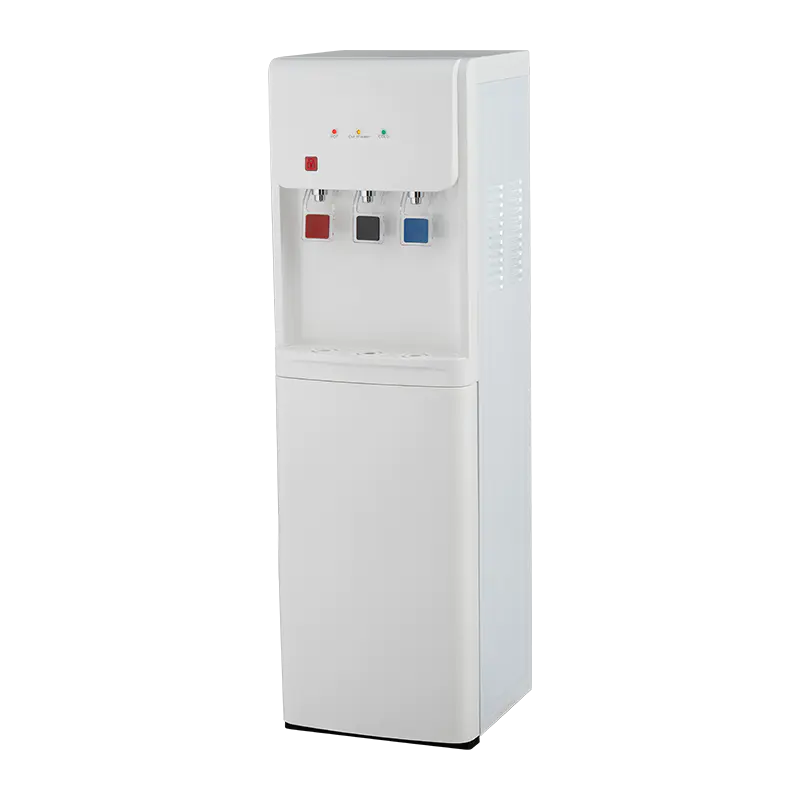
A four-person office drawing ten cups before 10 a.m. needs recovery more than a large tank. A household with two morning cups can use a smaller reservoir. Bottom-load and top-load designs change lifting and storage, not the heating principle; under-counter units save counter space but still need ventilation. For a hot, cold, and normal-temperature vertical unit, check hot-tank volume, element wattage, and whether the thermostat is mechanical or electronic.
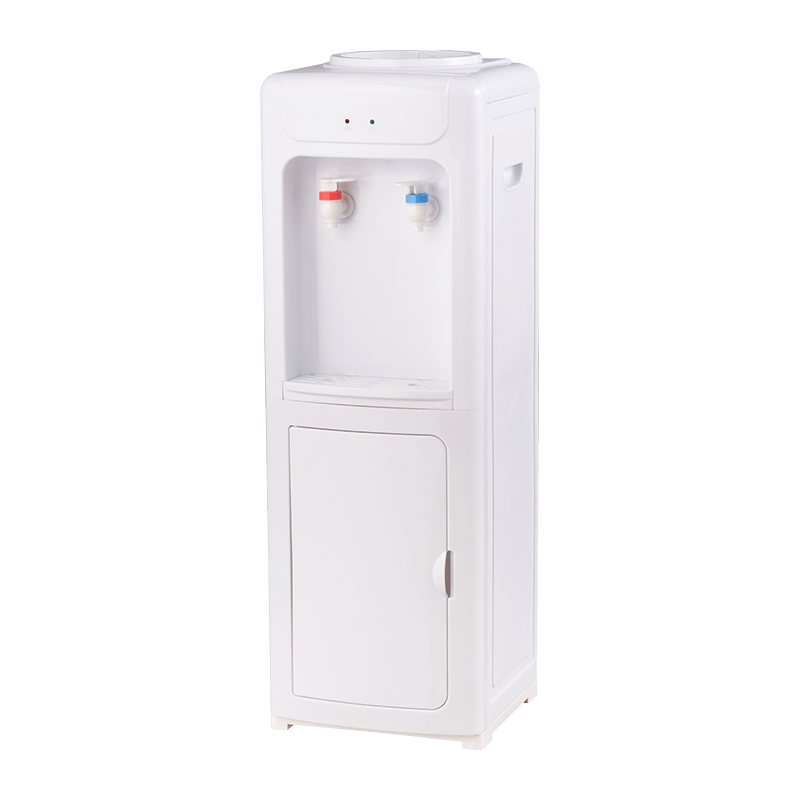
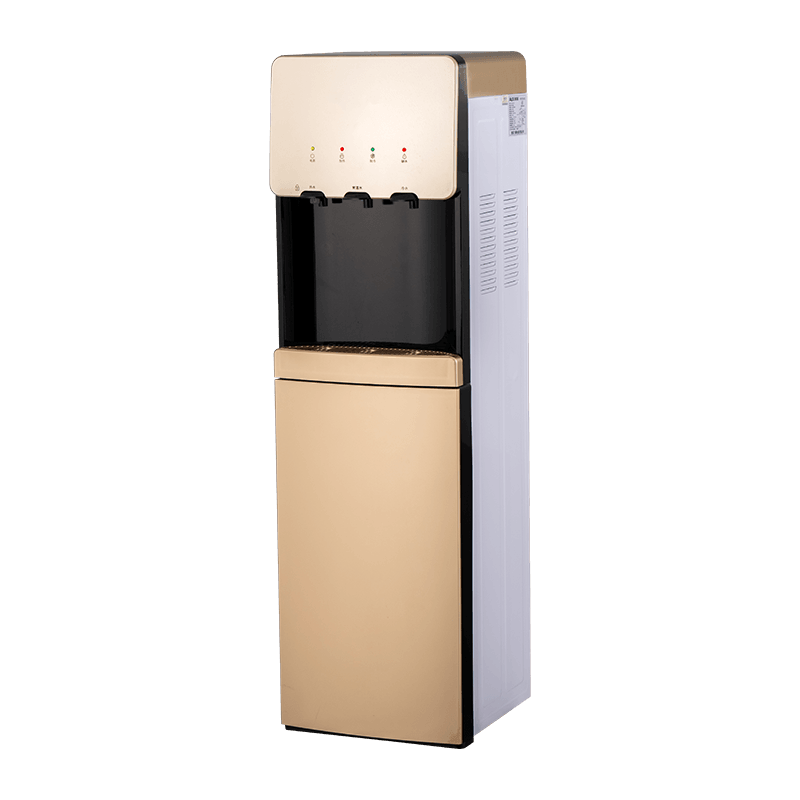
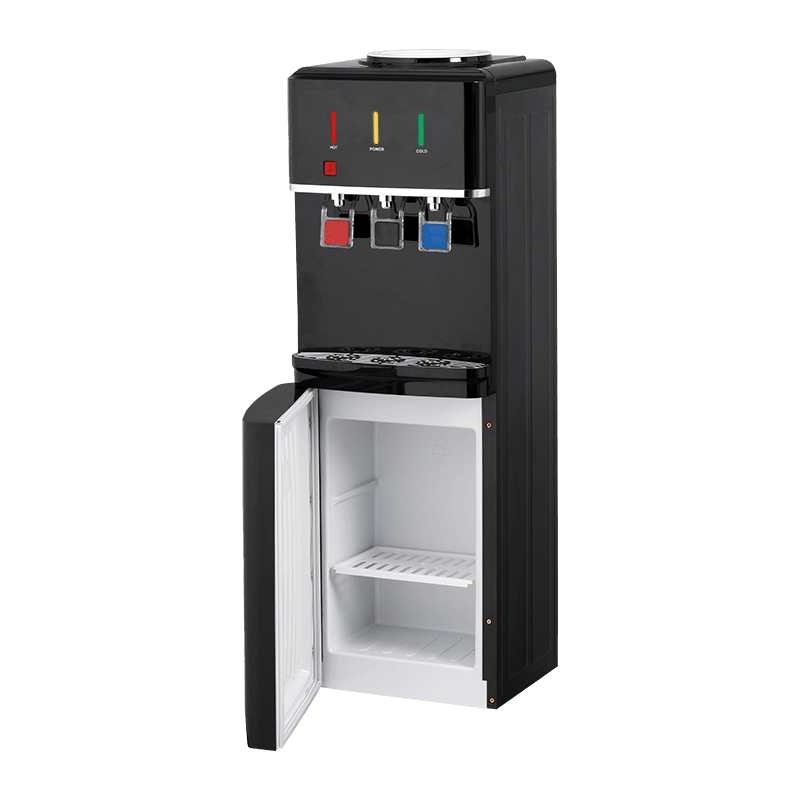
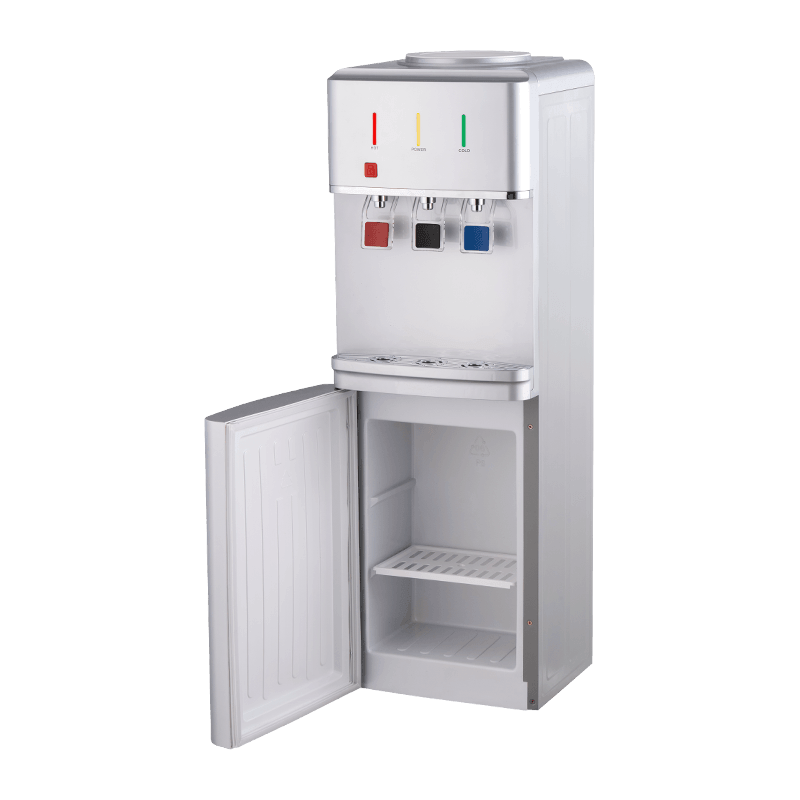
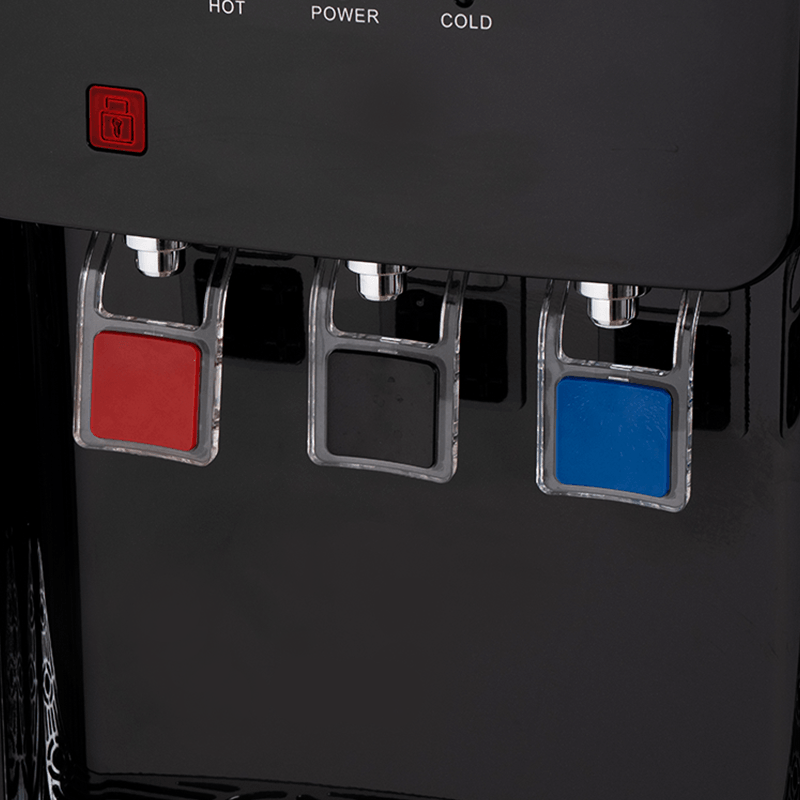 YR-2506 Series Vertical Hot/Cold/Normal Water DispenserCompare three freestanding models with 550W heating, electronic or compressor cooling, and optional freezer storage for different cold-water demands.View Product →
Color and finish are visible, but the specification sheet is where the heating performance sits. A unit with a 1.5 L hot tank and a 500 W element is not the same as a 1 L tank with 800 W, even if both look similar on the showroom floor.
Countertop and under-counter choices
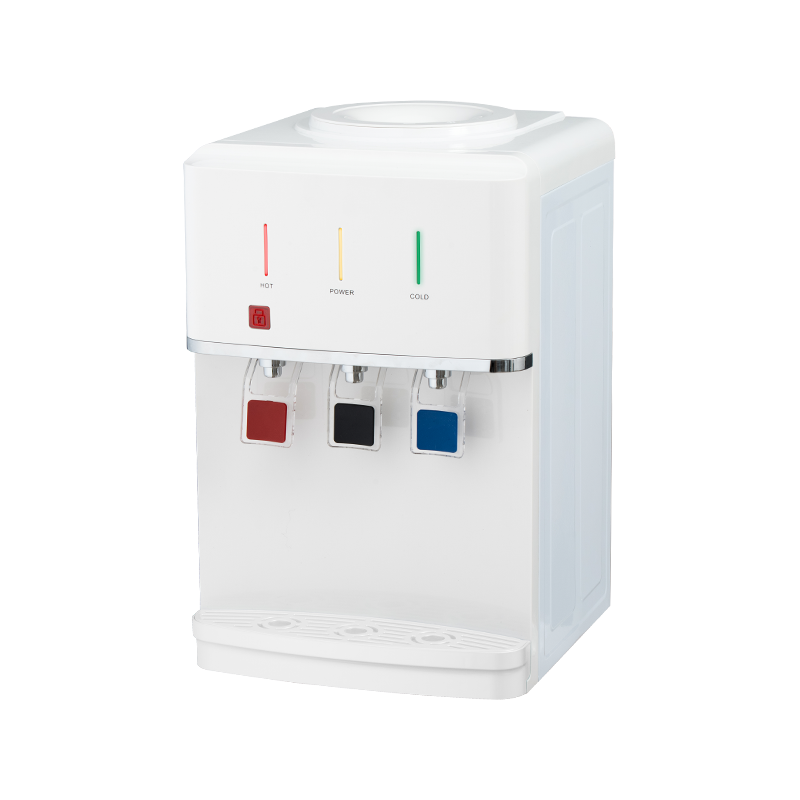
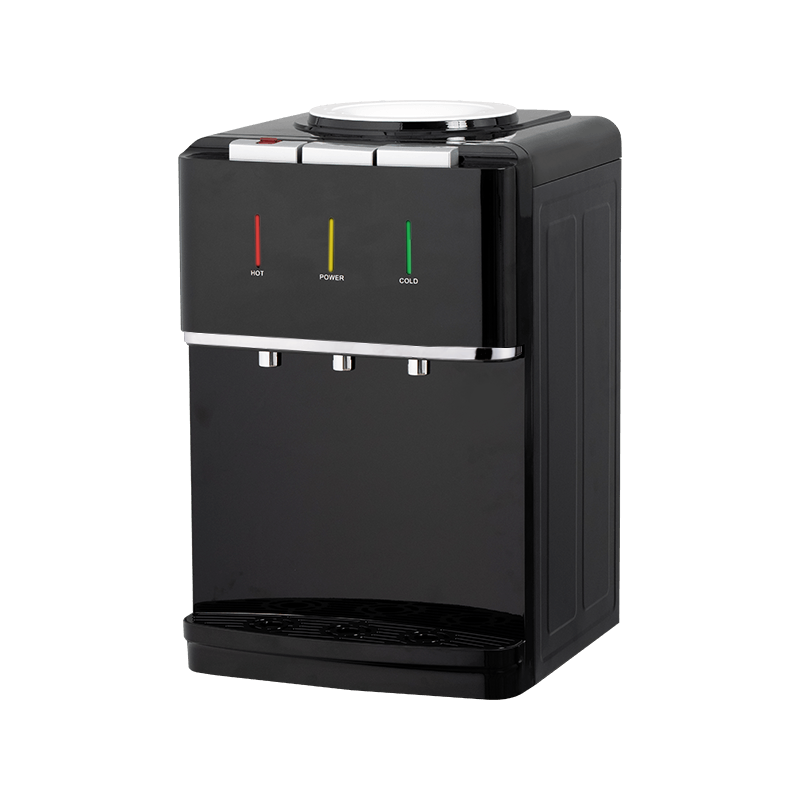
Countertop dispensers are simple to place but occupy work surface. Under-counter models free the counter and hide the bottle, but they need clearance for service and airflow. Both can use the same stored-tank heating logic. If the tap is used for tea, soup, or instant noodles, recovery and delivered temperature matter more than the number of decorative finishes.
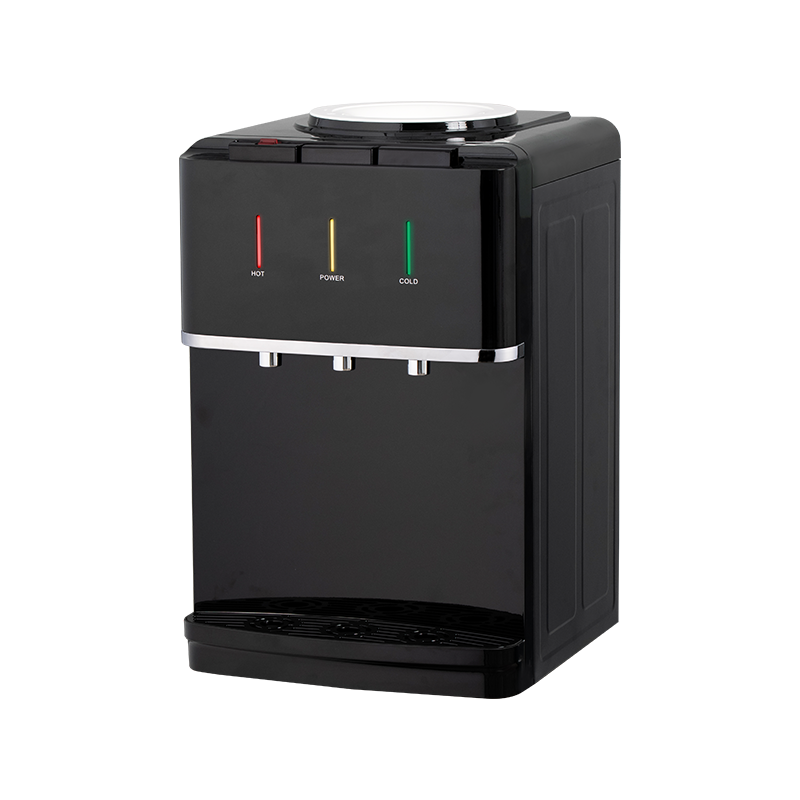
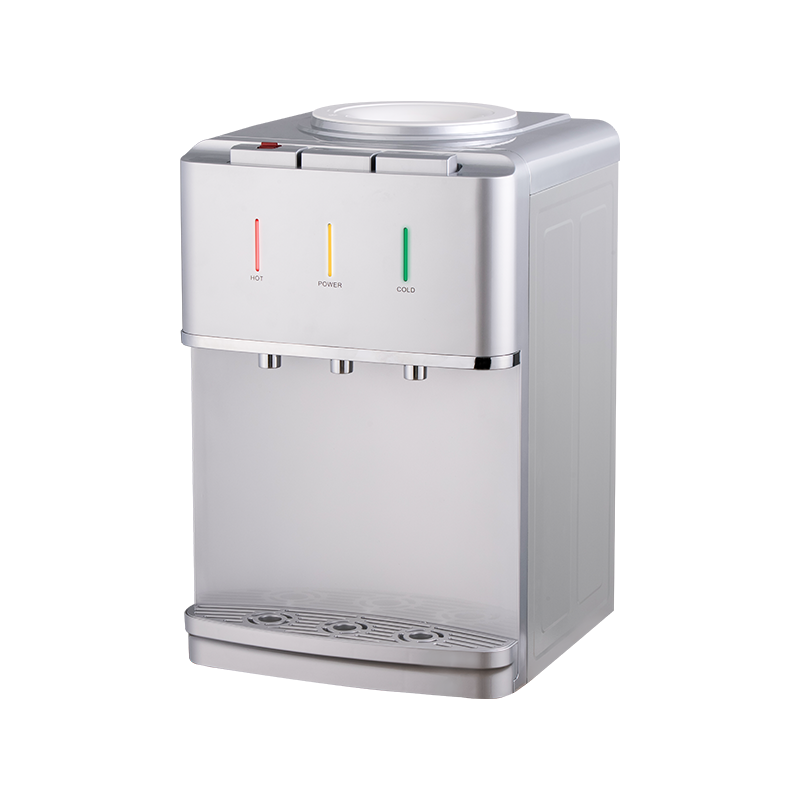
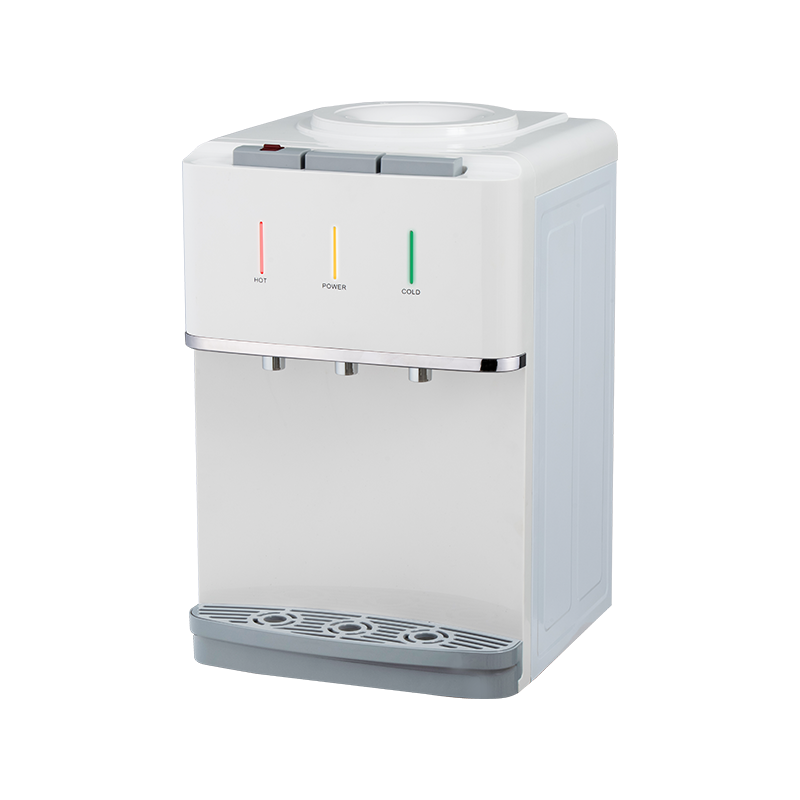
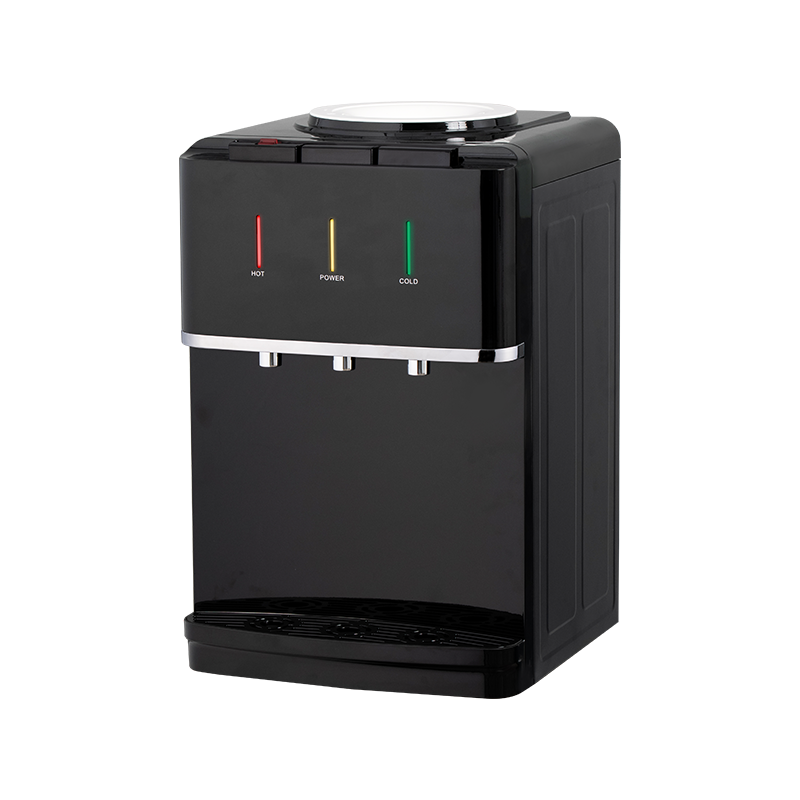 YR-2508T/YLR-2508T Black Desktop Hot and Cold DispenserFor countertop placement, compare two compact models with 5L/H hot water and electronic or compressor cooling for cold supply.View Product →
For office bottom-mounted units, the bottle sits below the cabinet, so the pump or inlet system must be reliable and the hot tank must still be accessible for service. The heating element is usually the same family of part; the difference is how water reaches it and how easily a technician can descale or replace it.
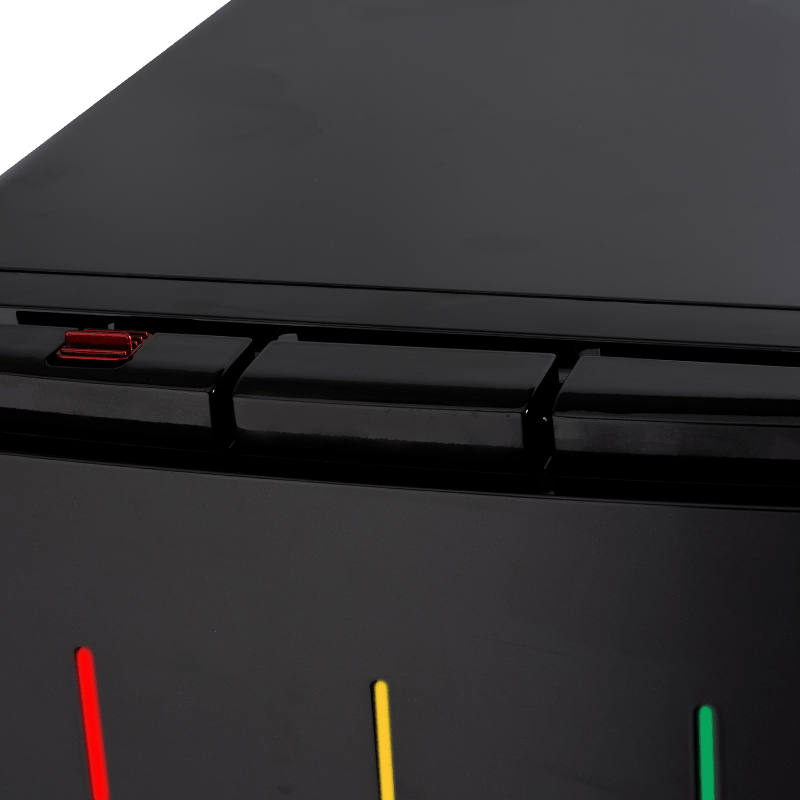 YX-2508/YLX-2508 Office Bottom-Mounted Hot and Cold DispenserBottom-loading office dispenser supplies hot, room-temperature, and cold water; compare electronic versus compressor cooling and hot-tank service access.View Product →
Procurement checklist for distributors and facilities teams
- Hot-tank volume and material, including whether 304 or 316 stainless is offered.
- Element wattage and recovery time at a stated inlet temperature.
- Setpoint, control hysteresis, and whether an altitude-adjusted version is available.
- Standby power and insulation, especially for units that run all day.
- Safety features: thermal cutout, dry-boil protection, child lock, and leak protection.
- Scale management, element access, and spare-parts availability.
- Electrical requirement: shared plug load for a tank, dedicated circuit for a high-wattage on-demand heater.
The practical takeaway
A water dispenser heats water by resistance, stores it in a hot tank, and controls it with a thermostat and safety cutout. Most units deliver 90–95°C rather than a rolling boil, and instant models replace the tank with a higher-wattage heater and flow control. For buyers, recovery time, water hardness, circuit capacity, and altitude matter more than the temperature printed on the sticker. Match the heating design to the peak draw at the tap, and the cup at 9:05 a.m. will be hot for the reason you expect.