English
 Español
 عربى
 中文简体


A dispenser that needs 25 minutes to chill its first tank is not necessarily faulty. That recovery time usually points to the cooling circuit, the cold-tank volume, the insulation around it, and the room temperature. The useful question is not simply whether a unit has a compressor, but how it moves heat out of the water and how well it holds the result.
Short answer: a water dispenser cools water by transferring heat out of an insulated cold tank. Most floor-standing and bottom-loading models use a vapor-compression circuit, the same basic process as a refrigerator. Compact or quiet desktop models may use a thermoelectric module. A compressor system is faster and more efficient at larger volumes; a thermoelectric system is simpler and quieter but slower.
The short answer: heat is moved, not created
Cooling is not the addition of cold. It is the removal of heat. In a dispenser, water sits in a cold tank, usually stainless steel and surrounded by foam insulation. A cooling element draws heat from that tank and releases it into the room. The two common ways to do that are a compressor circuit and a Peltier module. The cold tank, thermostat, and insulation determine how much of that cooling reaches the water and how long it stays there.
This is why two dispensers with the same claimed cold-water temperature can behave very differently. One may chill 2 liters quickly but struggle to refill a busy office. Another may hold a large tank steadily but take longer to recover after several draws. The cooling method, tank size, and control strategy matter together.
Inside a compressor-cooled dispenser
A compressor dispenser uses four main parts: compressor, condenser, expansion device, and evaporator. The refrigerant circulates in a closed loop. The compressor raises the pressure and temperature of the refrigerant gas. That hot gas passes through the condenser, usually a coil at the back or side of the cabinet, where a fan moves room air across it and carries heat away. The refrigerant then passes through a capillary tube or expansion valve, which drops its pressure and temperature sharply. The cold refrigerant enters the evaporator, which is wrapped around or immersed in the cold tank. Heat from the water passes into the refrigerant, cooling the water. The refrigerant returns to the compressor and the cycle repeats.
The evaporator does not sit directly in the drinking water in most designs. It is separated by a metal wall, often the stainless steel tank surface or a coil around the tank. That separation matters for hygiene and serviceability. A thermostat or thermistor monitors the cold-tank temperature and switches the compressor on and off. A typical cold setting is around 5-10 C, though actual delivery temperature depends on tank size, draw rate, and ambient conditions.
Compressor systems are efficient at moving large heat loads. That is why they appear in office coolers, bottom-loading dispensers, and commercial units with high daily demand. A fast-cooling compressor model can shorten the first-chill and recovery cycle, but it still depends on condenser airflow and tank insulation. For buyers comparing systems, the relevant check is cooling capacity in liters per hour and recovery time after a measured draw, not just compressor wattage.
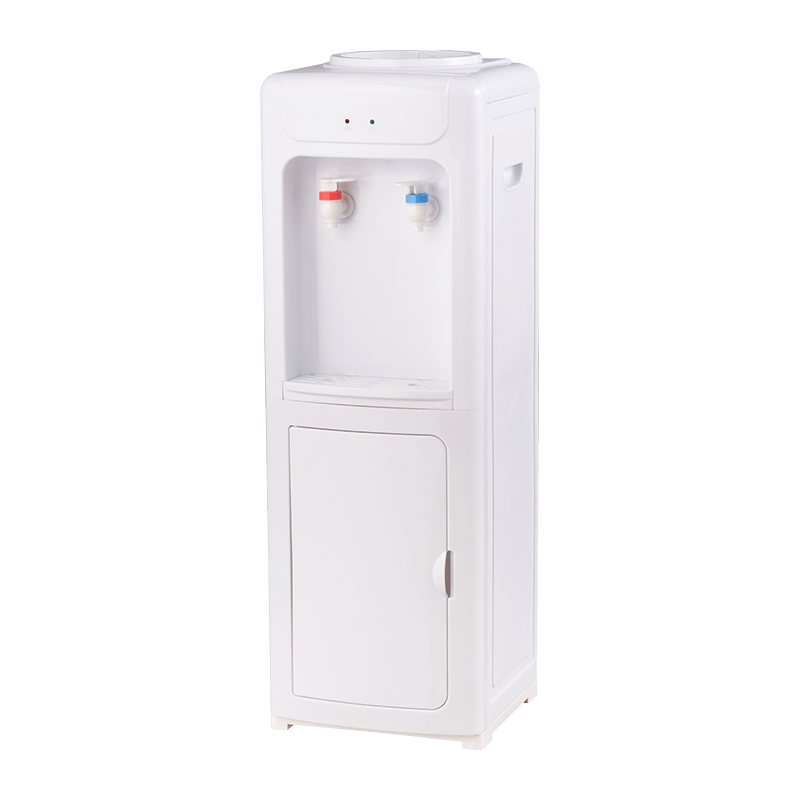
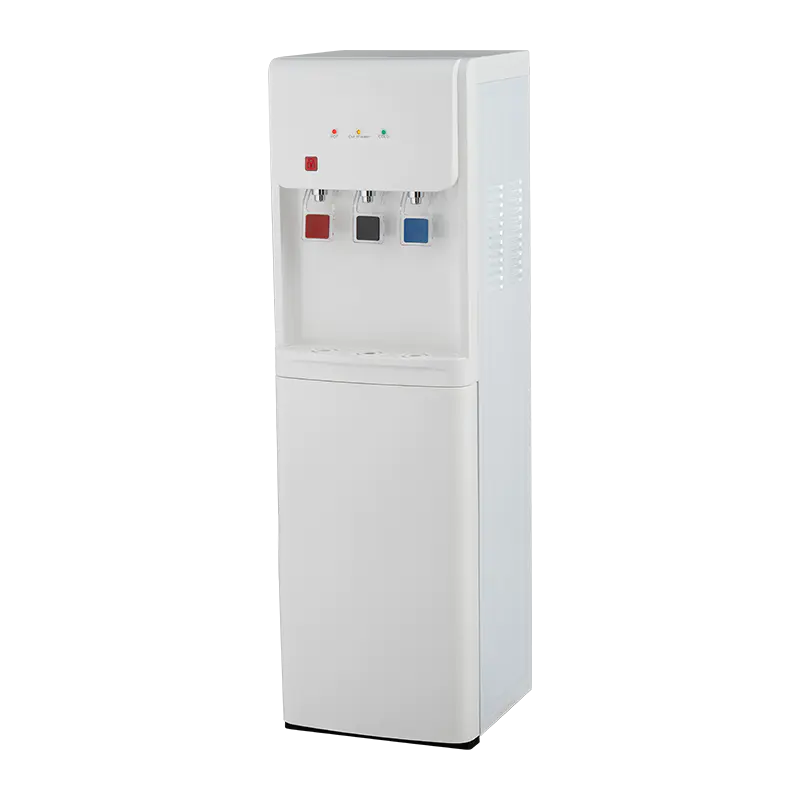
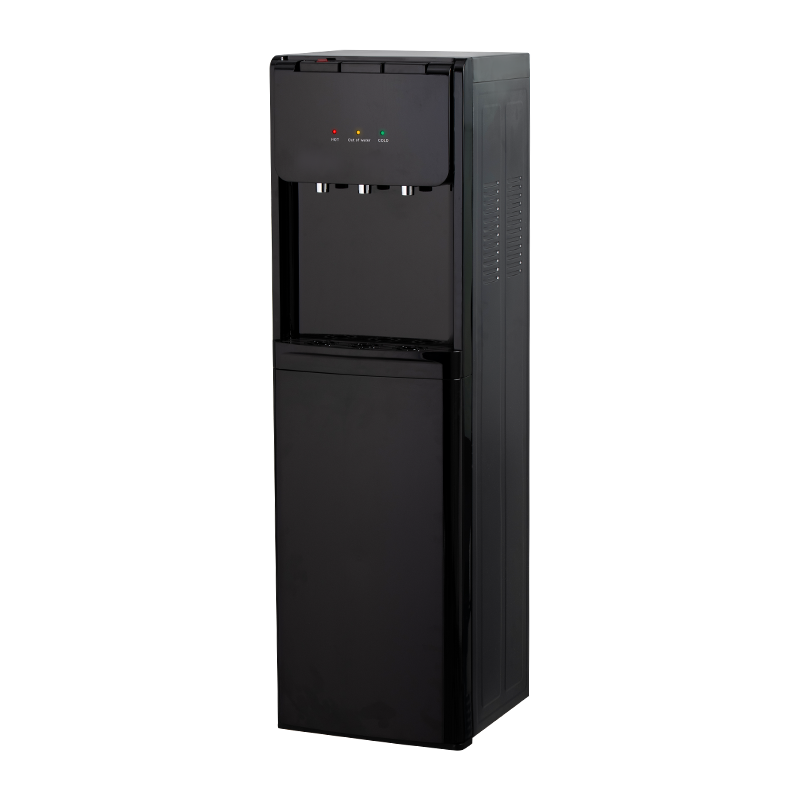 YX-2505/YLX-2505 Bottom-Mounted Refrigerated Water DispenserCompare the electronic YX-2505 and compressor YLX-2505 models; the bottom-load layout and stated cooling capacities help match airflow and recovery needs.View Product →
Units in this class often pair a bottom-mounted bottle with a refrigerated cabinet. The bottom-load layout keeps the bottle out of the top-heavy position and can make bottle changes easier, but it also affects cabinet airflow and service access. Check that the condenser is not blocked by the bottle compartment and that the fan has clear space.
What the cold tank and thermostat do
The cold tank is the buffer between the cooling circuit and the tap. It stores chilled water, so the dispenser does not need to chill water on demand at the exact moment someone draws a cup. A larger tank gives more immediate cold-water volume but takes longer to chill from start-up. A smaller tank recovers faster but may run out during a lunch break or meeting. Insulation quality decides how much cold is lost through the tank walls when the compressor is off.
Thermostat control also shapes performance. A simple on/off thermostat allows a temperature band: the compressor starts at the upper limit and stops at the lower limit. A narrow band keeps water more consistent but cycles the compressor more often. A wide band saves energy but produces more temperature swing. In offices, the difference shows up when several people draw water in a short period. The tank may still feel cold, but the delivered temperature rises if the compressor cannot keep up.
Cold-tank design is a major reason two similar-looking dispensers perform differently. A high-efficiency cold tank uses effective surface contact, good insulation, and a thermostat position that senses the water rather than the air. If the sensor is poorly placed, the compressor may stop too early and leave the tank warmer than the display suggests. A dispenser built around a high-efficiency cold tank is easier to match to a draw pattern because the tank, insulation, and cooling surface are designed as one system. Ask for the cold-tank volume, cooling capacity, and recovery time at a stated ambient temperature. Those three figures are more useful than a generic ice-cold claim.
Thermoelectric cooling: quieter, smaller, slower
A thermoelectric dispenser uses a Peltier module. When current passes through the module, one side becomes cold and the other becomes hot. The cold side pulls heat from the water tank; a heat sink and fan on the hot side release that heat into the room. There is no compressor, no refrigerant loop, and no moving parts except the fan. That makes the system compact and often quieter, which suits desktop units, small offices, and bedrooms.
The trade-off is capacity. Thermoelectric modules move less heat per unit time than a compressor circuit, so they chill a smaller volume more slowly. They are also sensitive to room temperature: a hot room makes the hot side hotter and reduces the temperature difference the module can maintain. In practice, a thermoelectric dispenser is best for low-to-moderate draw rates, where the user wants a few cups at a time and values quiet operation or a small footprint more than rapid recovery.
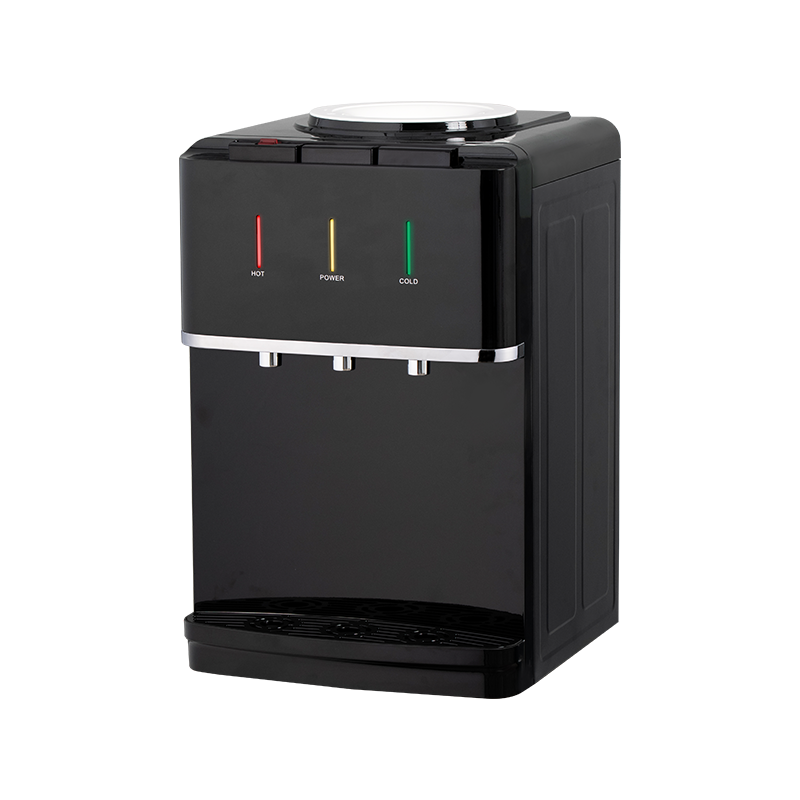
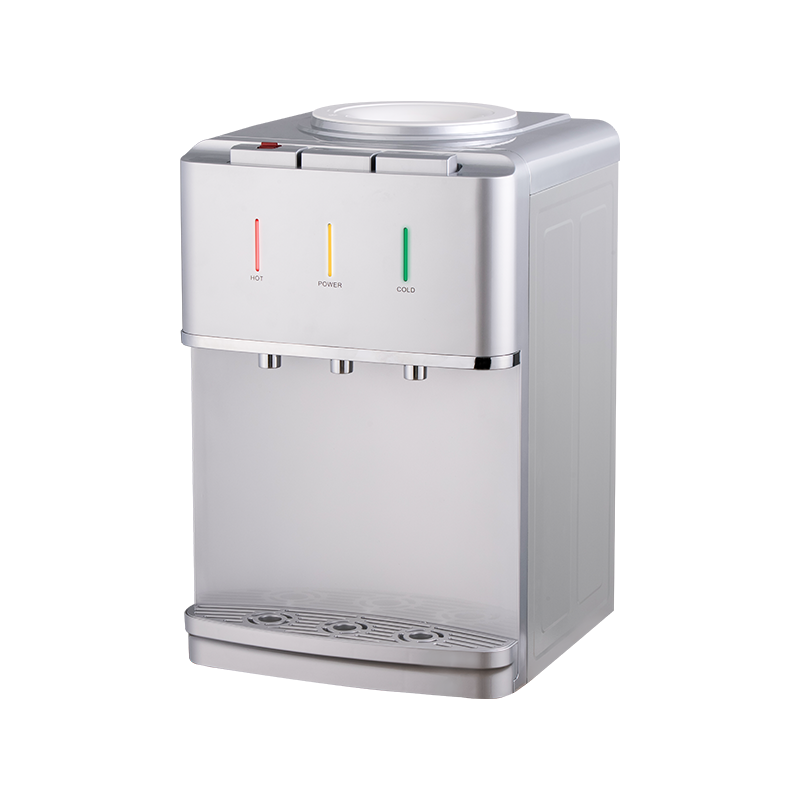
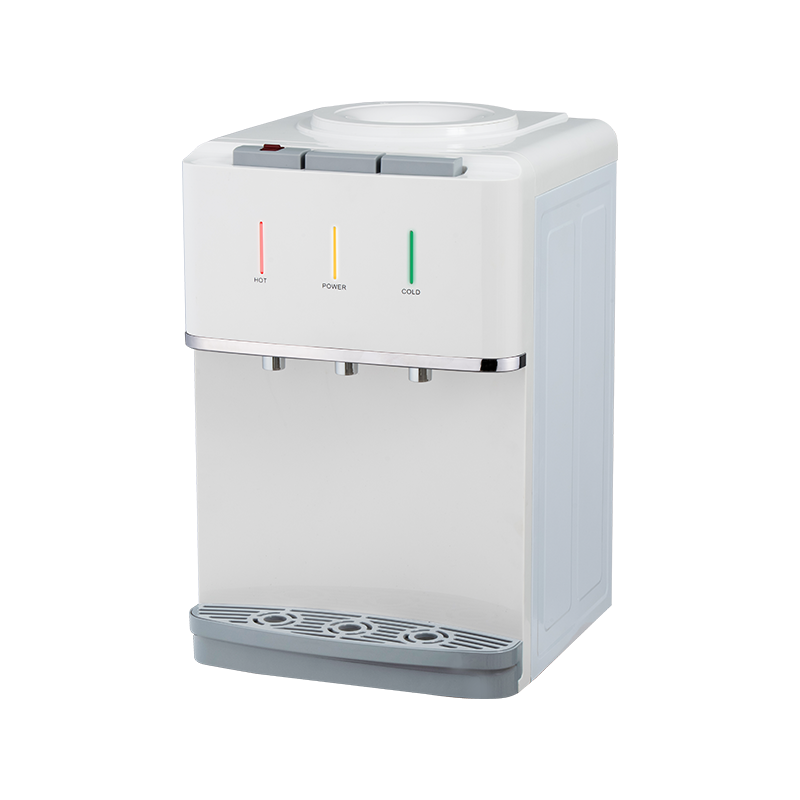
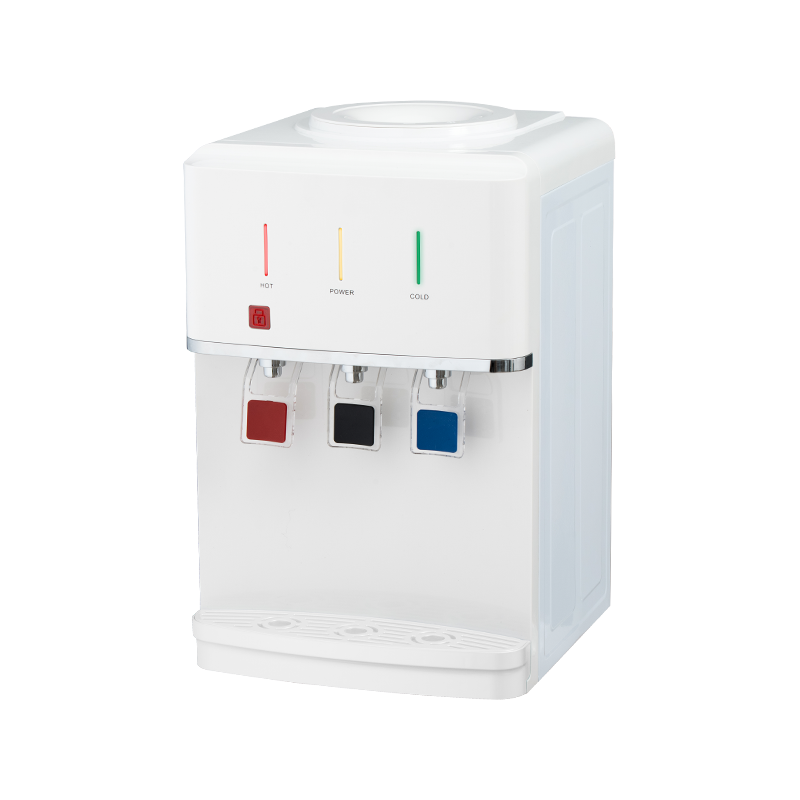
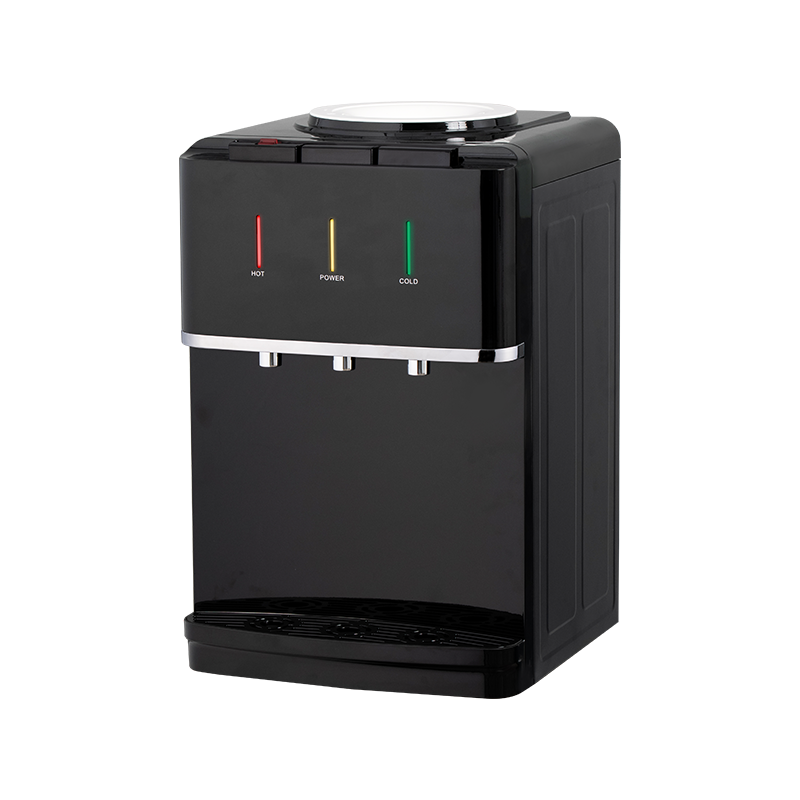 YR-2508T/YLR-2508T Hot and Cold Desktop DispenserCompact desktop choice with electronic or compressor cooling, suited to low-to-moderate draws where quiet operation and a small footprint matter more than rapid recovery.View Product →
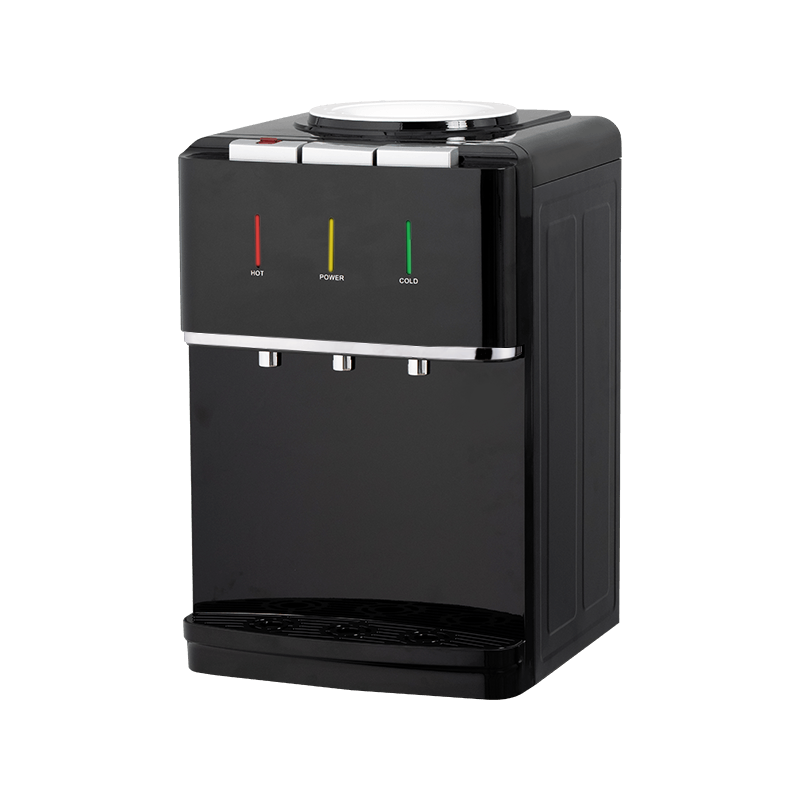
Desktop hot-and-cold models illustrate the point. They fit on a counter or side table, but the cold tank is small. If four people fill bottles in a row, the next cup may be less cold until the module catches up. That is normal for the category, not a defect. Buyers should match the cooling technology to the draw pattern rather than assume every dispenser will perform like a full-size compressor cooler.
Compressor vs thermoelectric: what the difference means in use
The table below is a practical comparison, not a ranking. A compressor system is usually the better choice for high volume and fast recovery. A thermoelectric system is often the better choice for small spaces, low noise, and light use. The right answer depends on how many people draw water, how cold they expect it, and how much space the cabinet can give to airflow.
| Feature | Compressor system | Thermoelectric system |
|---|---|---|
| Cooling capacity | Typically 2-20 L/h or more, depending on model class | Typically under 2 L/h |
| Recovery after several draws | Faster at larger volumes | Slower; best for light use |
| Noise | Compressor and fan noise; low-noise designs reduce it | Mostly fan noise; often quieter |
| Energy use at high volume | Generally more efficient per liter chilled | Less efficient as volume rises |
| Best fit | Offices, commercial spaces, family kitchens | Desktops, small offices, bedrooms, low draw |
Capacity, recovery time, and the numbers buyers should compare
Cooling capacity is usually stated in liters per hour. It describes how much water the system can chill over time under test conditions. Cold-water output is the volume available at a useful temperature in one draw. Recovery time is how long the dispenser needs to return to its set temperature after that volume is removed. A home model may offer 2-4 L/h, while an office or commercial model may reach 8-20 L/h or more. These are broad ranges; the model data sheet should give the actual figure.
Ambient temperature changes the result. A dispenser rated at 25 C room temperature will recover more slowly at 32 C, especially if the condenser is against a wall or inside a closed cabinet. Ventilation clearance matters. Most manufacturers specify 10-15 cm around the cabinet, and more in tight joinery. Dust on the condenser fins acts like insulation on the heat-rejection side, so a unit that performed well in its first year can become slow and noisy if the coil is never cleaned.
For office or commercial use, compare recovery time at the busiest hour rather than average daily consumption. A 20-person office may draw 30 cups in a short morning window. If each cup is 250 ml, that is 7.5 L in a short period, which can exceed a small cold tank even if the daily total looks modest. A high-capacity model with a larger tank and stronger compressor is a better fit than a desktop unit with a small thermoelectric module.
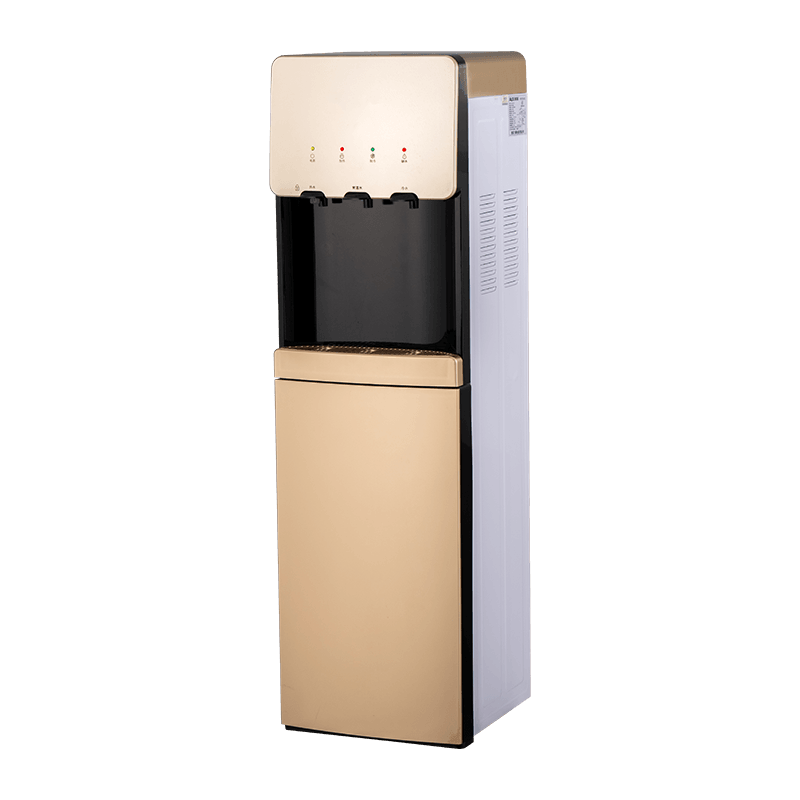
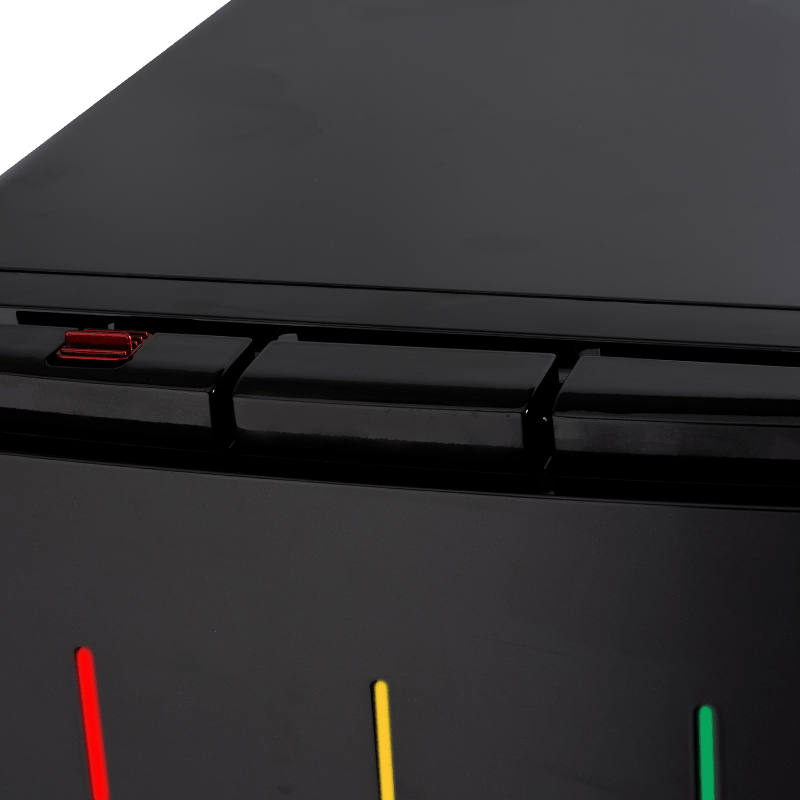 YX-2508/YLX-2508 Office Bottom-Mounted Water DispenserFor busy office draws, compare electronic YX-2508 with compressor YLX-2508; the bottom-loading design and stated cooling capacity support higher-demand recovery checks.View Product →
Office bottom-mounted dispensers often combine a larger cold tank with a cabinet layout that keeps the bottle below the cooling section. Check the stated cooling capacity and whether the condenser air path remains open when the bottle is installed. A design that recirculates warm air inside the cabinet will lose recovery speed no matter how large the compressor is.
Installation and maintenance details that affect cooling
Placement is part of cooling performance. A dispenser in direct sun, next to an oven, or in a closed cabinet works harder. The condenser must reject heat to the room, so the room needs some air movement. In a pantry or under-counter installation, confirm that the louvered area is not blocked and that the fan exhaust does not blow into a dead space. If the unit is built into joinery, leave a service gap for coil cleaning and fan replacement.
Water quality affects the cold tank and evaporator surface. Hard water can leave scale on the tank wall, which adds a barrier between the water and the cooling surface. Scale also creates places for biofilm if cleaning is irregular. Follow the manufacturer’s descaling interval, and do not use abrasive cleaners on a stainless steel tank. A self-cleaning or UV feature can help with microbial control, but it does not replace periodic manual cleaning of the tank and tap area.
Listen for change. A compressor that starts normally and then becomes louder or cycles more often may have a dirty condenser, a failing fan, or a thermostat issue. A thermoelectric unit that runs continuously without chilling may have a failing module or a blocked hot-side heat sink. In both cases, the cooling symptom points to the heat-rejection path first. Check airflow and dust before assuming the refrigerant circuit has failed.
How to choose the right cooling system
Start with the draw pattern. For a home kitchen or a small office with three or four users, a compact compressor dispenser or a well-insulated thermoelectric desktop unit can be sufficient. For a busy office, clinic, workshop, or food-service back area, specify a compressor model with a documented cooling capacity and a cold tank that matches the peak draw. For a reception area or bedroom where noise matters more than volume, a thermoelectric unit may be the better compromise.
Then check the physical fit. Measure the cabinet width, depth, and height, and add clearance for airflow and bottle changes. A bottom-loading model needs room to slide the bottle into the base; a top-loading model needs overhead clearance. If the dispenser sits on a counter, confirm the counter height and the distance to the nearest socket. A model that fits but cannot breathe will underperform in cooling and may run louder.
Finally, ask for the details that separate a useful specification from a marketing phrase: cold-tank volume, cooling capacity at a stated ambient temperature, recovery time, refrigerant type, insulation, and cleaning access. For a fast-cooling compressor unit, look for a design that pairs a strong compressor with an effective condenser and a tank that is not oversized for the application. For a quiet office unit, check the noise figure at the distance where people sit, not only at the cabinet. These details make the cooling method understandable and the purchase decision more predictable.
For a closer look at compressor-based designs, see the fast-cooling compressor water dispenser category. It explains how the cooling circuit, tank, and airflow are arranged for quicker recovery without relying on a vague rapid-cooling claim.
A water dispenser cools water by moving heat out of an insulated tank, then using a thermostat to hold the water in a useful temperature band. Compressor systems do this with a refrigerant loop and are the practical choice for larger volumes and faster recovery. Thermoelectric systems use a Peltier module and suit smaller, quieter applications where the draw rate is modest. The cold tank, insulation, airflow, and cleaning routine decide whether either system performs as expected after the first month.
When comparing models, treat cooling capacity, recovery time, and tank volume as the core numbers. Then check the installation space and the maintenance access. A dispenser that is correctly matched to its draw pattern will deliver cold water consistently; one that is oversized, undersized, or starved of airflow will not, regardless of how the cooling technology is described on the label.