English
 Español
 عربى
عربى 中文简体
中文简体

Anyone who has wrestled an 18.9-litre water bottle onto the top of a cooler knows the awkward flip-and-settle moment, and that is usually the moment a bottom-load water dispenser starts to look attractive. The short answer to how it works is this: the bottle stays upright in a lower cabinet, a small electric pump lifts water into an internal reservoir, and separate tanks heat or cool it before it reaches the faucet. You get the same hot and cold supply as a traditional unit without the lifting, flipping, or spills.
The Working Principle: A Pump Replaces Gravity
A top-load dispenser relies on gravity: an inverted bottle seats into a seal and water falls into a reservoir. A bottom-load unit cannot do that, because the bottle sits below the faucets, so it substitutes a pump and a small reservoir to push water upward.
When you seat a bottle onto the suction probe inside the cabinet, the probe does two jobs. One channel draws water out while a second channel lets air back in, so a vacuum never builds inside the bottle. A compact diaphragm pump lifts the water through a one-way check valve, and that valve keeps water from draining back into the bottle when the pump is off.
The pump does not feed the faucets directly. It delivers water to a reservoir fitted with a float switch or level sensor. Each time you pour a glass, the level drops, the pump runs for a few seconds to refill the reservoir, then stops. That automatic fill-and-stop cycle repeats all day, which is why the dispenser can run unattended between bottle changes.
Key parts in a bottom-load dispenser
- Suction probe with a water channel and an air channel.
- Diaphragm pump that lifts water from the bottle.
- One-way check valve that prevents backflow.
- Reservoir with a float switch or level sensor.
- Hot tank with a heating element and thermostat.
- Cold tank cooled by a compressor or thermoelectric module.
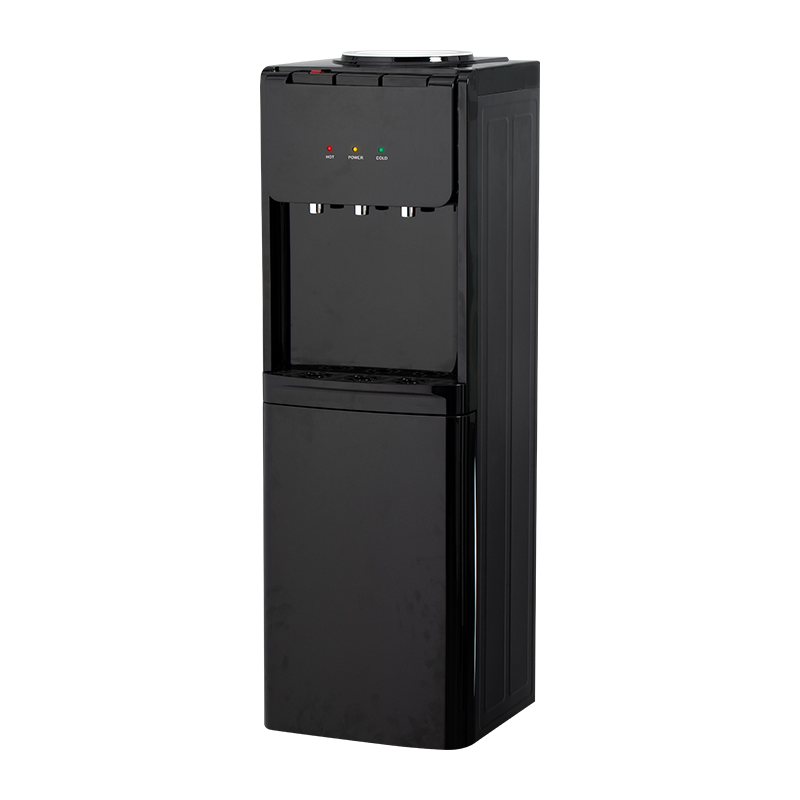
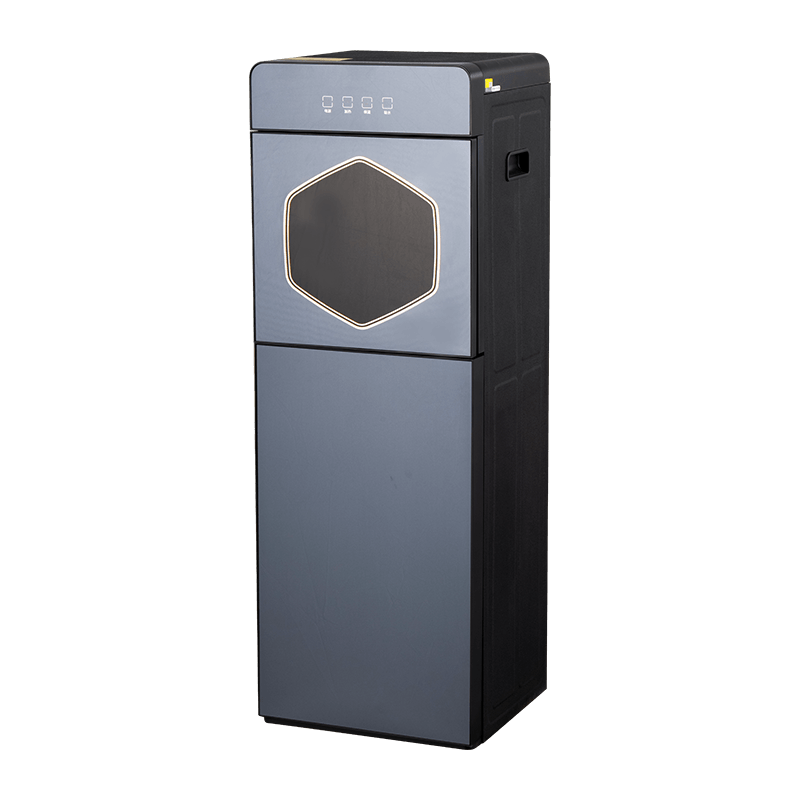
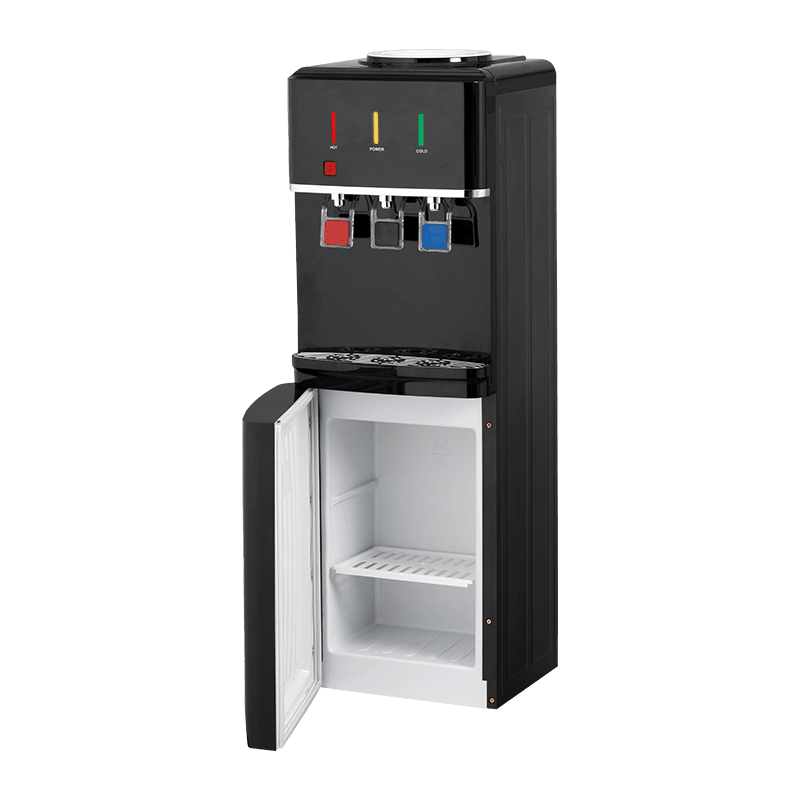
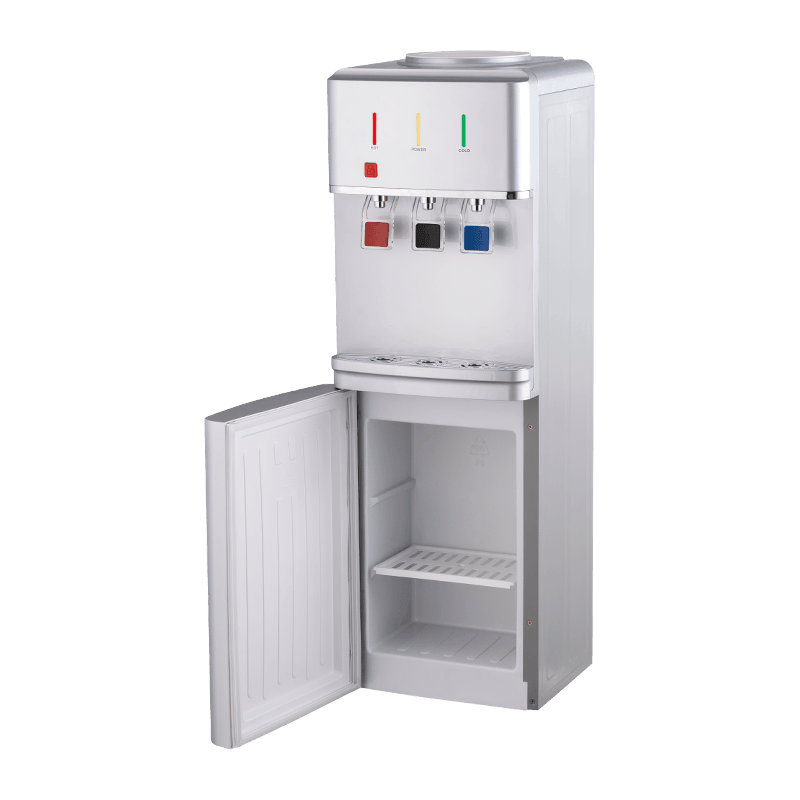
A model like the YR2505 bottom-load vertical dispenser puts all these parts in one compact tower, which is why the format fits kitchens, offices, and small living spaces.
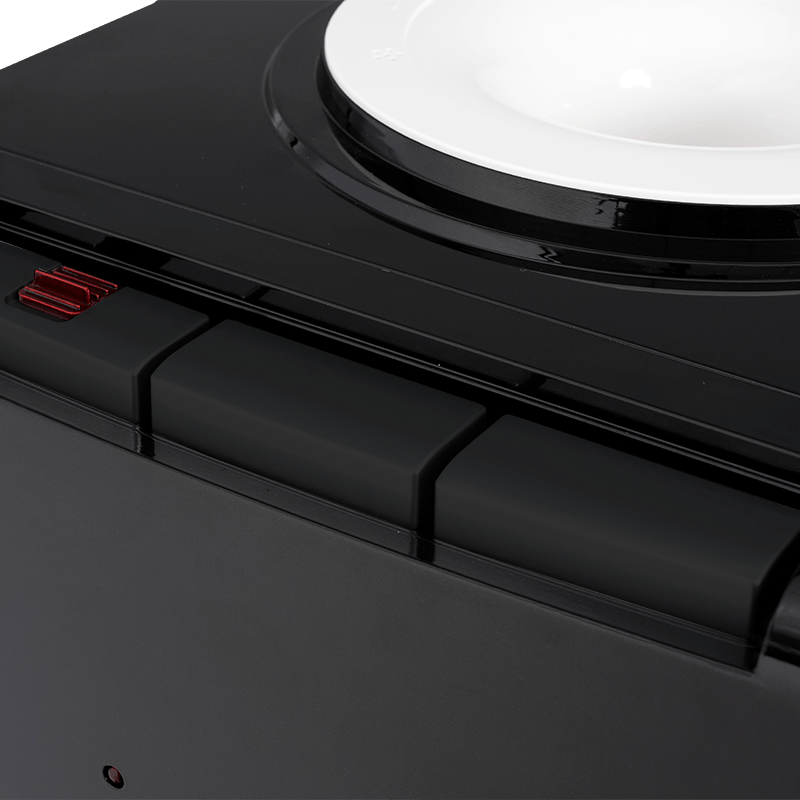 YR-2505/YLR-2505/YLR-2505Y Black Bottom-Load Vertical Water DispenserThis compact vertical dispenser offers hot, room-temperature, and cold water with electronic or compressor cooling. The YLR-2505Y adds a refrigerator compartment, making it a space-saving choice for kitchens and offices.View Product →
What Happens When You Press the Faucet
The water path is easiest to follow as a short chain of events, because every pour triggers the same sequence.
- The faucet valve opens and water pours from the reservoir into your cup.
- The reservoir water level drops by that amount.
- The float switch or sensor detects the drop and starts the pump.
- The pump pulls water from the bottle through the suction probe and pushes it past the check valve into the reservoir.
- The reservoir refills, the float rises, and the pump stops within a few seconds.
- If you chose hot or cold, the incoming water moves into the relevant tank and is brought to temperature before the next pour.
That brief pump cycle is the only moving sound you should hear from a well-built unit. Between pours, the dispenser simply holds the reservoir and both tanks at their correct levels and temperatures.
Heating and Cooling: The Two Circuits Behind the Taps
A pump alone only supplies room-temperature water; the hot and cold functions come from two independent tanks.
The hot tank is a small stainless-steel vessel, typically 0.5 to 1 litre, with an electric heating element at its base. A thermostat keeps the water between roughly 85 and 95 degrees Celsius. When you draw hot water, cold water from the reservoir enters the tank and is reheated until the thermostat cuts out. An anti-dry-heat sensor protects the element if the tank ever runs empty, which is most likely during a bottle change.
The cold side uses one of two technologies. Compressor cooling works like a mini refrigerator, chilling the tank through a sealed refrigerant loop and serving water at about 3 to 8 degrees Celsius. It recovers quickly and survives heavy use, but adds weight, noise, and power draw. Thermoelectric cooling uses a solid-state Peltier module; it is nearly silent and very energy efficient, but it cools more slowly and suits low-volume home use better than a busy office.
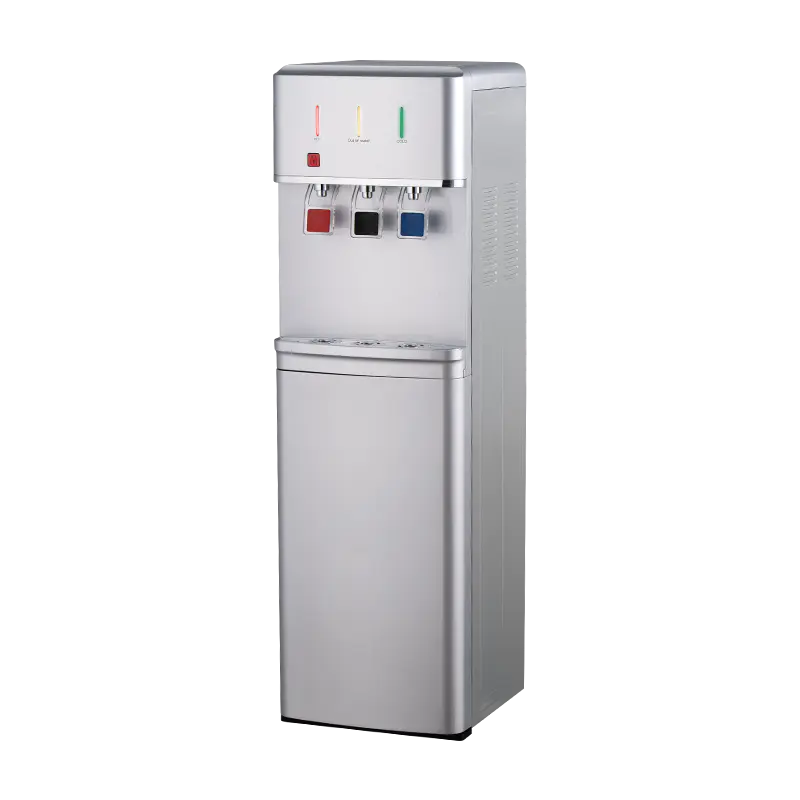
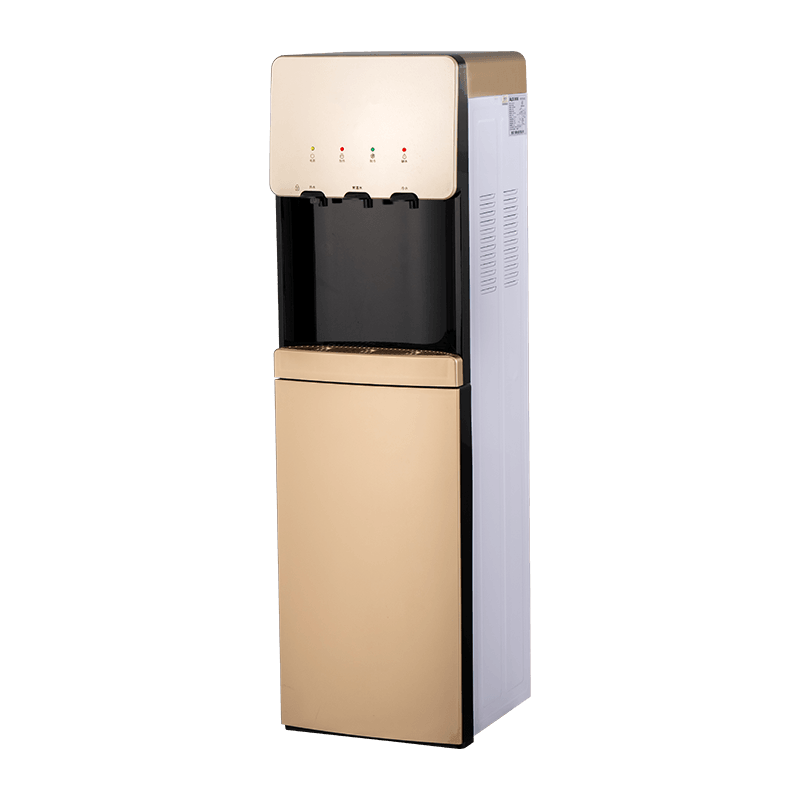
Three-outlet machines add a room-temperature faucet straight from the reservoir. The YX2507 cold/hot/normal-temperature bottom-mounted dispenser is a good example of this configuration for shared households.
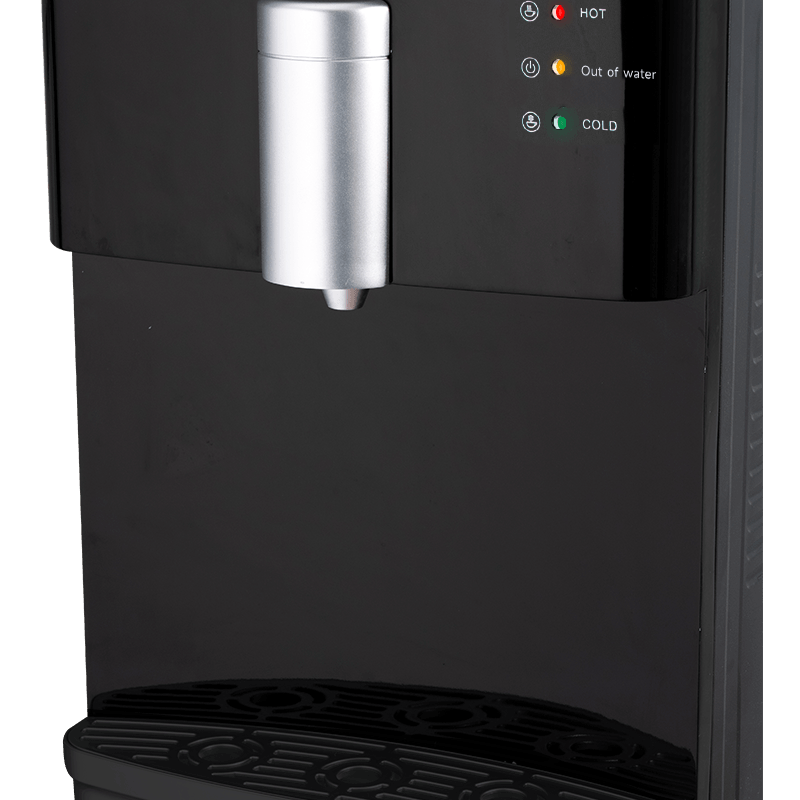 YX-2507/YLX-2507 Black Cold/Hot/Normal Temperature Bottom-Mounted DispenserThis bottom-mounted model provides hot, room-temperature, and cold water with a choice of quiet electronic or powerful compressor cooling. Its easy-load design suits households and shared spaces seeking convenience.View Product →
If your main demand is chilled water, a compressor-refrigerated bottom-mounted model is the standard choice for back-to-back pours.
Safety and Reliability Features You Should Look For
Because the dispenser combines mains electricity, water, and heat in one cabinet, safety features are what allow it to run unattended. The two most important protections are anti-dry-heat cut-off, which kills power if the hot tank is empty, and an over-temperature thermostat that opens the circuit above a safe limit.
In homes with children, the hot faucet is a real hazard. A child safety lock covers the tap or forces a two-step push-and-turn action, and it should be a requirement, not an option.
Leak prevention depends on the check valve and sealed connections between pump, tubing, and tanks. The reservoir, tubing, and tank materials should be food-grade stainless steel or polypropylene so the water never picks up an off-taste. Models with UV antibacterial treatment or a self-cleaning cycle are worth considering in offices and public spaces.
| Feature | Function | Why it matters |
|---|---|---|
| Anti-dry-heat protection | Stops heating when the tank is empty | Prevents overheating and fire risk |
| Over-temperature thermostat | Switches the heater off above a limit | Keeps water at safe temperatures |
| Child safety lock | Locks the hot-water faucet | Prevents scalding injuries |
| Check valve | Blocks backflow into the bottle | Avoids airlock and keeps the pump primed |
| Food-grade materials | Safe reservoir and tubing | Protects taste and health |
Bottom-Load vs Top-Load: Practical Differences
The working principle translates directly into the differences buyers notice in daily use.
| Aspect | Bottom-load | Top-load |
|---|---|---|
| Bottle handling | No lifting | Lifting and inverting required |
| Spill risk | Low | Higher when replacing bottles |
| Appearance | Bottle hidden behind a door | Bottle on top of the unit |
| Water level check | Via window or cabinet door | Visible at a glance |
| Moving parts | Pump, check valve, float switch | Fewer moving parts |
| Noise | Brief pump hum after pours | Silent in normal use |
For older users, anyone with back problems, and most workplaces, the reduction in heavy lifting outweighs the extra mechanical parts. The trade-offs are the larger cabinet, the pump hum, and the fact that you cannot see the remaining bottle level from across the room.
Buying Considerations and Routine Maintenance
The pump is the only part that does serious work, so its quality and serviceability matter most. Check whether it can be replaced through a service panel and whether the manufacturer stocks it as a spare part. Also confirm that the check valve can be cleaned, because a stuck valve is the most common cause of erratic refill cycles.
Noise is the second issue. A weak motor will hum loudly or vibrate the whole cabinet after every pour. If the unit sits near a desk or in a bedroom, choose a quiet-operation bottom-load machine with dampened pump mounts.
Maintenance itself is simple. Wipe the bottle compartment during each bottle change, clean the drip tray weekly, and wash the reservoir with a food-safe cleaner every two or three months. In hard-water areas, descale the hot tank with citric acid on that same schedule. If the unit will sit idle for days, drain both tanks, disconnect the bottle, and leave the cabinet door open so odours cannot form.
For a family with continuous demand or a small office, an office-oriented bottom-mounted model such as the YX2508 is built around frequent pours and rapid recovery.
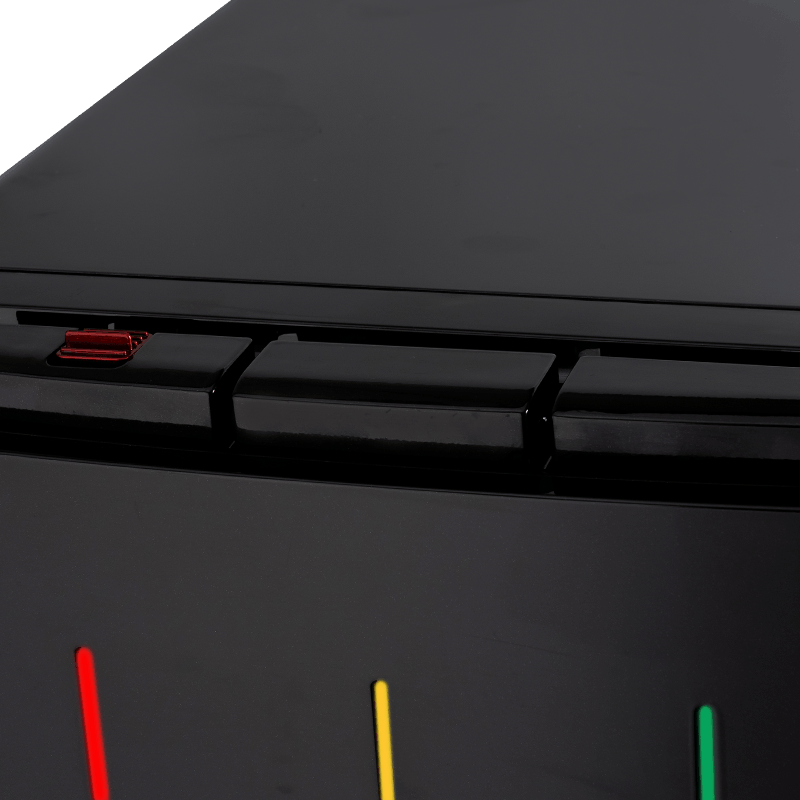 YX-2508/YLX-2508 Black Office Bottom-Mounted Water DispenserBuilt for workplace use, this bottom-mounted dispenser offers hot, room-temperature, and cold water. The electronic cooling variant runs quietly, while the compressor version delivers faster chilling for frequent pours.View Product →
The bottom-load dispenser is not a complicated machine. A pump lifts water from the bottle in the base to a reservoir, a float switch repeats that fill cycle automatically, heating and cooling circuits bring the water to the temperature you select, and the faucet releases it on demand. The payoff is no heavy lifting, fewer spills, and the same hot and cold convenience as a traditional cooler. Keep the pump, the safety protections, and the cleanability in mind when you shop, and the machine will deliver years of quiet, dependable service.