English
 Español
 عربى
عربى 中文简体
中文简体

Does your water dispenser’s cold tap feel warm instead of icy? You do not need to empty the tank or call a repairman immediately. In most cases, the cause is a simple switch, a dirty condenser, or a fan that has stopped spinning. Before you pay for service, work through this checklist in order. It will either fix the unit or tell you exactly which component is failing.
Know Your Water Dispenser Cooling System Type
Before you open any panel, find out whether your unit uses a compressor or a thermoelectric (Peltier) cooling system. Compressor models are the most common in vertical and bottom-load dispensers; they use a small refrigerator circuit and can chill water to about 5-7 °C. Desktop and compact dispensers often use Peltier modules, which are quieter but only cool to about 10-15 °C. The diagnostic steps below differ because the components are completely different.
| Feature | Compressor Cooling | Thermoelectric Cooling |
|---|---|---|
| Typical cold water temperature | 5-7 °C | 10-15 °C |
| Noise level | Audible compressor and fan | Nearly silent |
| Common failure points | Start relay, capacitor, fan, condenser, refrigerant | Peltier chip, power supply, thermal compound |
| Typical tank size | Large, often 3-5 L | Small, often 1-2 L |
If your unit has a compressor and a fan, the repair path is mechanical. If it uses a Peltier module, focus on the power supply and the module itself before anything else.
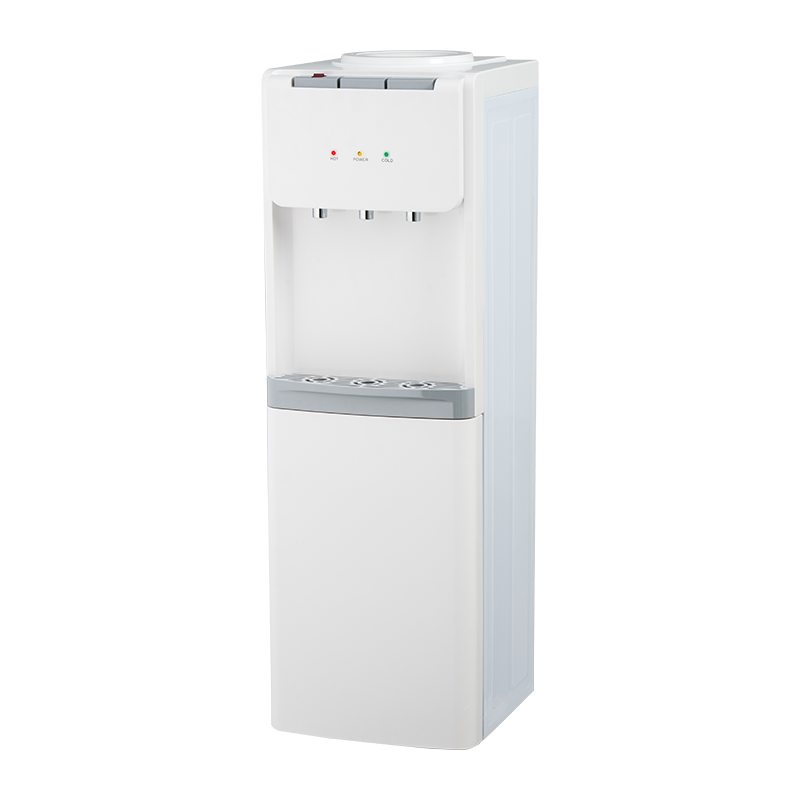
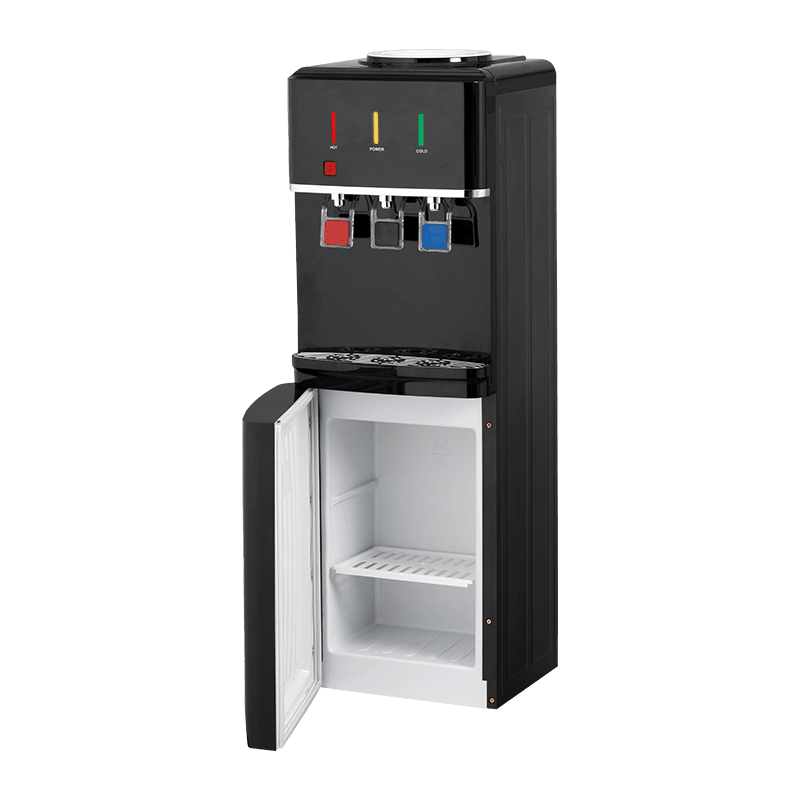
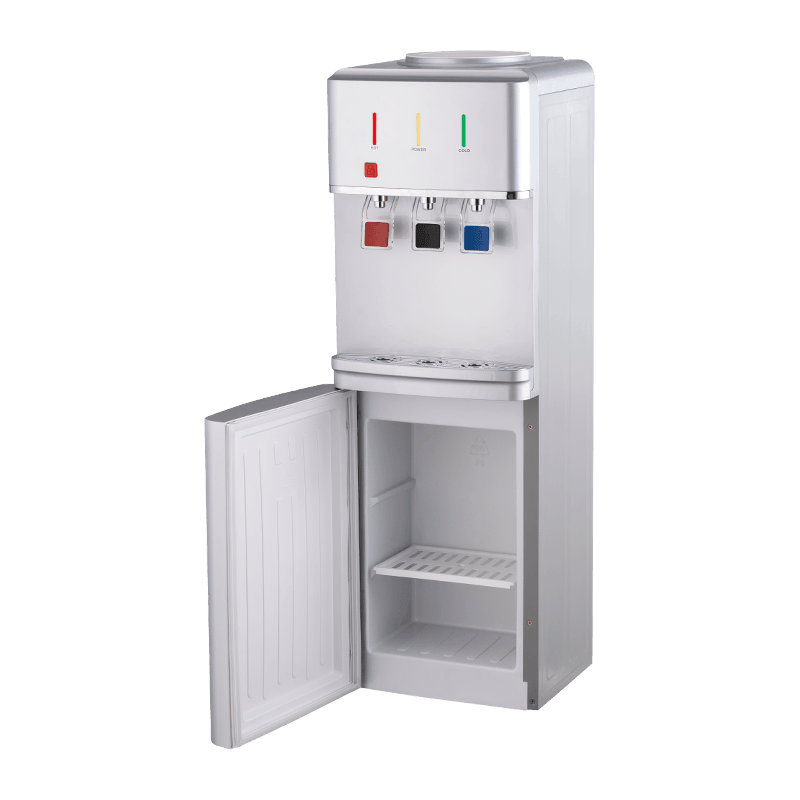
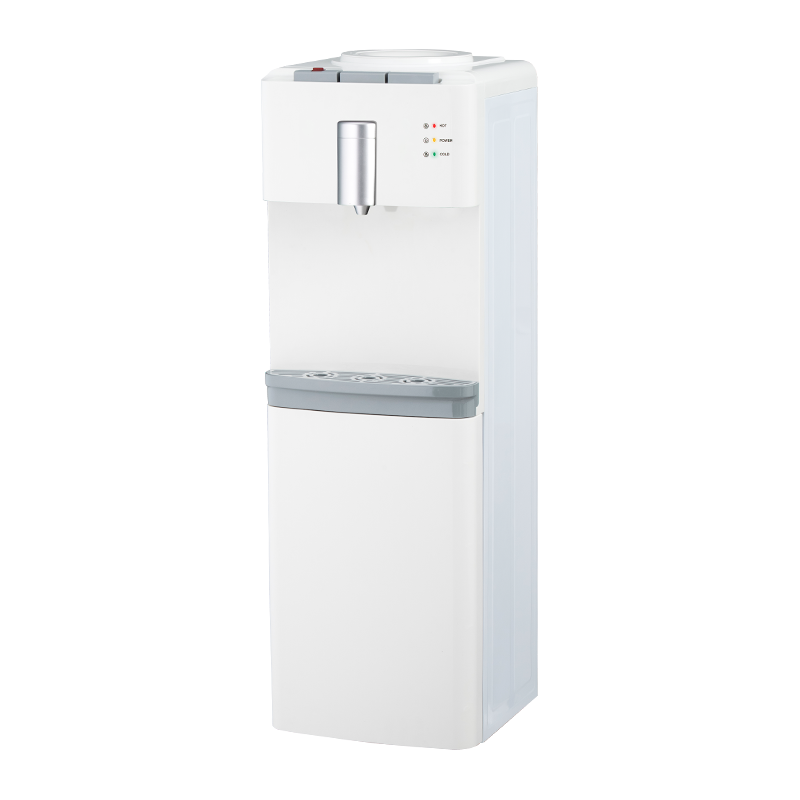 YR-2507/YLR-2507/YLR-2507Y White Refrigerable Vertical Water DispenserThis vertical dispenser comes in electronic and compressor cooling versions, with the YLR-2507Y adding a freezer feature. Useful when troubleshooting cold-water issues, as it clarifies which cooling system your unit uses.View Product →
Start With the Obvious: Power and Cold Switch
A water dispenser that is not cooling is frequently just a machine that is not receiving the start-cooling signal. Many models have a separate cold switch, often located on the back panel or under the control panel. It can be switched off by accident during cleaning. Confirm the dispenser is plugged into a live outlet and the cold-water indicator light is on. If hot water works but cold does not, the switch or its wiring is the most likely culprit.
- Unplug the dispenser and inspect the power cord for damage.
- Plug a lamp or phone charger into the same outlet to verify it works.
- Locate the cold water switch on the back or front panel and turn it on.
- Wait up to 60 minutes for the cooling cycle to establish.
Set the Thermostat Correctly
Even if the cooling components are in good condition, a thermostat set at the wrong point will stop the compressor before the water is cold. Find the dial or hidden adjustment for cold water. It is often marked with a snowflake or a range from 1 to 5. Turn it to the coldest allowed setting, close the unit, and wait for an hour. Also turn off energy-saving or holiday modes if they are active. If the dispenser uses a bulb-type thermostat and the compressor never runs, test the thermostat for continuity with a multimeter; many failures are mechanical and show no obvious damage.
Inspect the Cooling Fan and Condenser Coils
Compressor cooling moves heat through the condenser coils, and a fan pushes that heat away. When the fan fails or the coils are clogged, the compressor runs but the evaporator cannot get cold enough. Turn off the power, pull the dispenser out, and take off the rear service panel. The fan is usually next to the compressor; it should spin freely and start when the compressor starts. Clean the condenser with a soft brush or vacuum, and make sure the fins are not flattened. Keep at least 10 cm of clearance around the unit. If the fan motor is dead, replace it with the correct part. For comparison, a purpose-built fast-cooling compressor water dispenser uses a larger condenser and a more powerful fan, which is one of the reasons it recovers temperature quickly after heavy use.
Check the Cold Water Tank for Ice Buildup
A weak cold water stream or no flow is often an ice problem, not a temperature problem. The cold tank sits next to the evaporator, and if the thermostat keeps the compressor running, the water inside can freeze into a solid block. That block stops the inlet and outlet and makes the dispensing area feel cool but not cold. Unplug the unit, drain the tank, and let the ice melt for at least 12 hours. Never pour hot water into the tank; it can crack the plastic or damage the seal. After defrosting, clean the tank and restart. If ice comes back quickly, replace the thermostat. A high-efficiency cold tank with better insulation and precise temperature control minimizes this failure mode.
Listen for the Compressor and Its Starting Components
When a compressor does not run, you usually hear a click from the starting relay, or no sound at all. The starting relay, the overload protector, and sometimes a start capacitor are mounted to the side of the compressor under a small black cover. Remove the cover and shake the relay; if it rattles, replace it. Check the overload protector for continuity with a multimeter. If the unit short-cycles, the capacitor or compressor is suspect. Use a resistor to discharge a capacitor before handling it. If the compressor itself is defective, there is no safe field repair; you will be facing a sealed system issue. At that point, a new refrigerable desktop water dispenser may be more cost-effective than a compressor replacement.
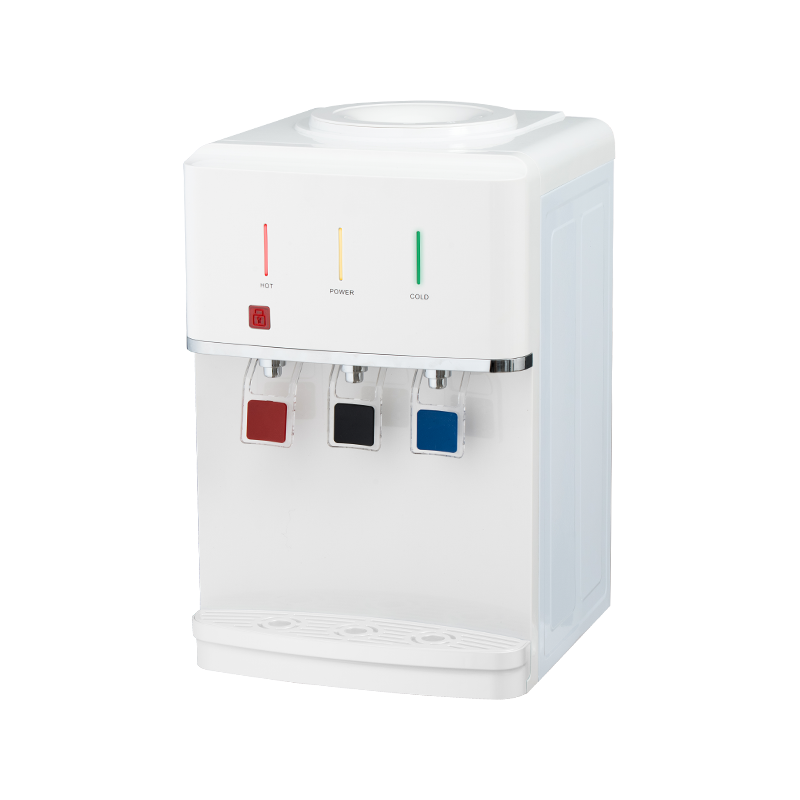
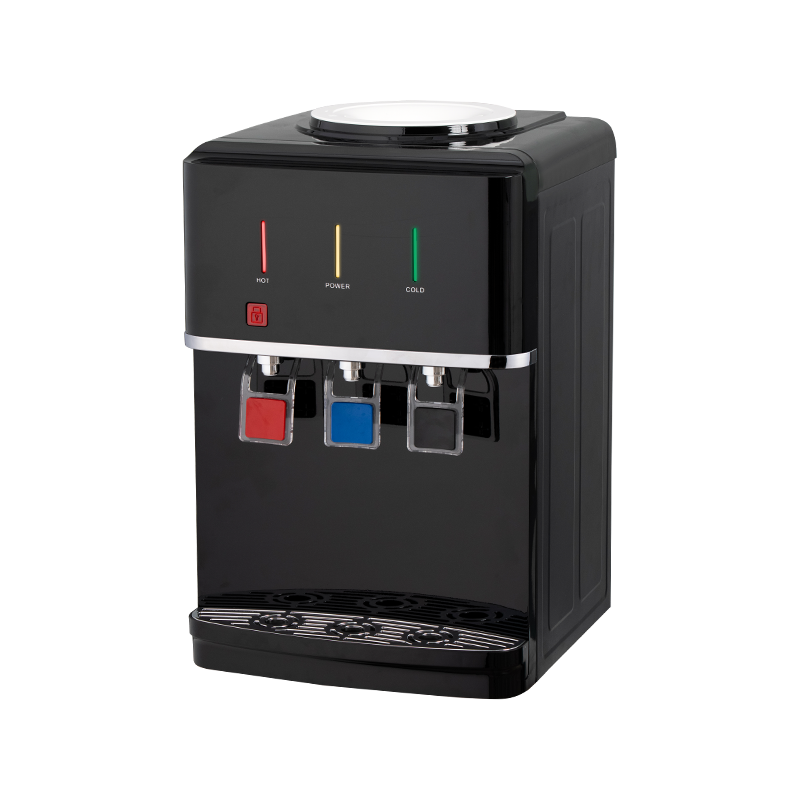
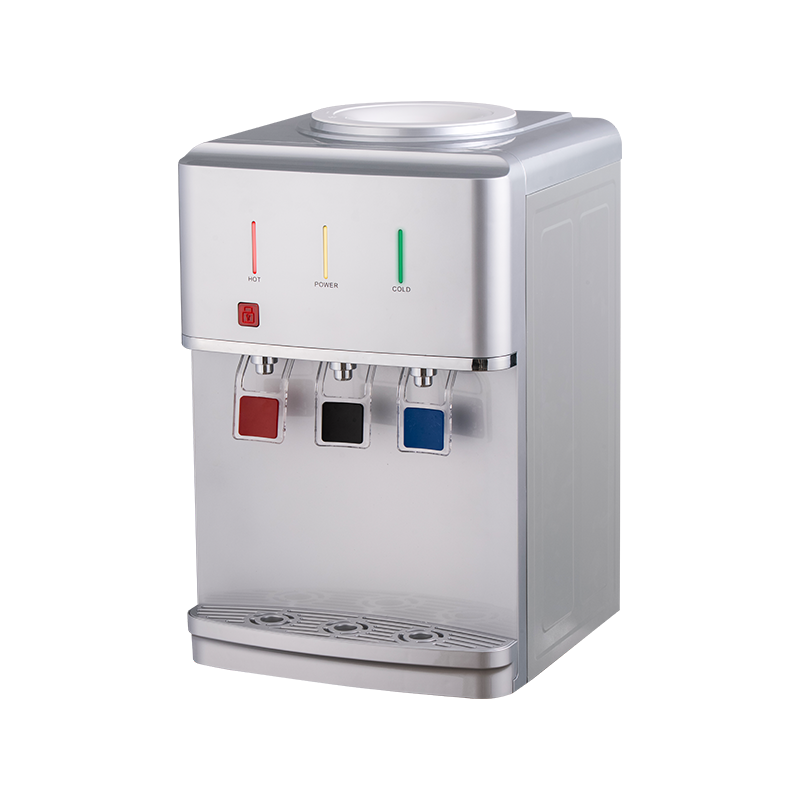
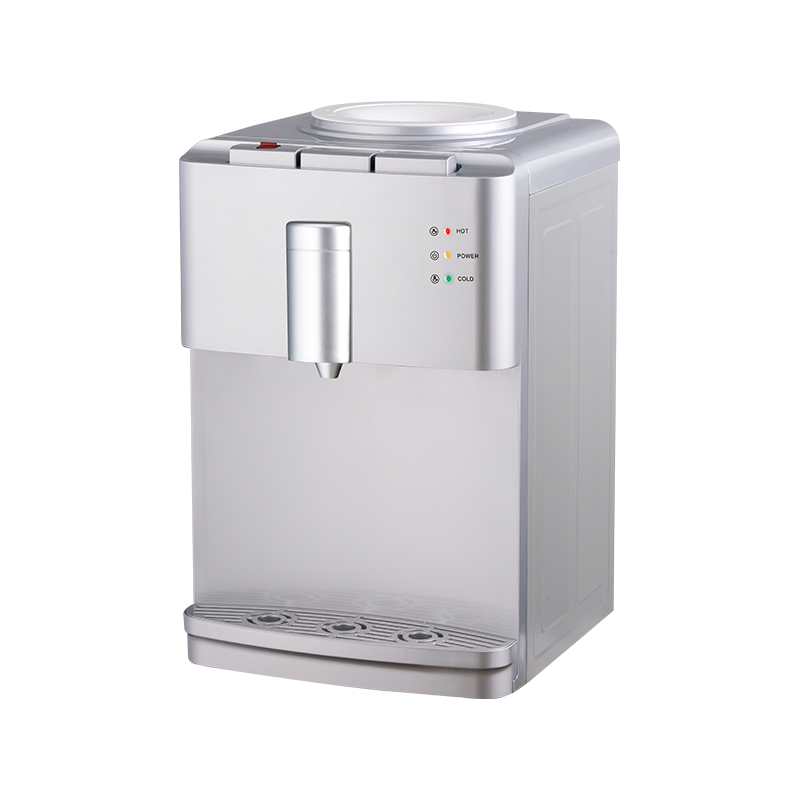 YR-2507T/YLR-2507T Silver Refrigerable Desktop Water DispenserThis desktop model offers both electronic and compressor cooling options, with the compressor version providing faster cold water. Relevant when diagnosing cooling failures, as it helps identify which type of system you have and its repair path.View Product →
Refrigerant Leaks and Sealed System Failures
If you have verified the fan, cleaned the condenser, tested the thermostat, and defrosted the tank, yet the water stays at room temperature, the sealed system is probably the problem. Refrigerant leaks and blocked capillary tubes gradually reduce cooling until the unit is useless. Warm condenser lines and a slightly oily residue around the compressor are strong clues. Repairing a sealed system requires a vacuum pump, a manifold gauge, and refrigerant handling certification; do not attempt it yourself. If the dispenser is under warranty, contact the manufacturer. If it is out of warranty and over eight years old, the cost of a sealed-system repair can approach half the price of a new bottom-mount refrigerated dispenser.
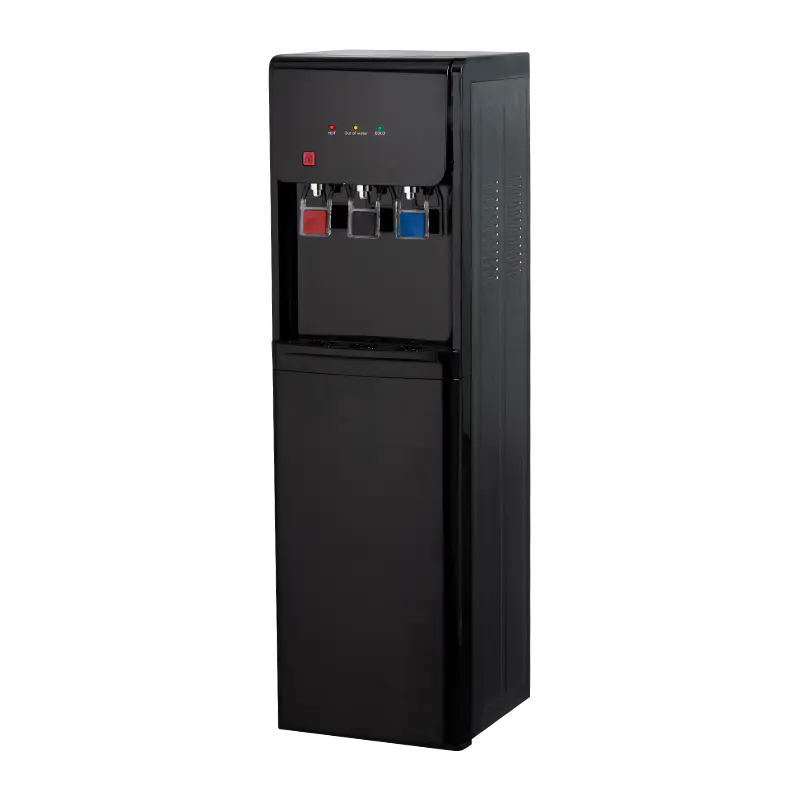
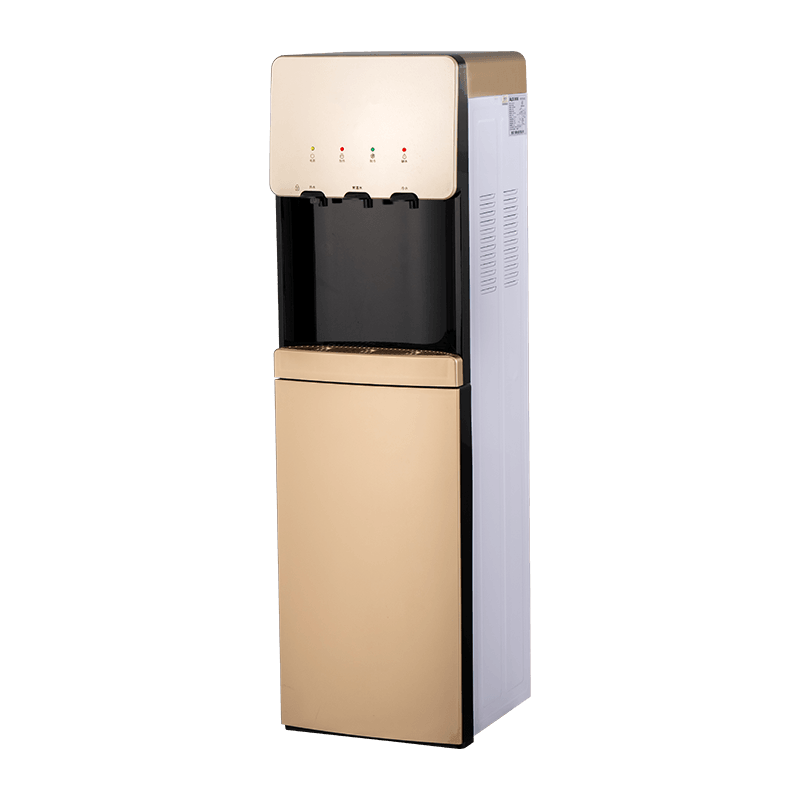
 YX-2505/YLX-2505 Silver Refrigerated Bottom-Mounted Water DispenserThis bottom-mount dispenser offers electronic or compressor cooling, with easy bottle replacement and a compact design. Consider it when weighing repair costs against replacement, as its price point may beat fixing an older unit.View Product →
When to Call a Professional or Replace the Unit
The line between can be fixed and should be replaced is not always clear. Call a technician after you have done the basic checks and the unit still does not cool. A professional will test the compressor windings, the sealed system pressure, and the cold tank sensor. Use the same rule for water dispensers that you use for an old refrigerator: if the repair estimate is more than half the replacement cost, or the unit is older than eight years, choose replacement. Also replace the unit if the tank is cracked, because a cracked tank can leak water into electrical parts.
Preventive Maintenance Tips to Avoid Future Cooling Problems
Most not-cooling failures are caused by poor heat exchange or overheating. Simple maintenance keeps the cooling system healthy.
- Clean condenser coils every six months.
- Keep at least 10 cm of space behind and beside the dispenser.
- Replace the water filter or strainer on schedule to maintain proper flow.
- Sanitize the cold tank and faucets every two to three months.
- Do not place the dispenser near an oven, server rack, or direct sunlight.
- If you see frost on the cold water lines, raise the thermostat setting and check for air leaks around the tank.
Use the checklist in this order: check power and the cold switch, adjust the thermostat, clean the fan and condenser, defrost the cold tank, and only then inspect the compressor components. More than half of not-cooling callbacks are solved in the first three steps. If the sealed system is at fault, stop and call a professional. Water dispensers are simple when you break them down into modules, and a little routine maintenance will keep yours cold for years.