English
 Español
 عربى
عربى 中文简体
中文简体

When you press the cold tap on a water cooler dispenser, you are activating a small refrigeration system that has been quietly cycling inside the cabinet since the machine was turned on. Press the hot tap and a separate heating circuit takes over. The answer to "how does a water cooler dispenser work" is that it is really two appliances in one housing: it cools a reservoir with either a compressor or a thermoelectric module, and it heats a sealed tank with an electric resistance element. This guide explains the components, the cooling and heating processes, the differences between bottled and bottleless machines, and how to keep a dispenser reliable.
Key Components Inside a Water Cooler Dispenser
Every dispenser, from a basic top-loader to a commercial under-counter unit, shares the same core architecture. A reservoir, also called a cold tank, stores the water that will be chilled. A cooling circuit removes heat from that tank. A smaller, heavily insulated hot tank contains a heating element and a thermostat. Valve taps draw water from each zone, and a drip tray collects spills and condensation.
Understanding these parts helps when reading specifications or comparing models, because capacity, power, and insulation decide performance.
| Component | Function | Location in the Unit |
|---|---|---|
| Cold tank / reservoir | Stores water during chilling | Behind the front panel, below the cold faucet |
| Compressor and evaporator coil | Refrigerant cycle chills the tank | Lower rear compartment |
| Thermoelectric module | Alternative cooling device for compact units | Bonded directly to the cold tank |
| Heating element and thermostat | Warms and holds water near 90°C | Sealed insulated hot tank |
| Dispense valves and taps | Release cold or hot water | Front faceplate |
| Drip tray | Catches overflow and drips | Below the taps |
How the Cold Water System Works
Two fundamentally different methods are used to cool the reservoir. Compressor-based refrigeration delivers high capacity and is used in most full-size and commercial units. Thermoelectric Peltier cooling is cheaper and quieter and appears mainly in desktop models.
Compressor-Based Refrigeration
A compressor raises the pressure of refrigerant gas, which pushes it through a condenser coil. Here the gas releases heat into the room and condenses into liquid. The liquid then passes through an expansion device, where the pressure drops sharply. That pressure drop turns the refrigerant into a cold vapor as it flows through an evaporator coil wrapped around the cold tank. Water entering the tank gives up its heat to the evaporator, dropping to about 4 to 10°C. A thermostat on the tank switches the compressor on and off to hold the temperature.
Thermoelectric Peltier Cooling
Compact desktop dispensers often eliminate the compressor and use a Peltier module. When DC current flows through a junction of two different semiconductor materials, heat moves from one side to the other. The cold face is clamped against the water tank, while the hot face connects to a finned heat sink and fan. This system is quiet because the only moving part is the fan, and standby power is low. But it only lowers the water temperature by about 8 to 15°C below room temperature, and heat removal is slow, so it suits kitchens, bedrooms, and light office use rather than high-demand break rooms.
How the Hot Water System Works
The hot-water circuit is simpler and works much like an electric kettle. Cool water flows into a small, sealed tank, usually 1 to 2 litres, where a metal-sheathed resistance element is immersed. A thermostat energizes the element until the water reaches roughly 85 to 95°C, then cuts power to avoid boiling inside a sealed vessel. Because the tank is insulated, the water stays hot for hours with only occasional reheating.
Safety is handled by a secondary high-limit thermostat that trips if the primary thermostat fails, and by a pressure-relief passage that vents steam pressure. When buying a dispenser for a workplace, check the heating wattage, typically 500 to 1,200 W, because higher wattage means faster recovery after several cups of hot water are drawn.
Bottled vs. Bottleless Dispensers: Two Ways to Feed the Tank
A bottled dispenser receives water from an inverted 11- to 19-litre bottle. A hollow probe pierces the bottle cap so water can fall by gravity into the reservoir. When the cold tap opens, water from the reservoir flows out, and fresh water from the bottle immediately replaces it.
A bottleless, point-of-use dispenser connects directly to the mains water line. Internal multi-stage filters remove sediment, chlorine, and other contaminants before the water enters the same cold tank and hot tank. Because there is no bottle to lift or replace, bottleless units are popular in offices, but they need plumbing access and routine filter changes.
| Aspect | Bottled Dispenser | Bottleless Dispenser |
|---|---|---|
| Water source | Removable jugs delivered or exchanged | Connected to permanent plumbing |
| Setup | Plug into a socket, place the bottle, done | Requires a water-line connection and installation |
| Filtration | Usually none included | Multi-stage filters built in |
| Physical effort | Lifting and replacing 19-litre jugs | No lifting required |
| Running cost | Purchase of each bottle | Filter cartridge replacement |
| Hygiene focus | Keep the bottle neck and probe clean | Replace filters on schedule |
How the Dispenser Type Affects the Working Mechanism
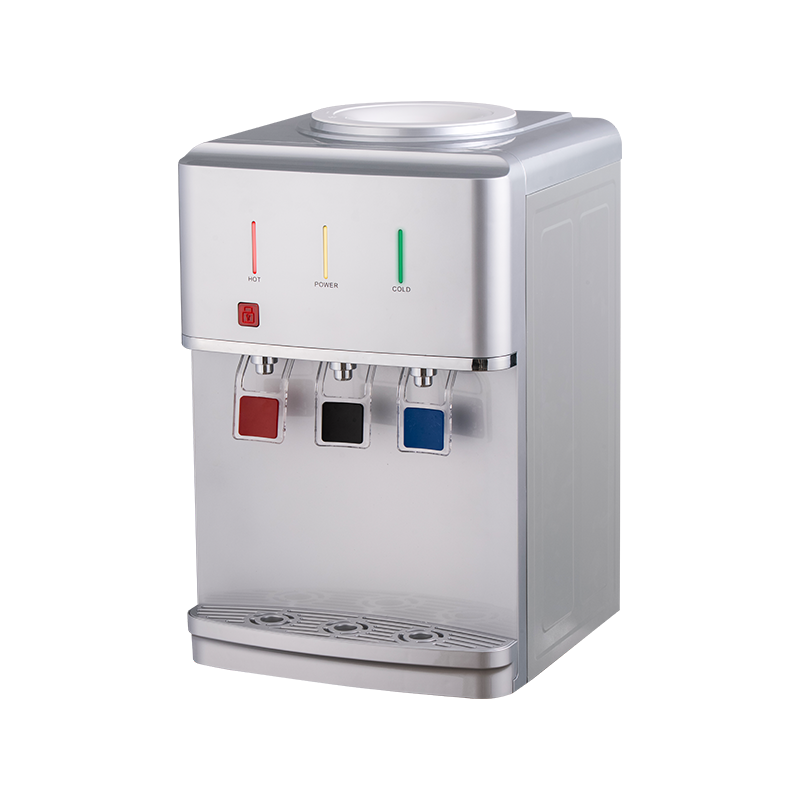
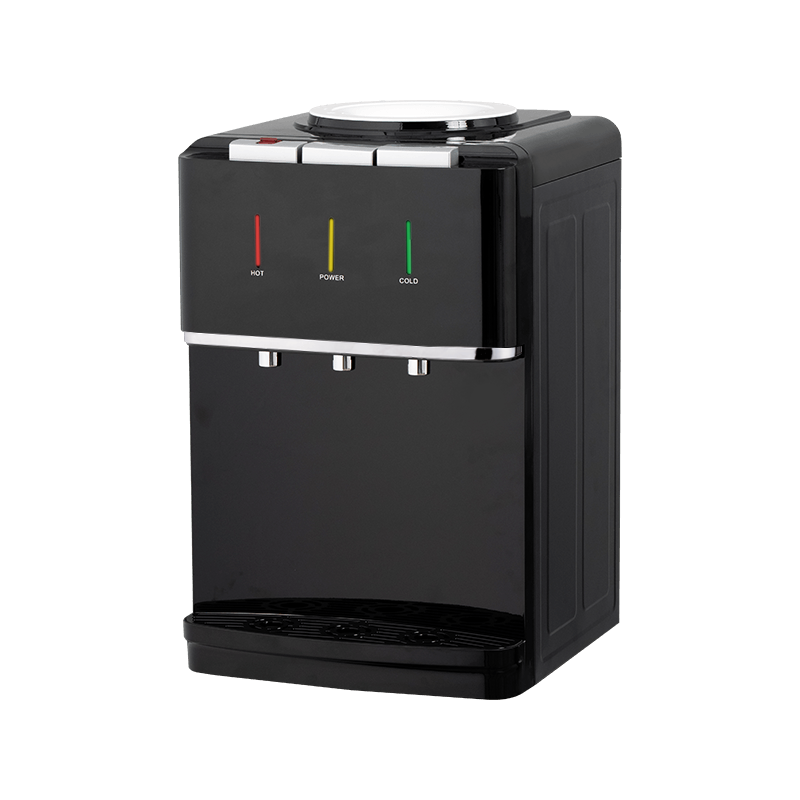
The core cooling and heating technology stays the same across form factors, but the water path changes. Top-loading units accept a bottle through the top, with the probe pointing upward into the cap. Bottom-loading units hide the bottle inside the cabinet and use a small electric pump to lift water to the internal tanks, which removes the strain of lifting heavy jugs. Desktop units sit on a counter and are often thermoelectric, with a tank capacity of 1 to 3 litres. Under-counter units mount below a sink or bench, connect to the mains supply, and deliver filtered hot and cold water through a separate faucet mounted beside the sink.
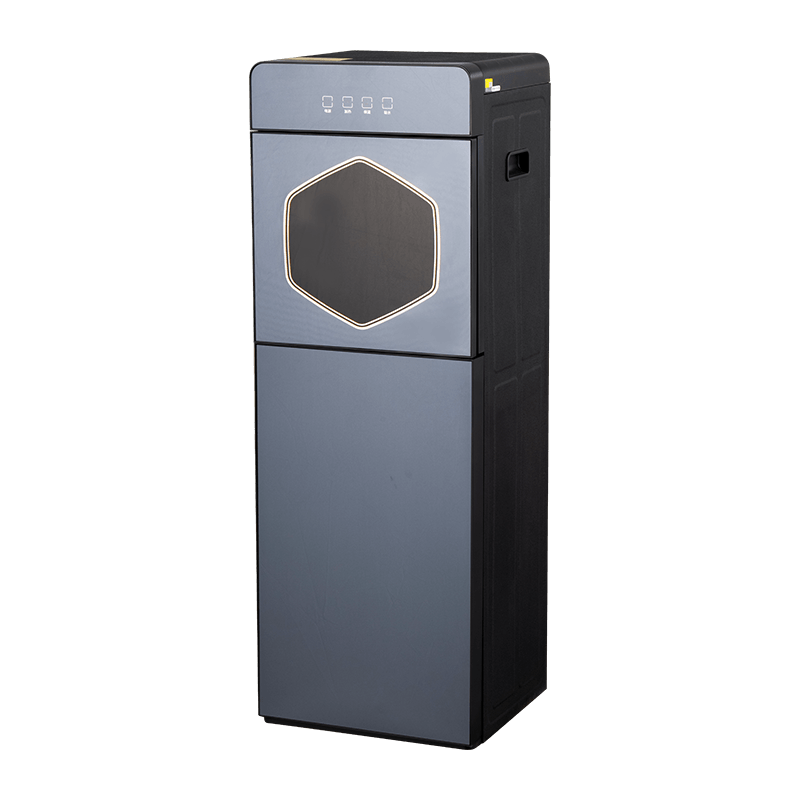
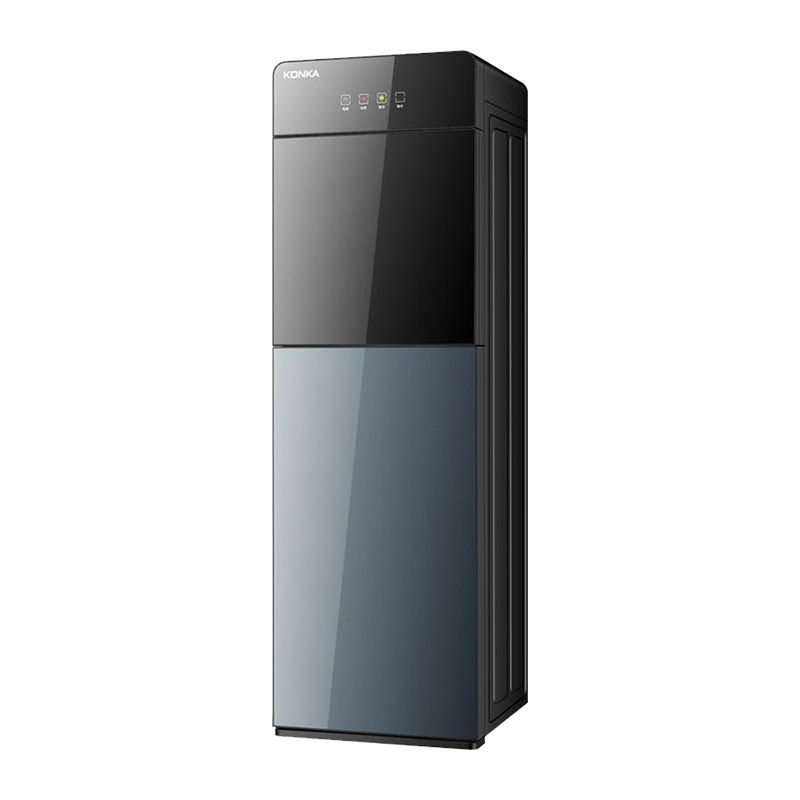
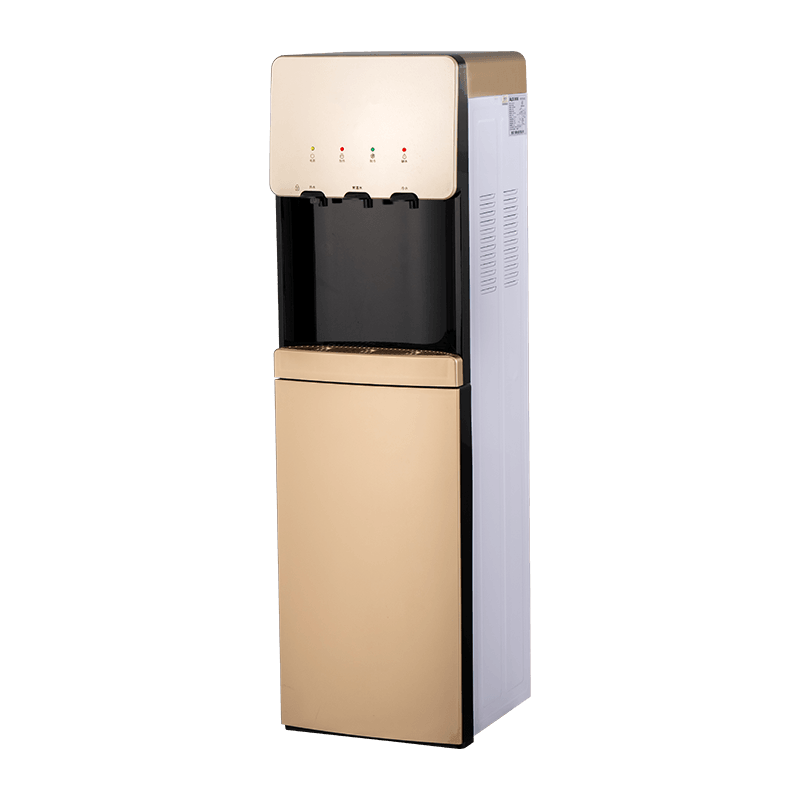
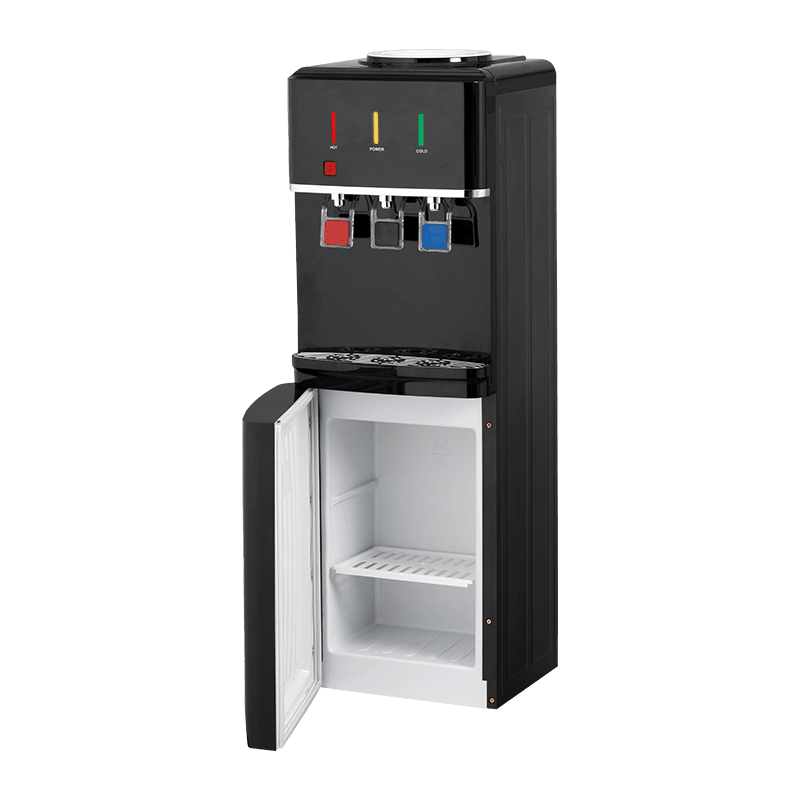
In a vertical bottom-load dispenser, the pump is the only moving part besides the compressor, and the cabinet door hides the bottle completely. This style has become common in homes because it combines easy bottle replacement with the cooling performance of a full compressor system.
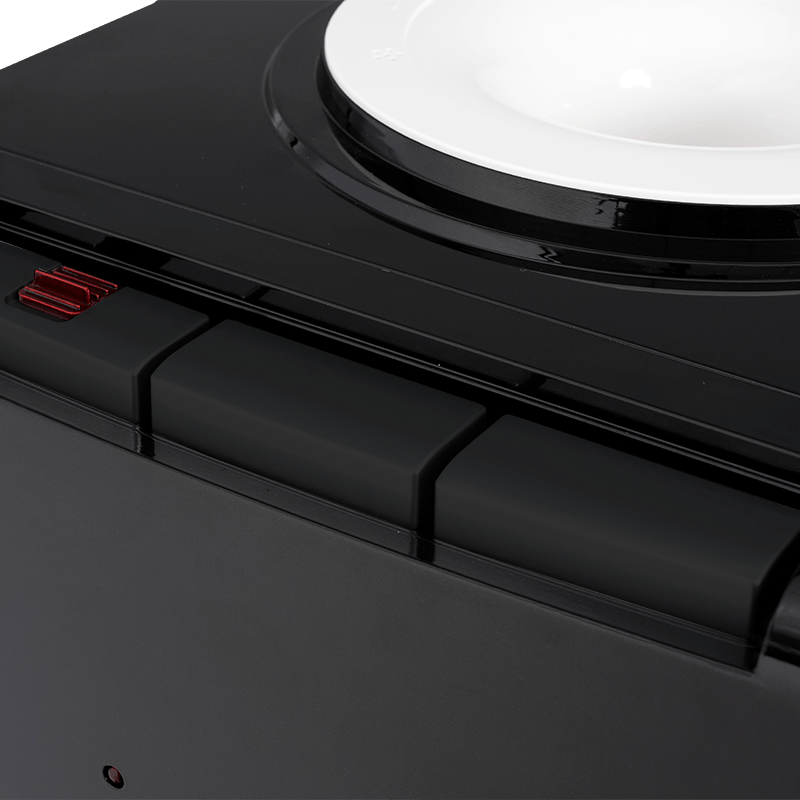 Black Bottom-Load Vertical Water Dispenser with Hot, Cold, and Room-Temperature OptionsThis vertical unit hides the bottle behind a cabinet door, simplifying replacement while offering compressor cooling for reliable cold water. Models include electronic cooling or a refrigerator-equipped version, suitable for home or office.View Product →
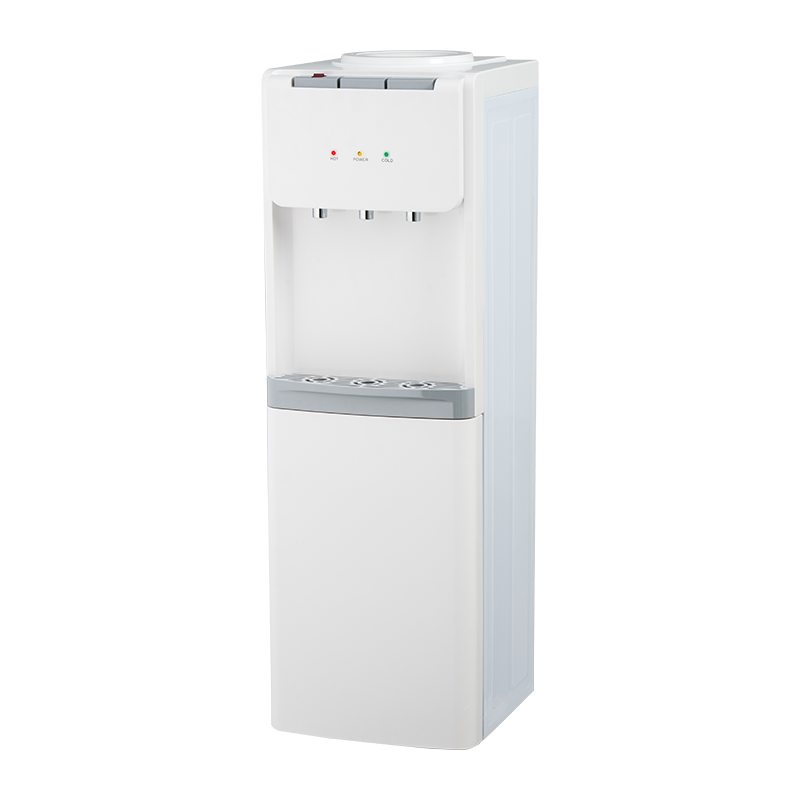
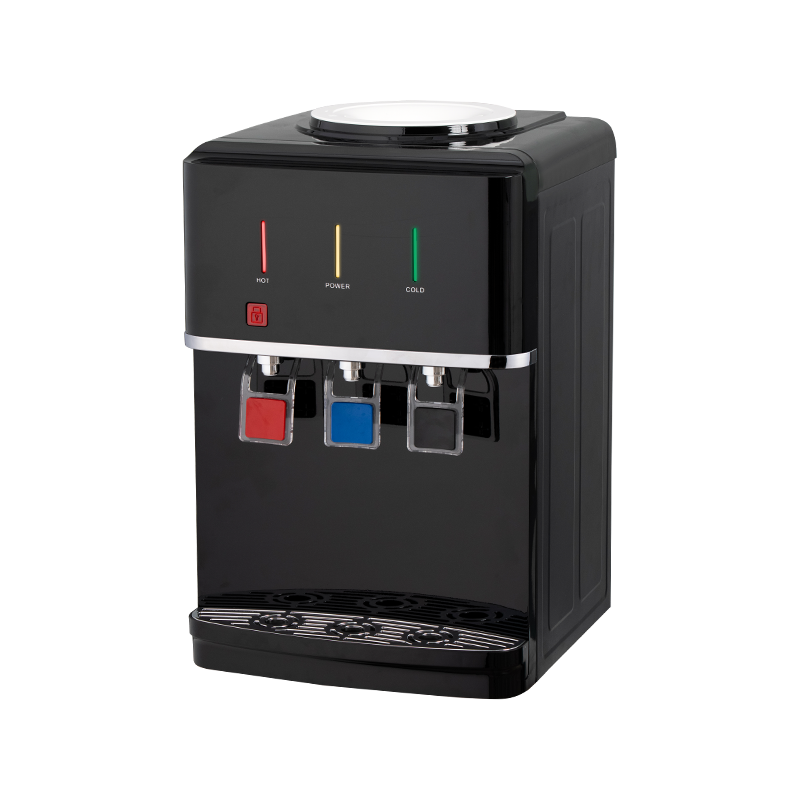
For a bedroom, study, or small kitchen, a desktop hot-and-cold unit with compressor cooling keeps the footprint small while still delivering genuinely cold water, and modern desktop models include the same stainless tanks and thermostats as larger towers.
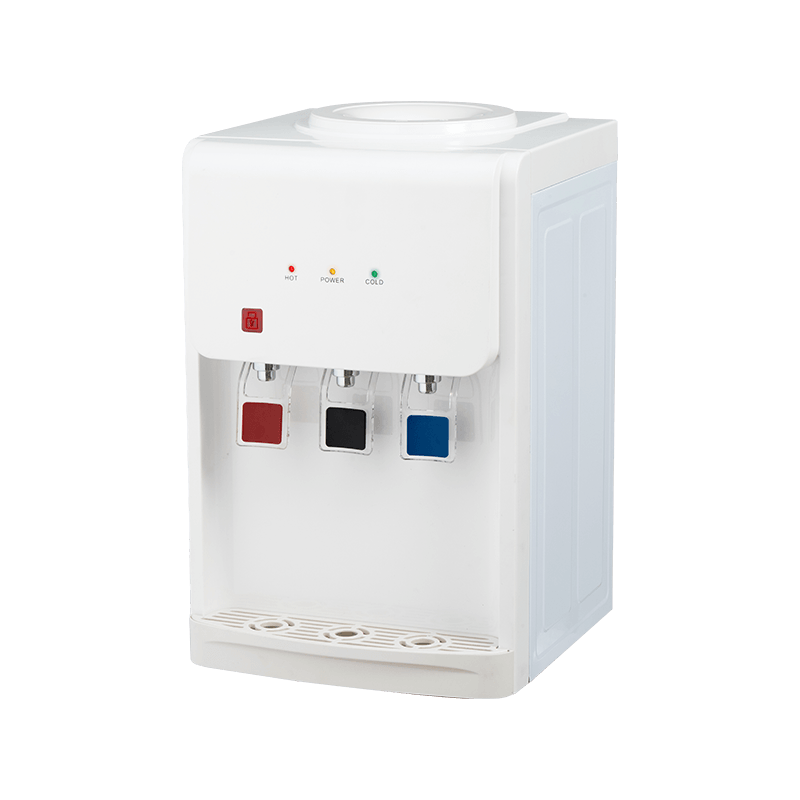 White Top-Load Desktop Water Dispenser for Home UseA compact desktop dispenser with top-loading bottle design, offering hot, room-temperature, and cold water. Choose electronic cooling for quiet operation or compressor cooling for faster chilling in warmer rooms, ideal for kitchens or dorms.View Product →
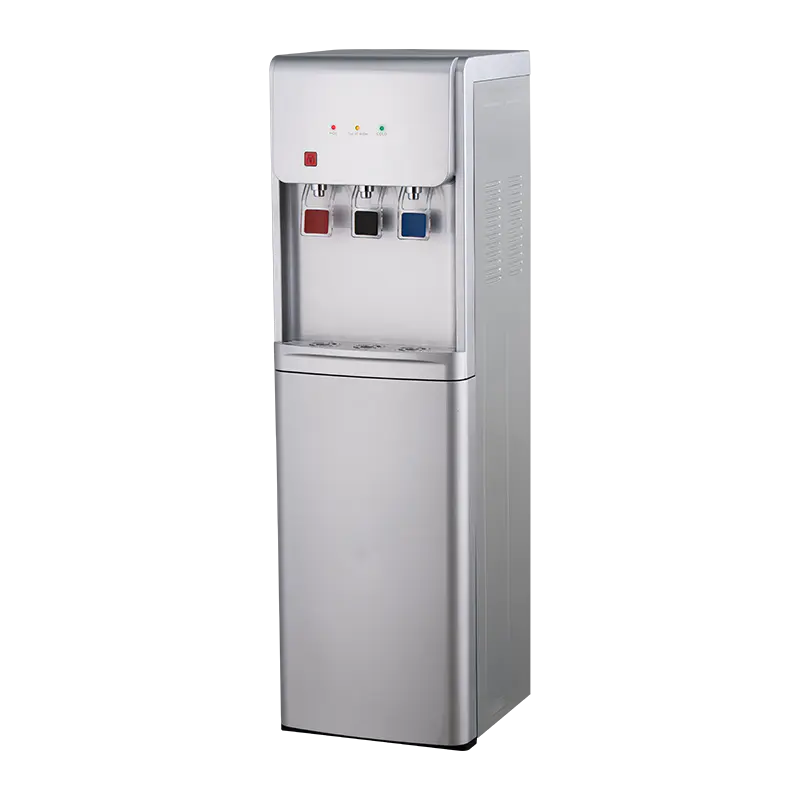
Under-counter systems bring the same mechanism into a built-in kitchen or office pantry. Because the machinery is hidden below the counter, the only visible part is a compact faucet on the work surface.
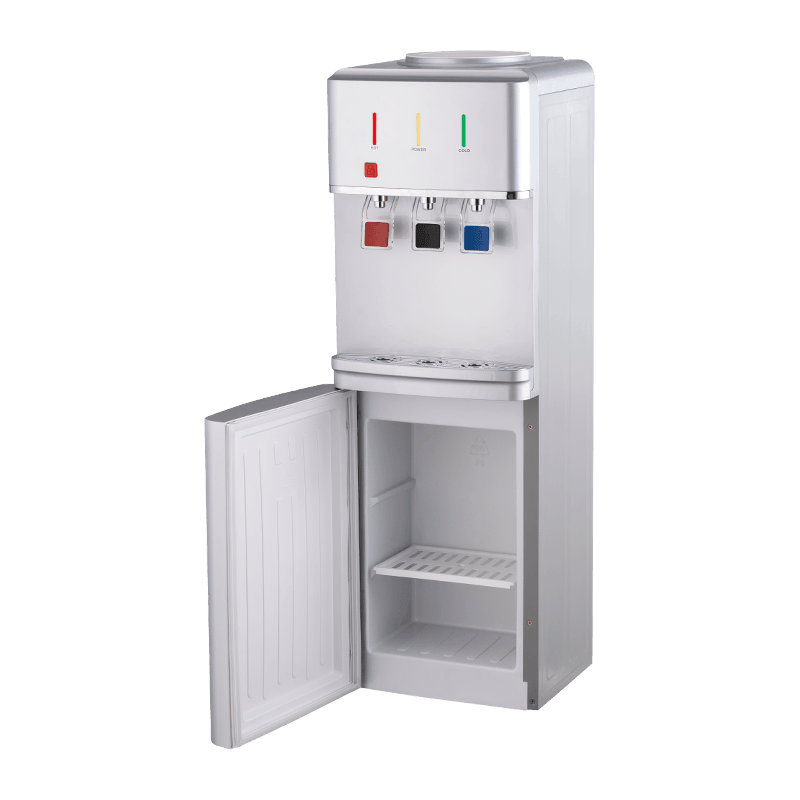
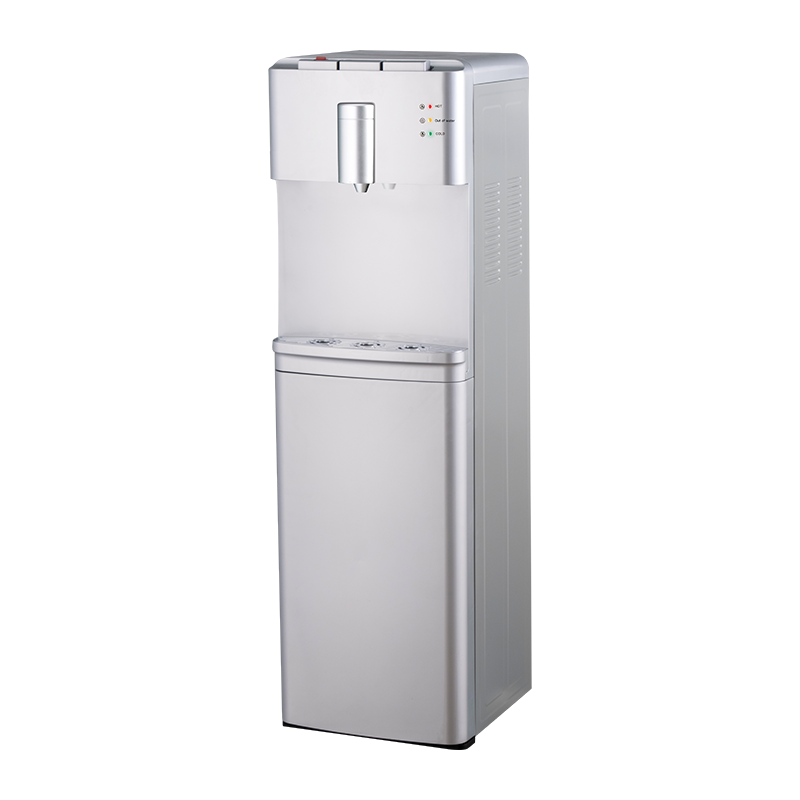 Silver Bottom-Mounted Water Dispenser with Hot, Cold, and Normal TemperatureThis under-counter dispenser delivers three water temperatures with either electronic or compressor cooling. The compressor model provides a larger cold water flow, while the electronic version is quiet and energy-efficient, fitting homes, offices, and public spaces.View Product →
What to Check Before You Buy
Start with the cooling method. If you expect heavy daily use, choose a compressor model; a thermoelectric unit struggles to keep water cold in warm rooms or under continuous draw. Then check the tank capacity against the number of users. A 1-litre cold tank is fine for a single office; a 3- to 4-litre tank is better for a team. Also compare energy consumption: better insulation and an efficient compressor mean lower standby losses, so look for units with thick tank walls and low standby ratings.
Other points to verify:
- Faucet flow control, because a poorly designed valve causes dripping and splashing.
- Child-safe locking on hot water taps.
- Materials in contact with water, ideally food-grade stainless steel for the hot tank and BPA-free plastic for internal lines.
- Noise level, mostly produced by the compressor and fan.
- Certification marks for electrical safety and food-contact compliance in your target market.
An energy-efficient home water station design can cut the electricity consumed by reheating, because the insulation keeps heat in the tank and away from the compressor.
For buyers who want stable quality at scale, working with a manufacturer that handles research, production, and testing in-house makes specification changes and custom branding easier, and gives distributors better control over certification and spare parts.
Maintenance That Keeps the Dispenser Working
Most dispenser failures trace back to neglect rather than component failure. Clean the nozzles and drip tray weekly with a food-safe sanitizer. Descale the hot tank every two to three months with citric acid, because hard-water deposits throttle heat transfer and lengthen heating time. For bottleless units, replace filters on the manufacturer's schedule, usually every 3 to 6 months. Brush or vacuum the condenser coil every six months; a dusty coil makes the compressor work harder and shortens its life. Bottled units also need an occasional sanitizing flush of the reservoir and bottle probe.
Whenever you draw a cup of cold water, you are relying on a miniature refrigerator loop running inside the cabinet; whenever you draw hot water, you are using a thermostatically controlled resistance heater. The two systems are proven, simple to maintain, and increasingly efficient. Choose the cooling technology and form factor that matches your usage, keep the filters and coils clean, and a well-built dispenser will deliver hot and cold water reliably for years. For businesses evaluating bulk orders, speaking directly with a specialized manufacturer is the most direct way to confirm which configuration, capacity, and safety options suit your market.