English
 Español
 عربى
عربى 中文简体
中文简体

What Are the Core Engineering Principles Behind the Instant Thermal Response and Multi-Stage Filtration of a Desktop Water Dispenser?
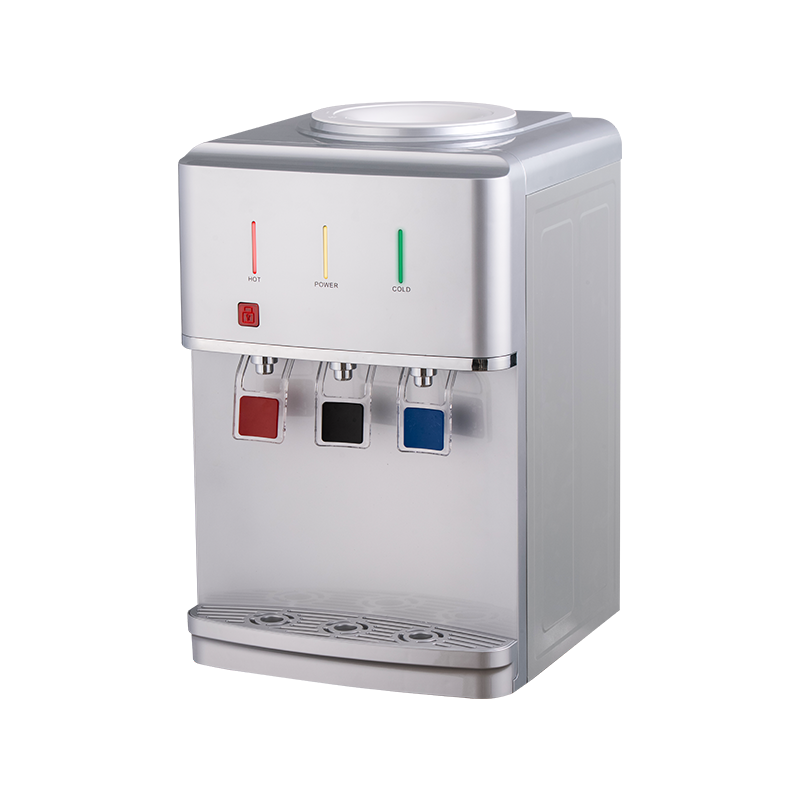
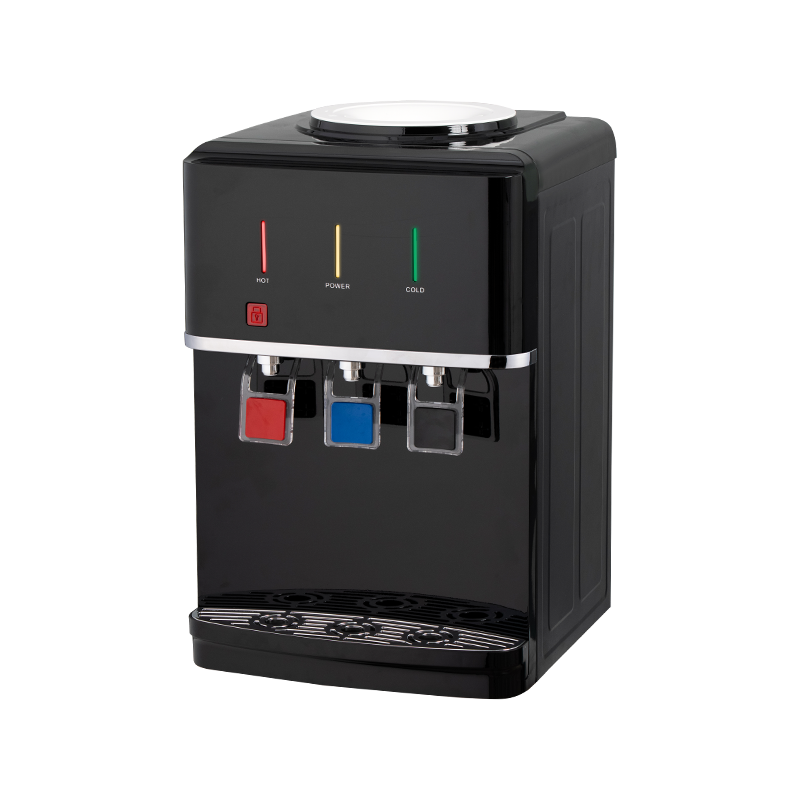
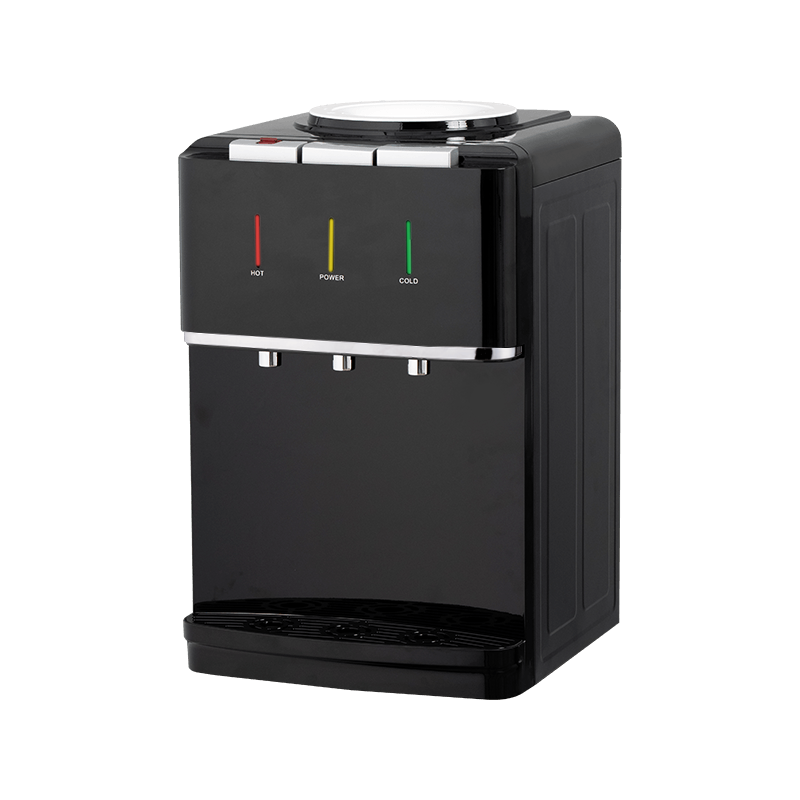
The technical superiority of a Desktop Water Dispenser is measured by its ability to deliver precise temperatures within seconds without the energy waste associated with traditional hot-tank storage.
-
Thick-Film Instant Heating and Thermal Efficiency: Unlike traditional dispensers that maintain a large reservoir of hot water, a premium Desktop Water Dispenser utilizes a thick-film heating element. This technology involves a non-conductive ceramic or stainless steel tube coated with a resistive heating layer. When water flows through the tube, it is heated instantaneously to the desired temperature—ranging from 45°C for milk formula to 100°C for tea—within 3 seconds. This "on-demand" logic significantly reduces standby power consumption and prevents the "repeated boiling" phenomenon, ensuring that the water remains fresh and chemically stable for every dispense cycle.
-
Reverse Osmosis (RO) and Composite Carbon Filtration: To ensure the highest level of purity, the Desktop Water Dispenser often incorporates a miniaturized multi-stage filtration system. The first stage typically consists of a PP cotton and activated carbon composite filter to remove sediment, chlorine, and odors. The secondary stage utilizes a high-precision RO membrane with a filtration accuracy of 0.0001 microns, effectively stripping away heavy metals, bacteria, and viruses. High-end units also include a post-carbon mineralizer that reintroduces essential trace elements like calcium and magnesium, ensuring that the purified water is not only safe but also possesses a balanced, natural taste.
-
Integrated Water Circuit and Leakage Prevention Logic: The internal plumbing of a Desktop Water Dispenser is often constructed as a single-piece integrated water circuit. By reducing the number of joints and connectors, the risk of internal leakage is minimized. Furthermore, advanced units are equipped with NTC (Negative Temperature Coefficient) sensors and optical water level detectors. These components provide real-time feedback to the main control board; if the temperature exceeds a safety threshold or if a dry-burn condition is detected, the system instantaneously cuts off power, protecting the internal heating module and ensuring user safety in residential environments.
|
Technical Parameter |
Standard Desktop Dispenser |
Advanced RO Desktop Dispenser |
Professional UV-C Dispenser |
|---|---|---|---|
|
Heating Method |
Internal Hot Tank |
Thick-Film Instant Heat |
Quartz Tube Instant Heat |
|
Filtration System |
Basic Carbon Filter |
4-Stage RO + Mineralization |
5-Stage RO + UV-C Sterilization |
|
Temperature Settings |
Room Temp / Hot |
5-7 Fixed Temperature Modes |
Stepless Precise Temp Control |
|
Storage Capacity |
External 5L - 18L Bottle |
Internal 4L - 6L Tank |
Tankless / Direct Connection |
|
Filtration Accuracy |
1.0 Micron |
0.0001 Micron |
0.0001 Micron + UV |
Why Is UV-C Sterilization and Smart TDS Monitoring Critical for Maintaining the Microbiological Safety of a Desktop Water Dispenser?
Maintaining the sterility of the dispensing point is a major engineering focus for the Desktop Water Dispenser, particularly in environments where water may sit in a storage tank for extended periods.
-
Embedded UV-C LED Sterilization Modules: Even with high-precision filtration, the water outlet and the internal storage tank of a Desktop Water Dispenser can become breeding grounds for bacteria if exposed to air. To combat this, professional-grade dispensers integrate UV-C LED sterilization modules. These LEDs emit ultraviolet light at a wavelength of approximately 260-280nm, which penetrates the cell walls of microorganisms and disrupts their DNA structure. Typically, these modules are programmed to activate automatically for 15 minutes every hour, ensuring that 99.9% of bacteria (such as E. coli) are eliminated without the use of chemical disinfectants.
-
Real-Time TDS (Total Dissolved Solids) Monitoring: To provide users with transparent data on water quality, the Desktop Water Dispenser is often equipped with an integrated TDS sensor at both the inlet and the outlet. These sensors measure the electrical conductivity of the water, which correlates to the concentration of dissolved minerals and salts. The data is displayed on a high-definition LED screen, allowing the operator to verify the efficiency of the RO membrane in real-time. A significant delta between the "raw" and "pure" TDS readings serves as a primary diagnostic tool for filter health and system integrity.
-
Smart Filter Life Algorithms and NFC Recognition: Managing filter replacement is essential for the long-term performance of the Desktop Water Dispenser. Rather than relying on simple timers, advanced systems use flow-based algorithms that calculate the actual volume of water processed. Some units even utilize NFC (Near Field Communication) tags on the filter cartridges. When a new filter is installed, the machine automatically recognizes the filter type and resets the lifespan counter. This ensures that the user is notified exactly when the filtration performance begins to decline, preventing "over-usage" of exhausted carbon or membranes.
How Do Ergonomic UI Design and Silent Pumping Technology Optimize the User Experience of a Desktop Water Dispenser?
The "desktop" nature of the device implies a high level of human-machine interaction, necessitating a focus on noise reduction and intuitive control logic.
-
Silent Diaphragm Pumps and Vibration Dampening: Since a Desktop Water Dispenser is often placed in quiet office or bedroom environments, the acoustic profile of the internal pump is a key engineering metric. High-end models employ brushless DC (BLDC) diaphragm pumps mounted on specialized rubber vibration isolators. These pumps are designed to operate at noise levels below 45 decibels, roughly equivalent to a quiet library. By optimizing the fluid path to reduce turbulence and cavitation, the dispenser provides a smooth, splash-free flow even when pumping from a deep internal reservoir.
-
Touch-Sensitive Interfaces and Child Safety Locks: The UI of a modern Desktop Water Dispenser is typically a waterproof glass touch panel. These interfaces allow for precise volume selection—ranging from a 150ml cup to a 1000ml kettle—preventing overflows. A critical safety feature is the intelligent child lock. To dispense hot water (above 50°C), the user must first engage a specific unlock sequence. In many units, the child lock automatically reactivates after 10 seconds of inactivity, providing a robust layer of protection against accidental burns in households with small children.
-
Modular Water Tank Design and Antibacterial Materials: Maintenance is simplified through the use of a detachable, food-grade water tank. The plastic components used in the tank and the internal tubing of the Desktop Water Dispenser are often treated with silver-ion antimicrobial agents. These agents inhibit the growth of biofilm and algae on the interior surfaces. The tank's wide-mouth design allows for easy manual cleaning, while the transparent material provides a clear visual indicator of the remaining water volume, ensuring that the machine is never run dry, which could otherwise damage the high-pressure pump.
By synthesizing instant thermal technology, precision RO filtration, and intelligent safety monitoring, the Desktop Water Dispenser has become a highly efficient and reliable solution for personalized hydration management.