English
 Español
 عربى
عربى 中文简体
中文简体

Which Water Dispenser Type You Should Choose
If you have a dedicated floor space of at least 30 by 30 centimeters and serve more than four people daily, a Vertical Water Dispenser is your most practical and cost-effective option. It holds a standard 18.9-liter bottle, delivers high-volume hot and cold water output, and typically lasts 8 to 12 years with minimal maintenance. If your priority is serving multiple temperature outputs simultaneously from a single unit, a Three-outlet Water Dispenser that provides hot, warm, and cold water from separate taps is the upgrade worth considering. For individuals, small home offices, or compact kitchens where countertop space is more available than floor space, a Desktop Water Dispenser delivers adequate performance in a footprint as small as 20 by 20 centimeters without requiring a floor-standing installation.
The decision ultimately comes down to three factors: daily water consumption volume, available installation space, and whether multiple temperature outputs are needed simultaneously. This guide addresses all three types with specific data so you can match the right product to your actual situation.
Vertical Water Dispenser: Capacity, Performance, and Best Placement
What a Vertical Water Dispenser Delivers in Practice
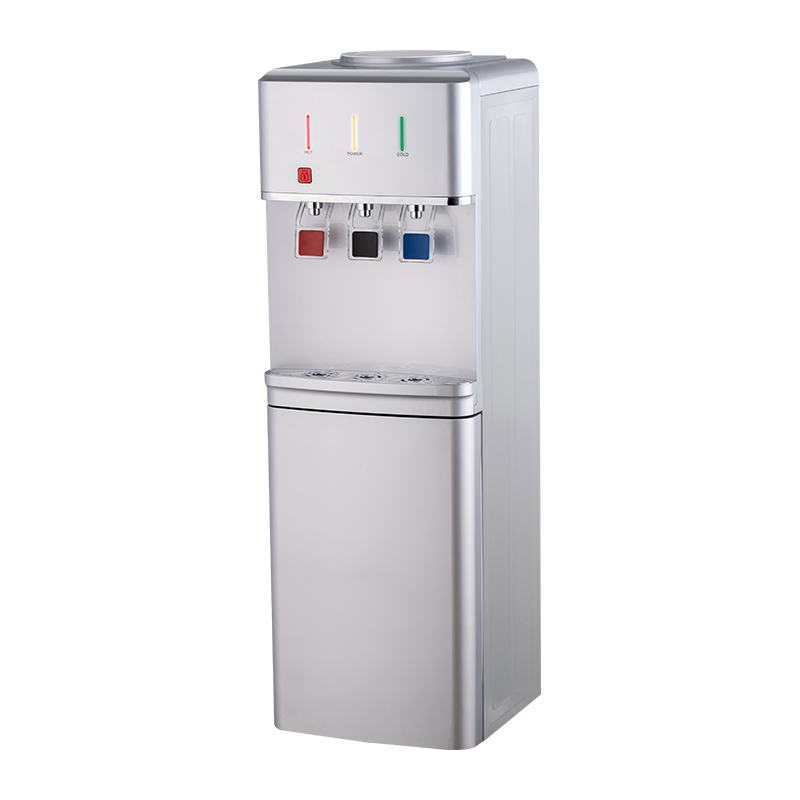
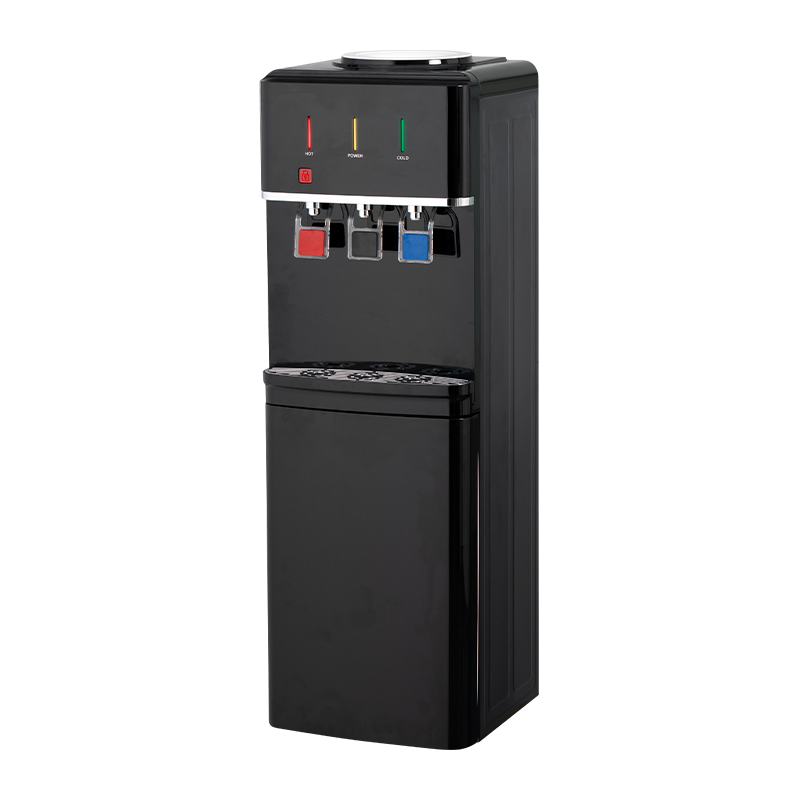
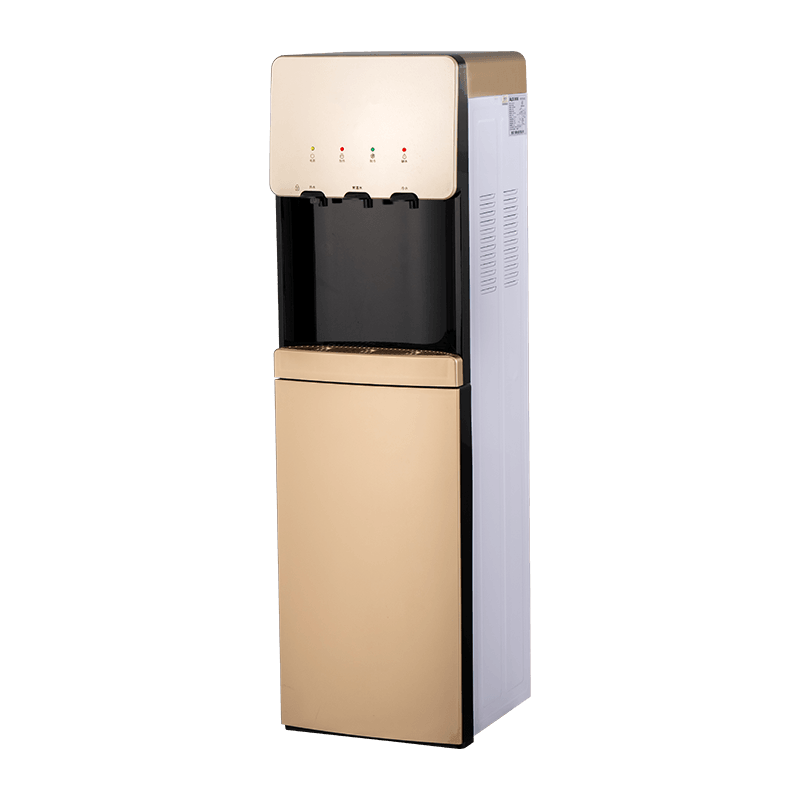
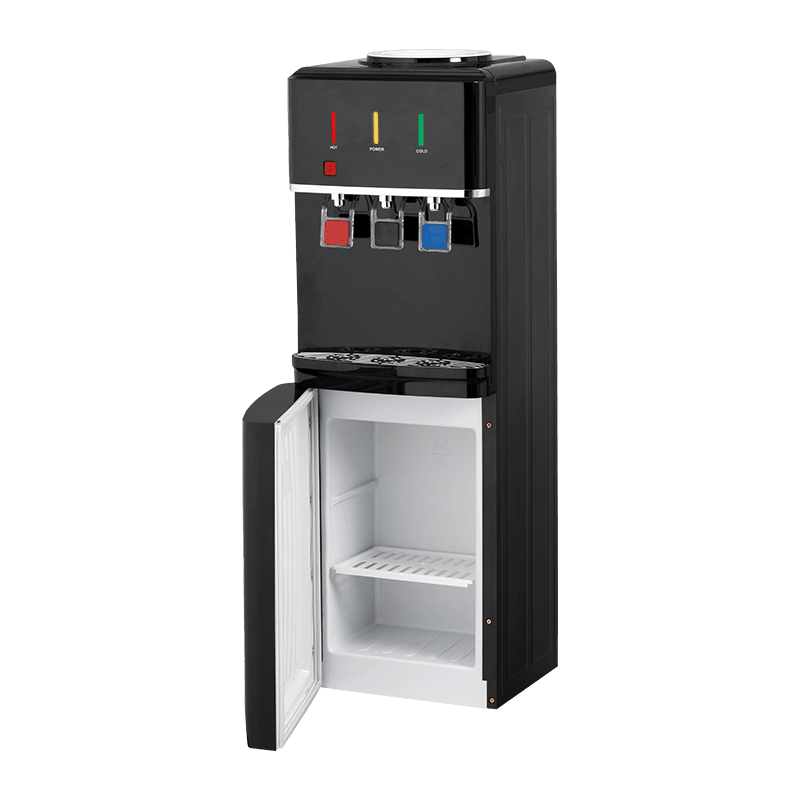
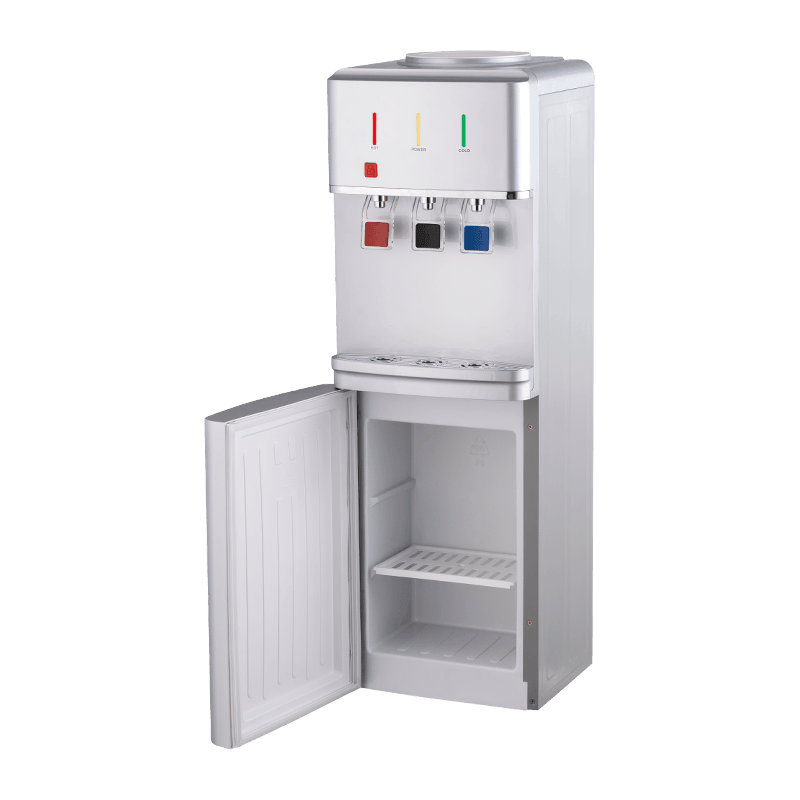
A Vertical Water Dispenser is a floor-standing unit that uses a top-loaded or bottom-loaded 18.9-liter water bottle as its supply source. Most models stand between 110 and 130 centimeters tall and occupy a base footprint of approximately 28 to 35 centimeters square. The vertical format provides a tap height of roughly 90 to 100 centimeters, which is ergonomically comfortable for most adults to fill a cup or bottle without bending.
In terms of thermal performance, a quality Vertical Water Dispenser maintains cold water at 4 to 10 degrees Celsius and hot water at 85 to 95 degrees Celsius. Cold water output is sustained by a compressor or thermoelectric cooling system, while hot water is maintained by a stainless steel internal tank with a rated capacity of 1 to 1.5 liters. This means the unit can deliver a continuous supply of hot water for tea, instant coffee, or instant noodles without waiting for a kettle to boil.
Power consumption for a Vertical Water Dispenser in normal operating mode typically ranges from 80 to 120 watts for cooling and 400 to 500 watts for heating. Most units cycle their heating and cooling elements rather than running them continuously, so average daily electricity use is considerably lower than peak wattage suggests, typically in the range of 0.5 to 1.2 kilowatt-hours per day depending on ambient temperature and usage frequency.
Where a Vertical Water Dispenser Fits Best
- Office common areas or break rooms serving 5 or more people per day
- Home kitchens or dining areas where floor space near a wall or corner is available
- Gyms, waiting rooms, and retail spaces where high-volume water access throughout the day is needed
- Any environment where users need to fill large bottles or containers, as the tap height and clearance below it accommodate taller vessels
Three-outlet Water Dispenser: Why Multiple Temperature Outputs Matter
How a Three-outlet Water Dispenser Works
A Three-outlet Water Dispenser provides three separate taps delivering hot water, warm water (typically 45 to 55 degrees Celsius), and cold water from a single unit. This configuration is available in both vertical floor-standing and desktop formats, making it a functional upgrade within either form factor rather than a separate category of its own.
The warm water output, which distinguishes a Three-outlet Water Dispenser from a standard two-tap model, is achieved by blending heated and ambient-temperature water in an internal mixing valve or by maintaining a separate intermediate-temperature tank. This warm output is particularly useful for preparing infant formula, brewing green tea that requires water below boiling point, or diluting hot beverages for children. Green tea, for example, is best brewed at 70 to 80 degrees Celsius rather than at full boiling temperature, and a Three-outlet Water Dispenser makes this precision easy without manual mixing.
Comparing Two-outlet and Three-outlet Water Dispenser Configurations
| Feature | Standard Two-outlet Dispenser | Three-outlet Water Dispenser |
|---|---|---|
| Temperature outputs | Hot and cold only | Hot, warm, and cold |
| Warm water range | Not available | 45 to 55 degrees Celsius |
| Best for infants | Requires manual blending | Direct warm output usable |
| Typical price premium | Base price | 10 to 25 percent higher |
| Maintenance complexity | Lower | Slightly higher (third tap and valve) |
| Ideal household profile | Adults only or office use | Families with infants or elderly members |
The price premium for a Three-outlet Water Dispenser is modest relative to the convenience it delivers, particularly for households with young children or elderly members who require water at a specific temperature for safety and comfort. For pure office or adult-only household use where hot and cold are sufficient, the standard two-outlet configuration remains the more economical choice.
Desktop Water Dispenser: Compact Performance for Limited Spaces
What Makes a Desktop Water Dispenser Different
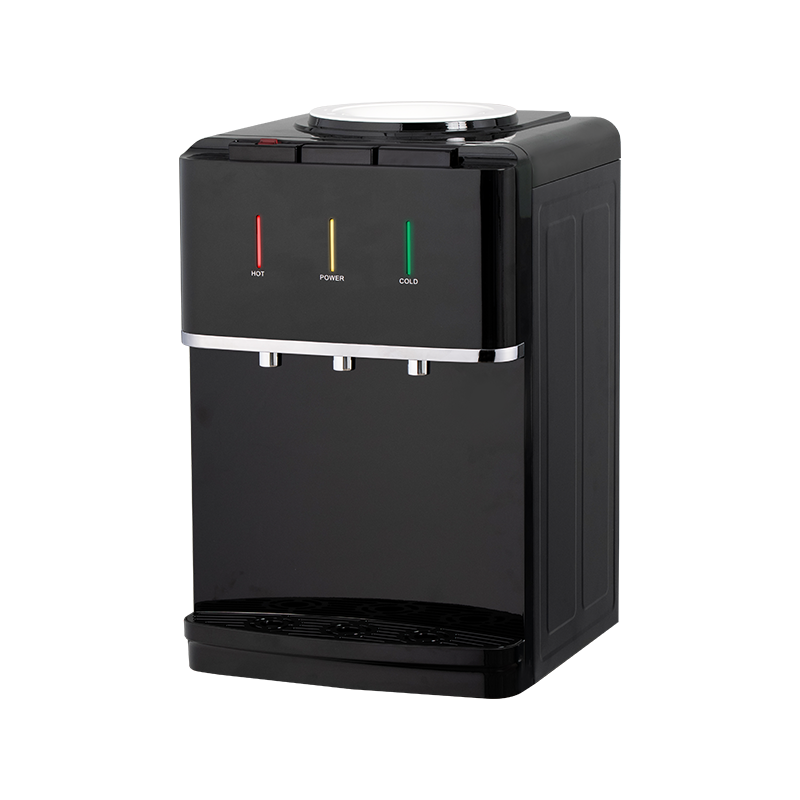
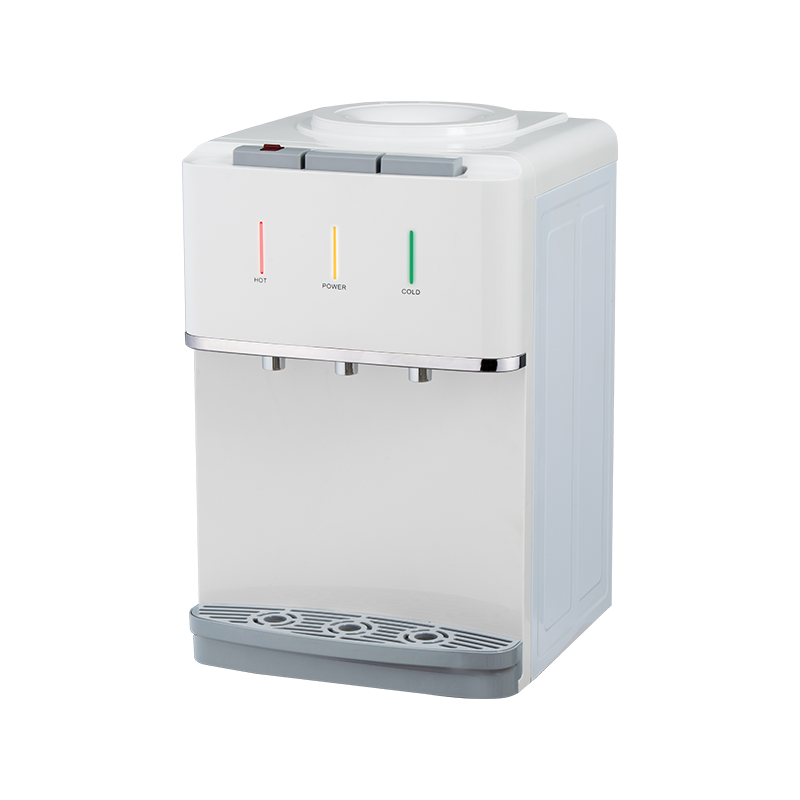
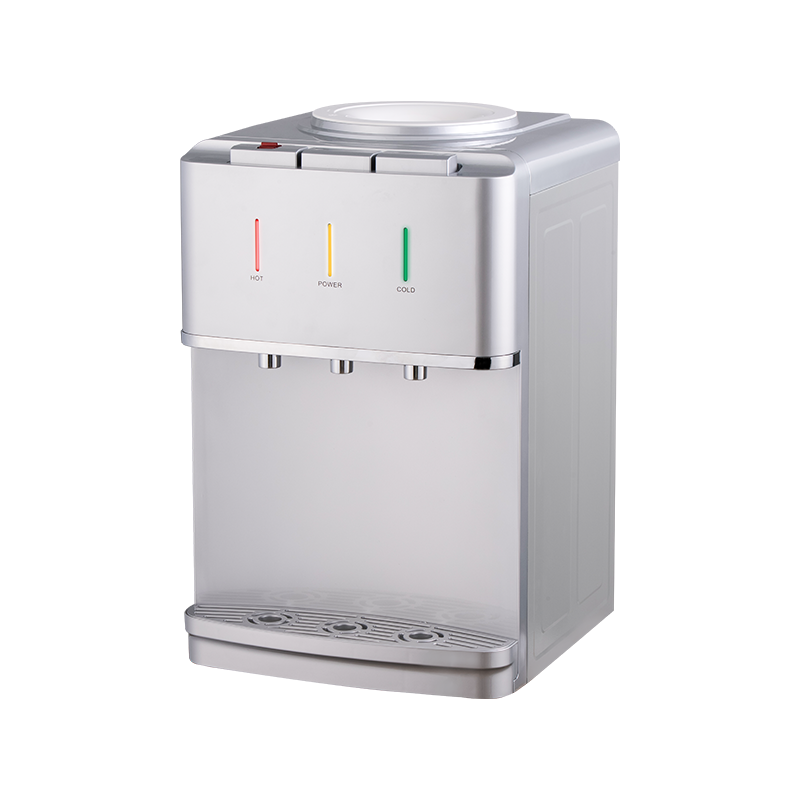
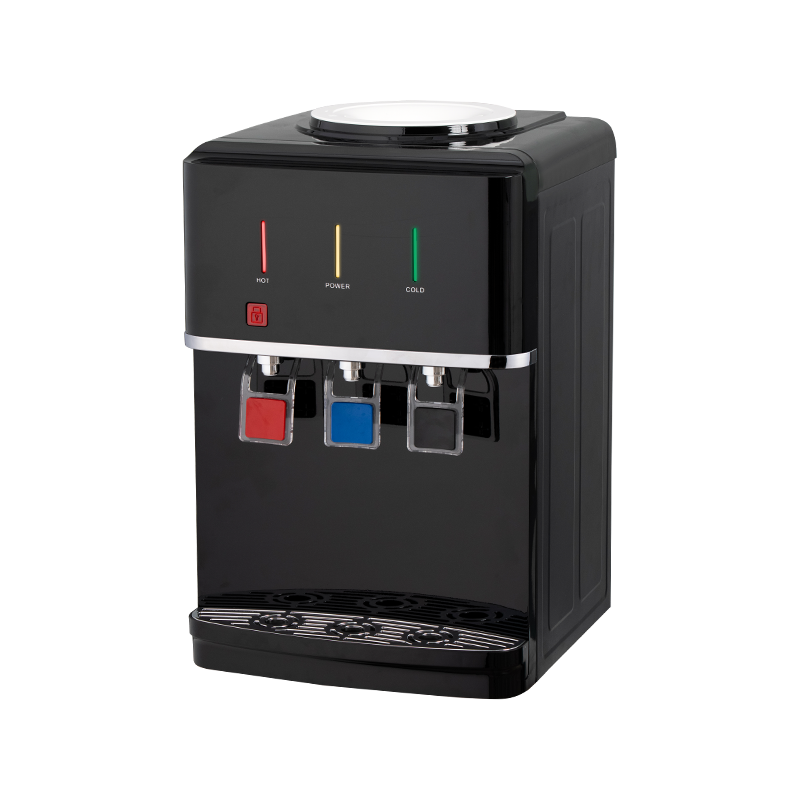
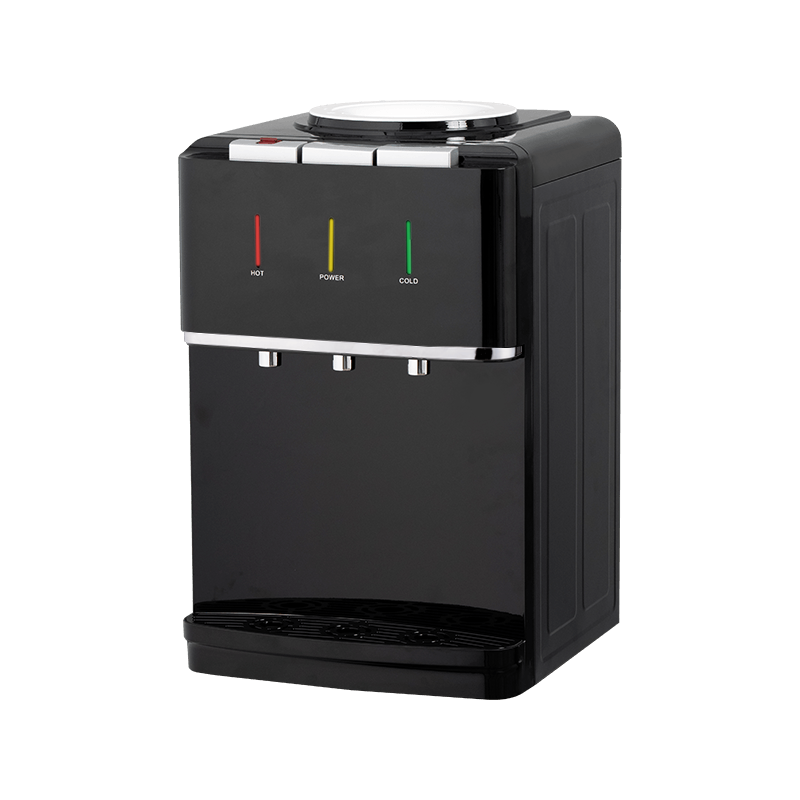
A Desktop Water Dispenser is a countertop-format unit designed to sit on a table, kitchen counter, office desk, or any elevated flat surface. It uses smaller water bottles ranging from 4 to 11.3 liters, or in the case of tankless models, connects directly to a filtered water line. The footprint is typically 20 to 28 centimeters wide and 30 to 45 centimeters deep, making it feasible in spaces where a full Vertical Water Dispenser would be impractical.
Despite its compact size, a quality Desktop Water Dispenser maintains thermal performance comparable to larger units for low-to-medium demand scenarios. Cold water temperature is typically maintained between 5 and 12 degrees Celsius and hot water between 80 and 95 degrees Celsius. The hot water tank capacity in a desktop unit is smaller, usually 0.5 to 0.8 liters, which is sufficient for two to three consecutive hot beverage servings before the tank requires a brief recovery period of 3 to 5 minutes.
Who Benefits Most From a Desktop Water Dispenser
- Studio apartment residents or single-occupant households where an 18.9-liter bottle would be too heavy to lift onto a floor-standing unit and too slow to consume before it loses freshness
- Small home offices of one to three people where a full Vertical Water Dispenser would dominate limited floor space
- Dormitory rooms or shared living spaces where the unit needs to sit on a desk or shelf rather than occupy valuable floor area
- Renters or frequent movers who need a portable, easy-to-relocate water solution that does not require installation or permanent placement
Side-by-Side Comparison: Vertical, Three-outlet, and Desktop Water Dispensers
| Specification | Vertical Water Dispenser | Three-outlet Water Dispenser | Desktop Water Dispenser |
|---|---|---|---|
| Format | Floor standing | Floor standing or desktop | Countertop |
| Bottle size | 18.9 liters | 18.9 liters (floor) or 4 to 11.3 liters (desktop) | 4 to 11.3 liters |
| Hot water tank capacity | 1 to 1.5 liters | 1 to 1.5 liters | 0.5 to 0.8 liters |
| Cold water temperature | 4 to 10°C | 4 to 10°C | 5 to 12°C |
| Hot water temperature | 85 to 95°C | 85 to 95°C | 80 to 95°C |
| Warm water output | Not standard | 45 to 55°C (dedicated tap) | Available on some models |
| Footprint | 28 to 35 cm square | 28 to 35 cm square | 20 to 28 cm wide |
| Recommended daily users | 4 or more people | 3 or more people | 1 to 3 people |
| Average daily power use | 0.8 to 1.2 kWh | 0.9 to 1.3 kWh | 0.4 to 0.8 kWh |
Maintenance and Hygiene: Keeping Any Water Dispenser Clean and Safe
Cleaning Frequency and What Happens If You Skip It
All three dispenser types require regular cleaning to prevent bacterial and mold growth inside the water tanks, taps, and drip trays. The recommended cleaning interval for any water dispenser is every 3 to 6 months, or more frequently if the unit is in a dusty environment or used heavily. Neglected dispensers develop biofilm on interior tank surfaces and tap nozzles, which can introduce contamination into water that appears visually clean.
The cleaning process for a Vertical Water Dispenser or Three-outlet Water Dispenser involves draining all water from the tanks, flushing with a food-grade sanitizing solution (typically a diluted bleach or citric acid solution), rinsing thoroughly with clean water, and wiping all external surfaces including the drip tray. A Desktop Water Dispenser follows the same process but is easier to handle due to its smaller tank volume and lighter weight.
Signs That Indicate Immediate Cleaning Is Needed
- Visible discoloration or sliminess inside the tap nozzle or around the tap area
- An off or stale taste in dispensed water that was not present when the bottle was fresh
- Visible mold or dark spots in the drip tray or on the bottle neck collar
- Any visible standing water inside the cabinet area of a bottom-load Vertical Water Dispenser
Frequently Asked Questions
1. What is the main advantage of a Vertical Water Dispenser over a Desktop Water Dispenser?
A Vertical Water Dispenser holds a full 18.9-liter bottle and is designed for higher daily usage by four or more people. Its larger hot and cold water tanks deliver continuous output without the brief recovery periods required by the smaller tanks in a Desktop Water Dispenser. It is also ergonomically better positioned for standing adults to fill cups and bottles without bending.
2. Is a Three-outlet Water Dispenser worth the price premium over a standard two-tap model?
For households with infants, elderly members, or anyone who regularly needs water at a specific intermediate temperature, the warm water output of a Three-outlet Water Dispenser is genuinely useful and worth the 10 to 25 percent price premium. For an office or adult-only household where hot and cold outputs cover all practical needs, the standard two-tap model is the more economical choice.
3. Can a Desktop Water Dispenser handle hot water for cooking as well as drinking?
A Desktop Water Dispenser delivers hot water at 80 to 95 degrees Celsius, which is sufficient for instant noodles, oatmeal, and hot beverages. Its hot water tank of 0.5 to 0.8 liters limits consecutive servings before a 3 to 5 minute recovery period is needed. For high-volume hot water needs such as cooking pasta or filling a large teapot repeatedly, a Vertical Water Dispenser with a 1 to 1.5 liter hot tank is more suitable.
4. How often should I change the water bottle in a Vertical Water Dispenser?
An 18.9-liter bottle typically lasts a household of four people approximately 5 to 7 days when used as the primary drinking water source. In an office of 10 people, the same bottle may last only 1 to 2 days. Once the bottle is on the dispenser, consume it within 30 days even if not fully empty, as water quality can degrade over time once the bottle seal is broken and the interior is exposed to air.
5. What is the warm water temperature in a Three-outlet Water Dispenser and what is it used for?
The warm water output in a Three-outlet Water Dispenser is typically maintained between 45 and 55 degrees Celsius. This range is ideal for preparing infant formula (recommended at 40 to 50 degrees Celsius to avoid destroying nutrients), brewing green or white tea (optimal at 70 to 80 degrees, achievable by combining warm and hot outputs), and providing a comfortable drinking temperature for elderly users who find both very hot and very cold water uncomfortable.
6. Does a Desktop Water Dispenser require installation or a water line connection?
Most Desktop Water Dispensers use a small removable bottle and require no installation or plumbing connection. They simply plug into a standard electrical outlet and are ready to use. Some models offer a direct-connect option for filtered tap water, which does require a basic under-sink connection, but this is an optional feature rather than a requirement for standard operation.
7. How do I choose between a top-load and bottom-load Vertical Water Dispenser?
A top-load Vertical Water Dispenser requires lifting an 18.9-liter bottle (approximately 19 kilograms when full) overhead to place it on the unit, which is physically demanding. A bottom-load model accepts the bottle at floor level inside a cabinet, making bottle replacement much easier and safer. Bottom-load models typically cost 20 to 40 percent more but are strongly recommended for users who change bottles frequently or who have any physical limitation affecting overhead lifting.
8. Are water dispensers energy-efficient compared to keeping a kettle boiled?
Yes. A Vertical Water Dispenser uses 0.8 to 1.2 kilowatt-hours per day on average because it cycles its heating element on and off to maintain temperature rather than heating water from cold each time. A kettle boiling 1.7 liters consumes approximately 0.1 to 0.12 kilowatt-hours per boil. If used more than 8 to 10 times per day across a household or office, the cumulative energy use of repeated kettle boiling exceeds the constant-standby cost of a water dispenser.
9. Can a Three-outlet Water Dispenser be used as a Desktop Water Dispenser?
Some Three-outlet Water Dispenser models are available in a desktop format compatible with smaller 4 to 11.3 liter bottles, combining the convenience of compact countertop placement with the functionality of three temperature outputs. However, the most common Three-outlet Water Dispenser configuration is floor-standing with an 18.9-liter bottle, targeting family or office use rather than individual or small-space scenarios.
10. What safety features should I look for in any water dispenser?
The most important safety features to verify before purchasing any Vertical Water Dispenser, Three-outlet Water Dispenser, or Desktop Water Dispenser include: a child safety lock on the hot water tap to prevent accidental scalding, an automatic shut-off function that stops heating if the water level drops below a safe minimum, food-grade stainless steel inner tanks rather than plastic-lined tanks for hot water storage, and a BPA-free designation for all water contact components. Models certified to relevant national electrical safety standards (such as UL, CE, or equivalent) provide an additional assurance of reliable construction.