English
 Español
 عربى
عربى 中文简体
中文简体

Choosing between a Top Loading Water Dispenser and a Bottom Mounted Water Dispenser is a practical decision that comes down to how you want to handle the water bottle, how the appliance should look in your space, and which design best serves the people who will use it daily. Both formats deliver the same core benefit: temperature controlled drinking water on demand from a large format reusable bottle, typically the standard 18.9 liter (5 gallon) size common in office and residential water delivery services. The difference lies entirely in where the bottle is positioned and how that positioning affects the user experience, the bottle change process, and the visual appearance of the appliance in the room.
The direct answer for anyone deciding between these two formats is this: a Top Loading Water Dispenser is the simpler, more affordable design that works well when the physical ability to lift a 19 kilogram full bottle to shoulder height is not a concern; a Bottom Mounted Water Dispenser eliminates the bottle lifting challenge entirely, presents a cleaner visual appearance with the bottle concealed inside a lower cabinet, and is the preferred choice for households and offices with elderly users, users with physical limitations, or any environment where a more refined aesthetic is a priority. This article explains both designs in full practical detail.
Top Loading Water Dispenser: How It Works and Who It Suits
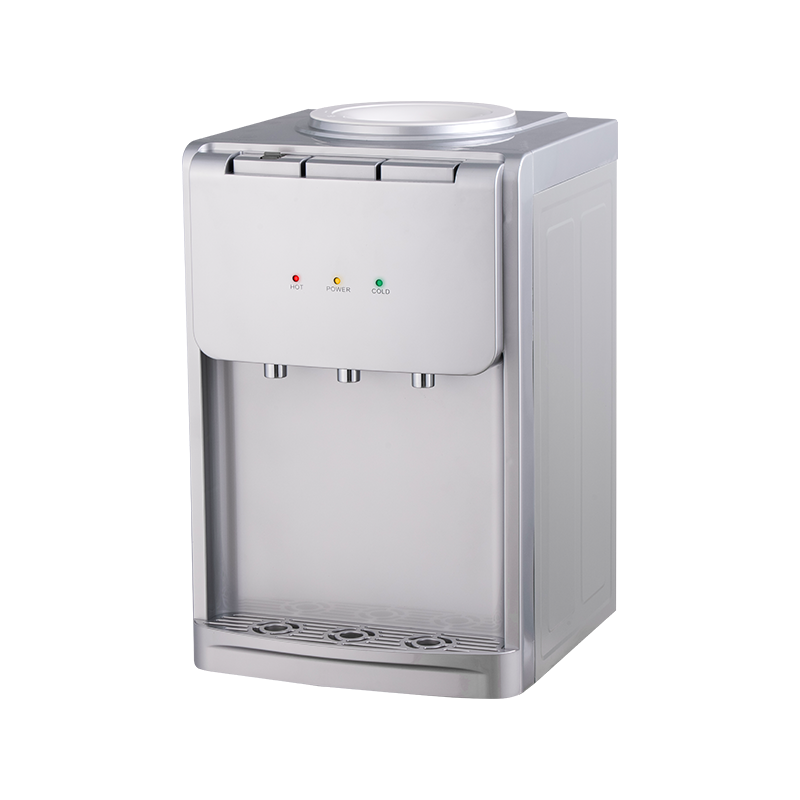
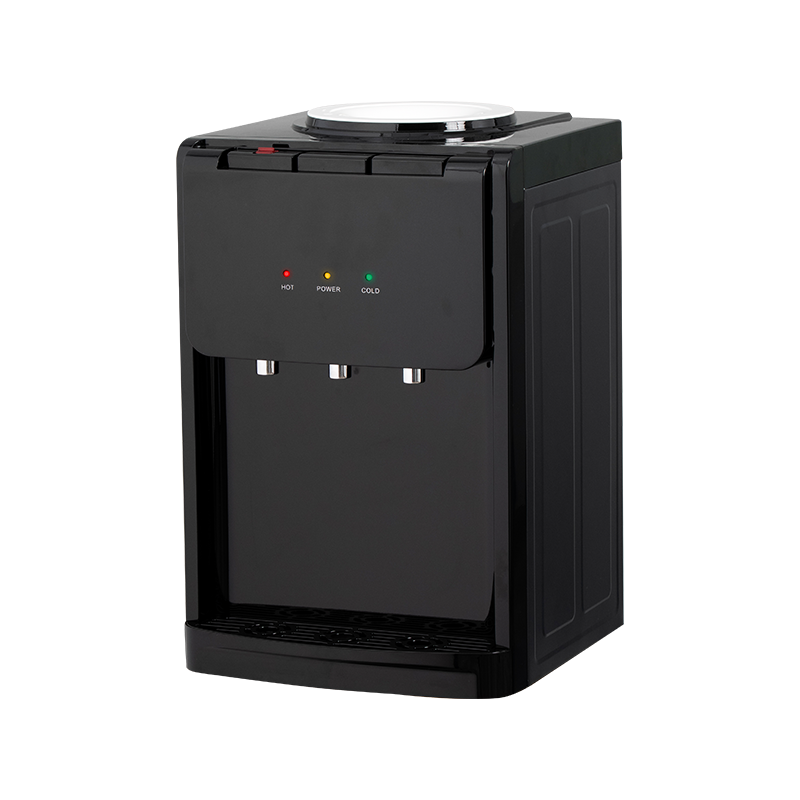
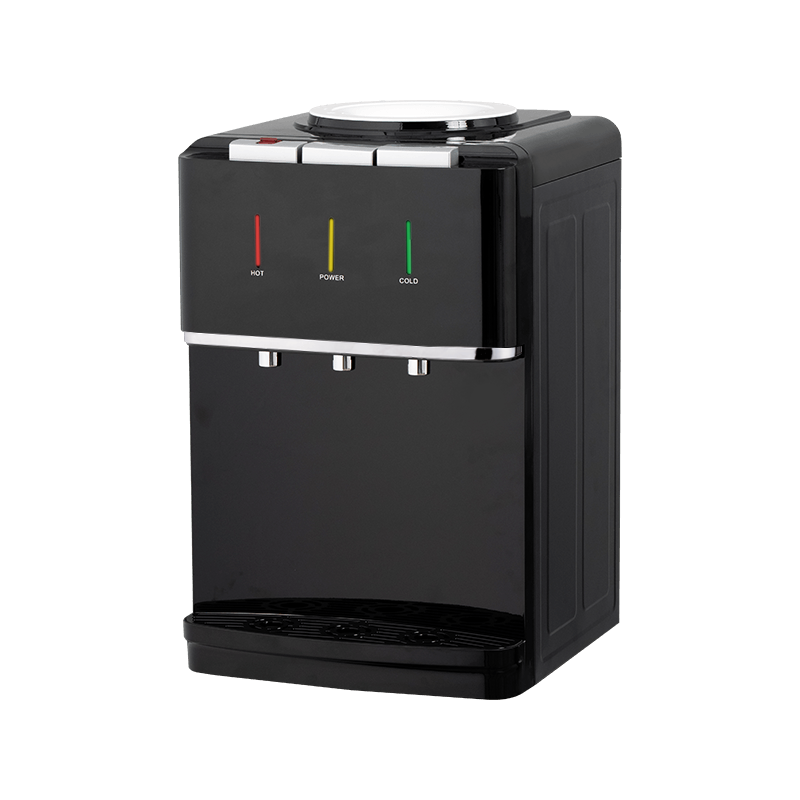
A Top Loading Water Dispenser positions the water bottle inverted above the dispenser body, with the bottle neck pushed down onto a probe or into a sealed collar at the top of the unit. Gravity and the vacuum created by the sealed bottle to probe connection work together to draw water down into the internal reservoir as water is dispensed from the taps below. The probe punctures or opens the bottle seal when the bottle is pushed onto it, and water flows down into the cold and hot water tanks within the dispenser body where it is chilled and heated to the set temperatures before dispensing.
The Bottle Loading Process in a Top Loading Dispenser
Loading a new bottle onto a Top Loading Water Dispenser requires the user to lift a full 18.9 liter bottle, which weighs approximately 19 kilograms, to a height of approximately 90 to 110 cm (the typical height of the top of a standard floor standing dispenser), invert it while supporting its weight, and align the bottle neck with the probe before lowering it into position. This is a physically demanding operation that many users manage successfully with practice, but it carries genuine risks for some groups:
- Risk of back injury: Lifting 19 kg to above shoulder height while twisting to invert the bottle is a recognized manual handling risk. In workplace settings governed by manual handling regulations, this task may require a risk assessment or mechanical aid to comply with health and safety requirements.
- Risk of water spillage: If the bottle is not inverted cleanly before placement, or if the probe is misaligned during lowering, water can spill from the open bottle neck. A mislabeled, cracked, or improperly sealed bottle is more likely to cause spillage in the top loading configuration because the full weight of the water column acts downward the moment the seal is broken.
- Not suitable for all users: Elderly users, individuals recovering from injury, pregnant women, and users with back, shoulder, or grip conditions should not attempt to lift and invert a full 19 kg bottle without assistance. For these users, the Top Loading Water Dispenser requires either a helper for each bottle change or an alternative design.
Advantages of the Top Loading Design
The top loading format has remained dominant in the water dispenser market for decades, and this persistence reflects genuine practical advantages that matter to many users:
- Lower purchase price: Top Loading Water Dispensers are consistently less expensive than Bottom Mounted equivalents with the same temperature capabilities. The price difference between entry level models in each format typically ranges from 20 to 50 percent, making the top loading design the more accessible choice for price sensitive buyers.
- Simpler mechanism: The gravity fed design requires no internal pump to move water from the bottle to the reservoir. This reduces the number of components that can fail, simplifies maintenance, and means that the unit continues to function even if an electrical fault disables the pump circuit that bottom loading designs depend on.
- Immediate visual confirmation of water level: Because the bottle is visible above the dispenser, users can see at a glance how much water remains without activating the unit or checking any display. Many users find this intuitive bottle level monitoring convenient for planning bottle replacement before the current bottle runs out during a busy day.
- Wide availability of compatible bottles: The top loading format is the global standard for water dispenser bottles, and the probe sizing and bottle neck configuration are highly standardized, meaning that bottles from most water delivery services are fully compatible without adapter rings or modification.
Bottom Mounted Water Dispenser: Ergonomic Loading and Clean Aesthetics
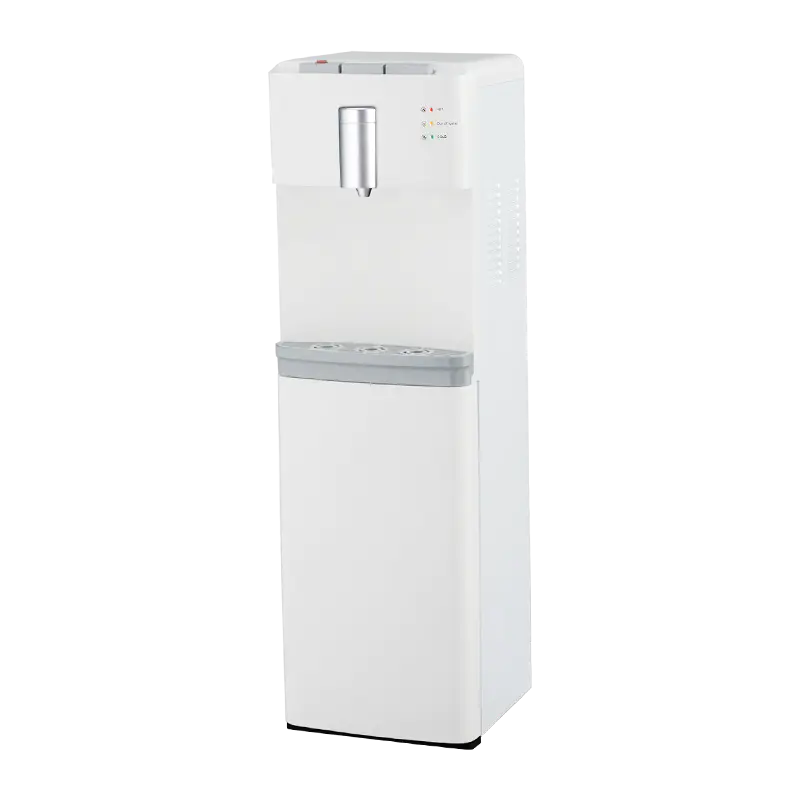
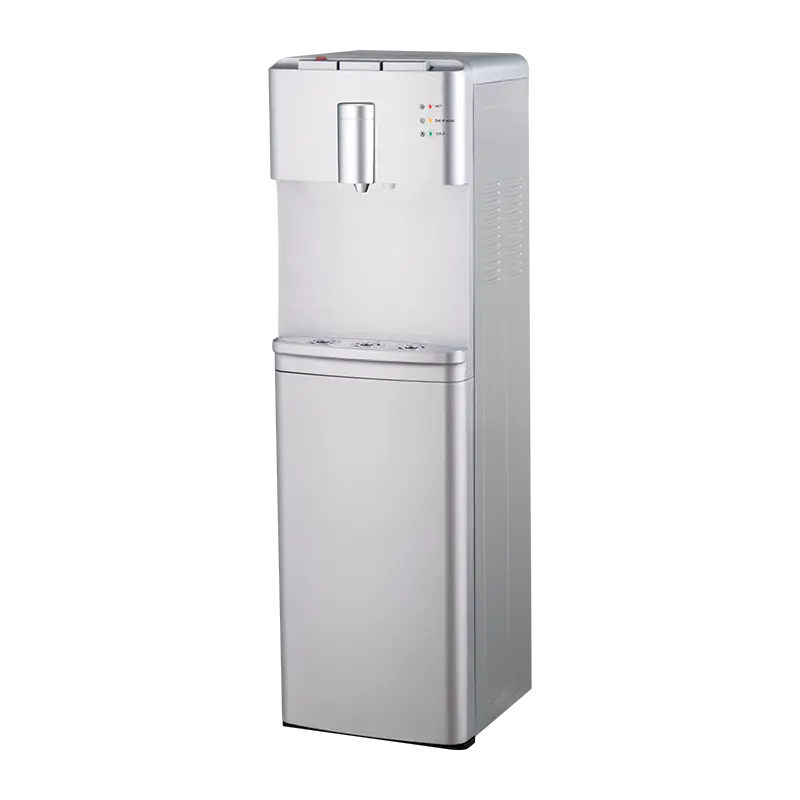
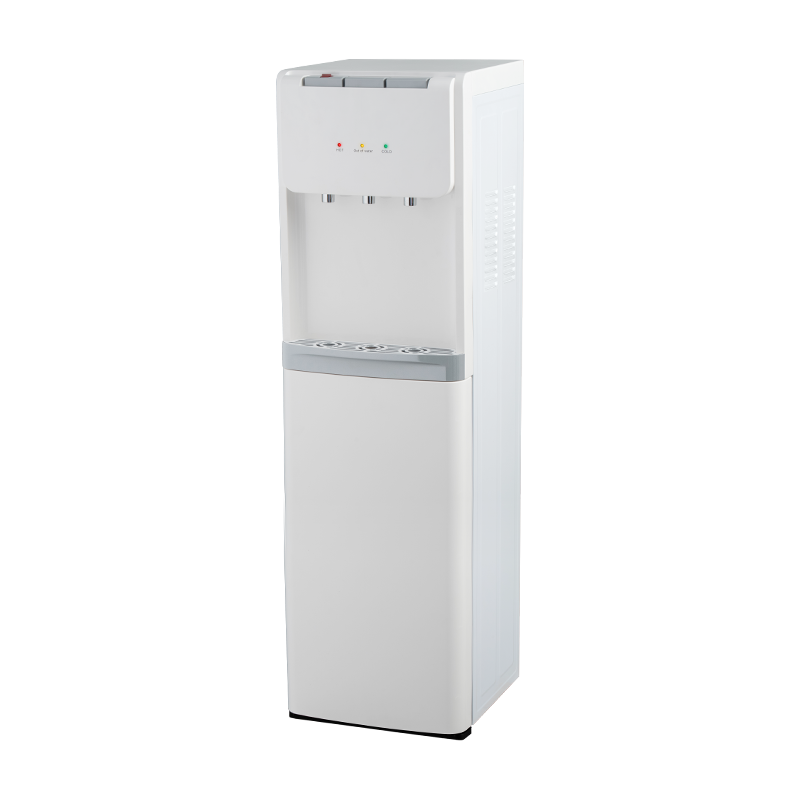
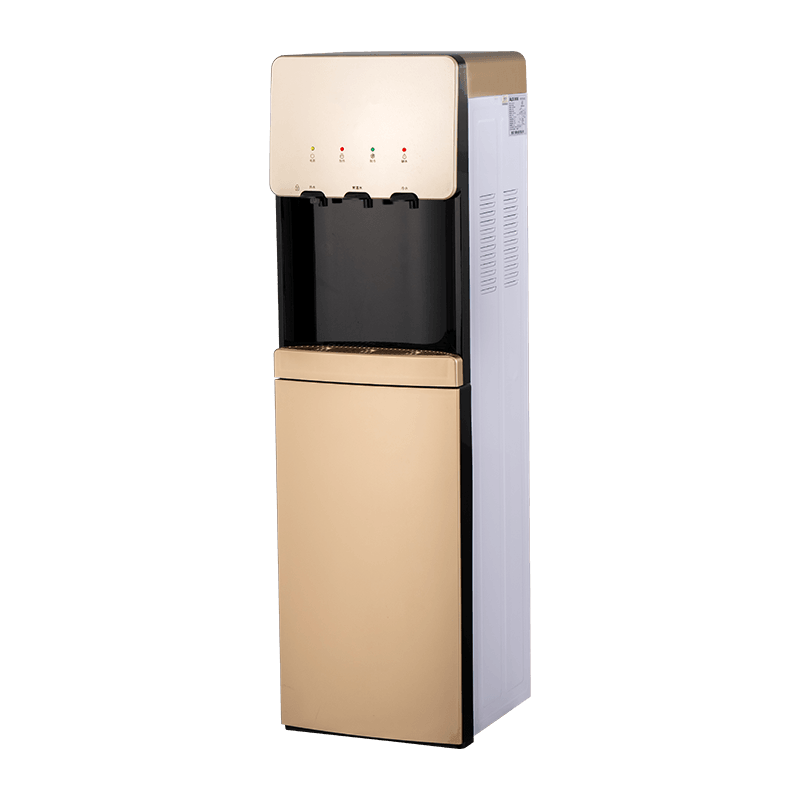
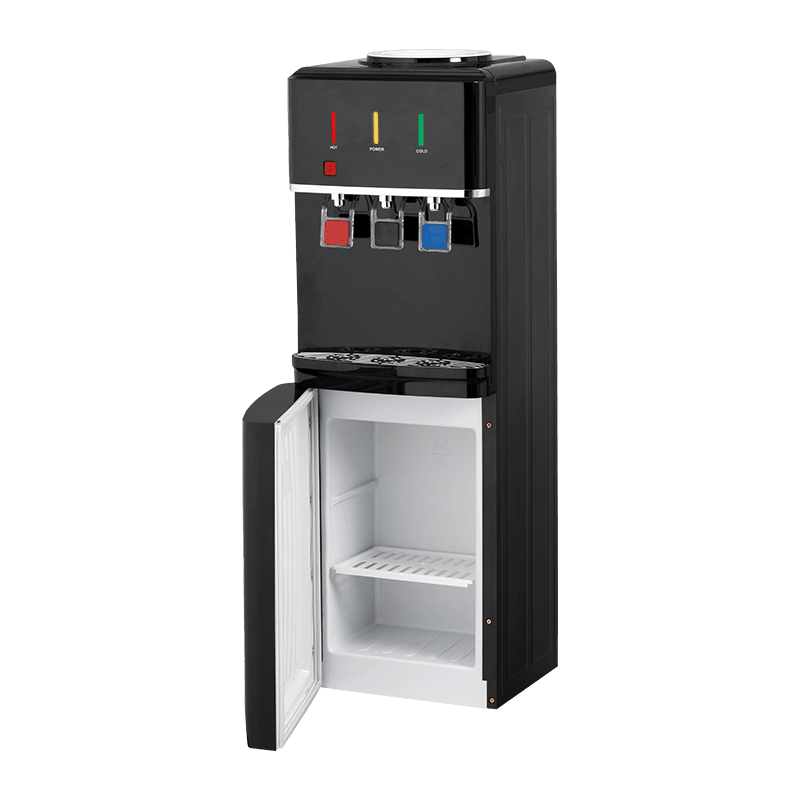
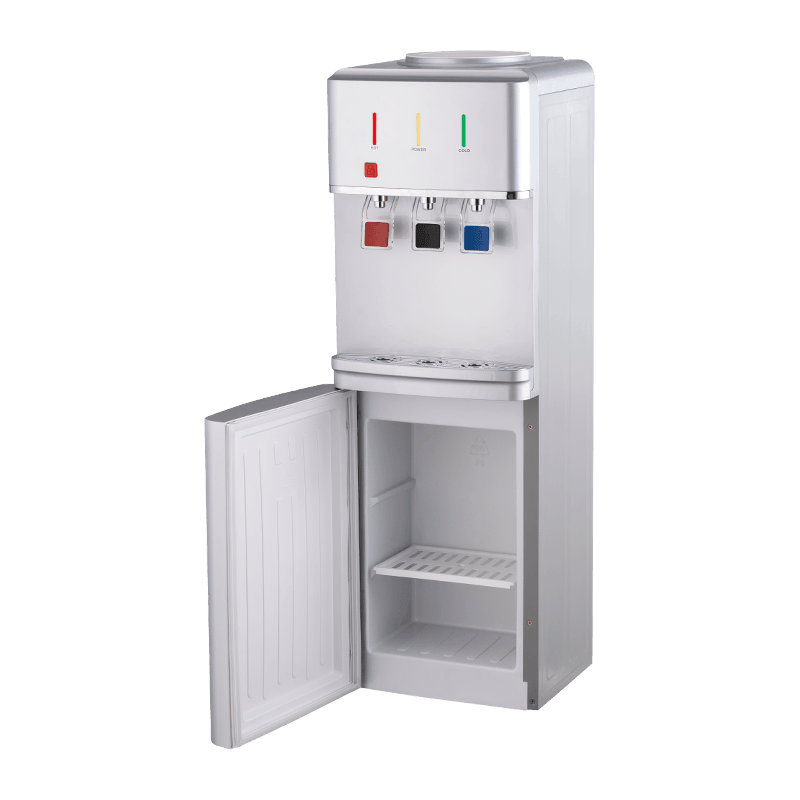
A Bottom Mounted Water Dispenser positions the water bottle in a concealed lower cabinet, typically accessible through a front door or pull out drawer at the base of the unit. The bottle sits upright in the cabinet, and an internal pump draws water upward through a tube that enters the bottle through its cap, delivering water to the cold and hot water tanks in the upper part of the unit. The pump activates automatically as needed to maintain the internal reservoir at the correct level, ensuring consistent water temperature and flow rate at the dispensing taps without requiring any action from the user beyond the initial bottle placement.
The Bottle Loading Process in a Bottom Mounted Dispenser
Loading a new bottle into a Bottom Mounted Water Dispenser involves opening the lower cabinet door, sliding the empty bottle out, sliding the full bottle in upright, connecting the bottle cap to the pump inlet tube, and closing the cabinet door. The full 19 kg bottle is handled at floor level throughout this process, never lifted above knee height, and is moved primarily by rolling or sliding rather than lifting. In timed bottle change trials comparing top loading and bottom mounted dispensers, the bottom mounted format consistently allows users of all physical capability levels to complete a bottle change in under 60 seconds with no spillage risk, while the top loading format shows significantly higher variability in completion time and a measurably higher spillage rate among users over 60 years of age or those with limited upper body strength.
Aesthetic Advantages of the Bottom Mounted Design
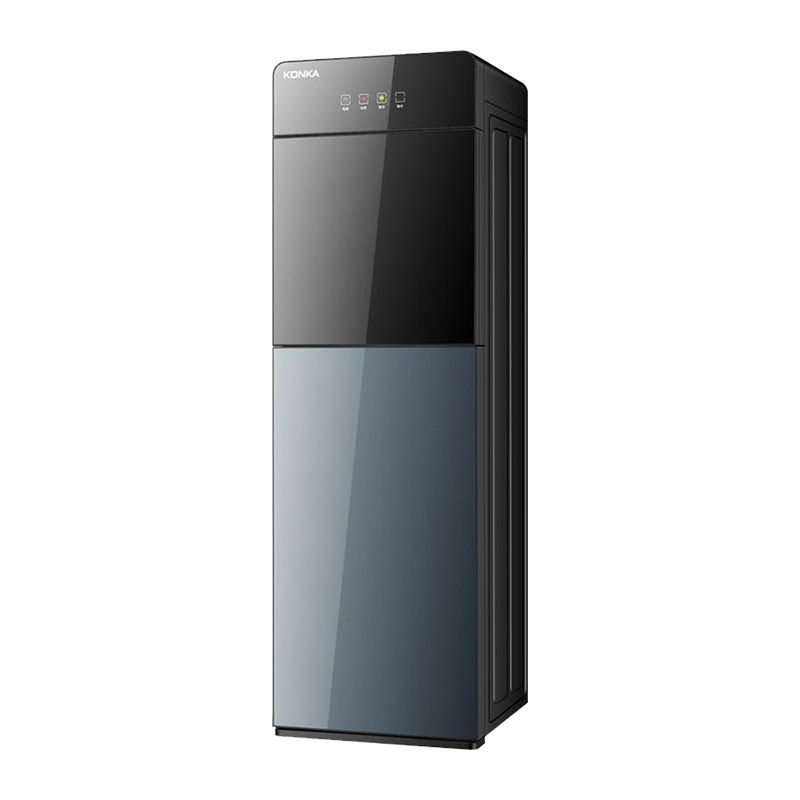
With the water bottle fully concealed inside the lower cabinet, the Bottom Mounted Water Dispenser presents a clean, uniform profile from any viewing angle. The visual appearance is more similar to a household appliance than the functional industrial look of a top loading unit with its prominent inverted bottle. In office environments where interior design and professional appearance matter, Bottom Mounted Water Dispensers are consistently specified by facilities managers and office designers over top loading equivalents because their appearance integrates more naturally into contemporary office furniture layouts, reception areas, and open plan office kitchens where the dispenser is visible to clients and visitors.
The Internal Pump: How It Works and What to Know
The pump in a Bottom Mounted Water Dispenser is a small centrifugal or peristaltic pump that operates on low voltage DC power drawn from the main power supply of the unit. It activates for a few seconds whenever the internal reservoir drops below a set level, drawing water from the bottle through the inlet tube and filling the reservoir to the correct level. The pump mechanism adds a small ongoing energy consumption (typically 2 to 5 watts during operation cycles) and represents an additional component that requires occasional maintenance. Most quality Bottom Mounted Water Dispensers include pump replacement as a standard maintenance procedure at 2 to 3 year intervals, and replacement pump kits are available for most major brands. The presence of the pump is the primary reason that Bottom Mounted dispensers are typically more expensive to purchase and marginally more involved to maintain than top loading equivalents.
Comparing Top Loading and Bottom Mounted Water Dispensers
| Factor | Top Loading Water Dispenser | Bottom Mounted Water Dispenser |
|---|---|---|
| Bottle position | Inverted at top of unit, visible | Upright in lower cabinet, concealed |
| Bottle loading height | Lifted to approx. 90 to 110 cm | Handled at floor level only |
| Physical difficulty of bottle change | High: 19 kg lifted to above shoulder | Low: bottle slid in at floor level |
| Water level visibility | Visible through bottle at any time | Indicator light or display; not directly visible |
| Internal mechanism | Gravity feed; no pump required | Internal pump draws water upward |
| Relative purchase price | Lower: typically 20 to 50% less expensive | Higher: pump mechanism adds cost |
| Visual appearance | Functional; bottle prominently visible | Clean appliance style; bottle concealed |
| Best suited for | Able bodied users, price conscious buyers | Elderly users, premium spaces, accessibility priority |
Making the Right Choice: A Practical Selection Framework
The correct choice between a Top Loading Water Dispenser and a Bottom Mounted Water Dispenser becomes clear when the specific circumstances of the installation are evaluated honestly against the strengths and limitations of each design. The following questions provide a practical framework for reaching the right decision:
- Who will be changing the water bottle? If everyone who uses the dispenser is physically capable of lifting 19 kg to shoulder height without risk, the top loading format is entirely adequate. If any regular user is elderly, pregnant, physically limited, or subject to manual handling guidelines, the Bottom Mounted Water Dispenser is the appropriate specification.
- How important is the visual appearance of the appliance? In personal use environments such as home offices, basements, and utility rooms where appearance is not a priority, the top loading design's visible bottle is not a disadvantage. In living rooms, reception areas, open plan offices, and professional environments where the dispenser is seen by visitors, the clean lines of a Bottom Mounted Water Dispenser present a more considered aesthetic.
- What is the purchase budget? If two models with equivalent temperature capabilities and build quality are being compared and the bottom mounted version costs 30 percent more, the question is whether the ergonomic and aesthetic advantages of the bottom mounted design justify that additional spend for the specific user and location. For many buyers in family households and shared offices, the answer is yes; for buyers prioritizing minimum spend, the top loading design is fully functional and genuinely adequate.
- Is the water level monitoring approach acceptable? Users who prefer to see the water level at all times without activating the unit will find the top loading design's visible bottle convenient. Users who are comfortable relying on a low water indicator light or checking the bottle through the lower cabinet door when refilling will not miss the direct visibility that the top loading format provides.
Both the Top Loading Water Dispenser and the Bottom Mounted Water Dispenser serve the same fundamental purpose effectively, and neither format represents a poor choice in absolute terms. The top loading design is the right answer when cost and simplicity are the priority and the physical challenge of bottle loading is manageable. The bottom mounted design is the right answer when ergonomic ease, visual refinement, or accessibility considerations make the more capable design worth the additional investment. Understanding these distinctions clearly is what makes the choice straightforward rather than arbitrary.