English
 Español
 عربى
عربى 中文简体
中文简体

Water dispensers have become standard equipment in homes, offices, schools, and healthcare facilities, providing on demand access to chilled, ambient, or hot water without the inconvenience and waste associated with individual bottled water or the delay of waiting for a kettle to boil. Two formats dominate the residential and office market: the Desktop Water Dispenser, which sits on a countertop, desk, or table and is sized for personal or small group use in spaces where a full size appliance would be impractical, and the Vertical Water Dispenser, which stands on the floor and is designed for shared use in offices, reception areas, break rooms, and family households where higher water consumption and larger bottle capacity are priorities.
The direct conclusion for anyone choosing between these two formats is this: a Desktop Water Dispenser is the right choice when space is limited, water consumption is modest, and the unit needs to sit on an existing surface in a bedroom, small office, dormitory room, or personal workspace. A Vertical Water Dispenser is the right choice when the installation has floor space available, multiple users will access the machine throughout the day, water consumption is higher, and the convenience of a larger bottle combined with a standing height access point is preferred. This article covers both formats in full practical depth to support a well informed purchase decision.
Desktop Water Dispenser: Compact Convenience for Smaller Spaces
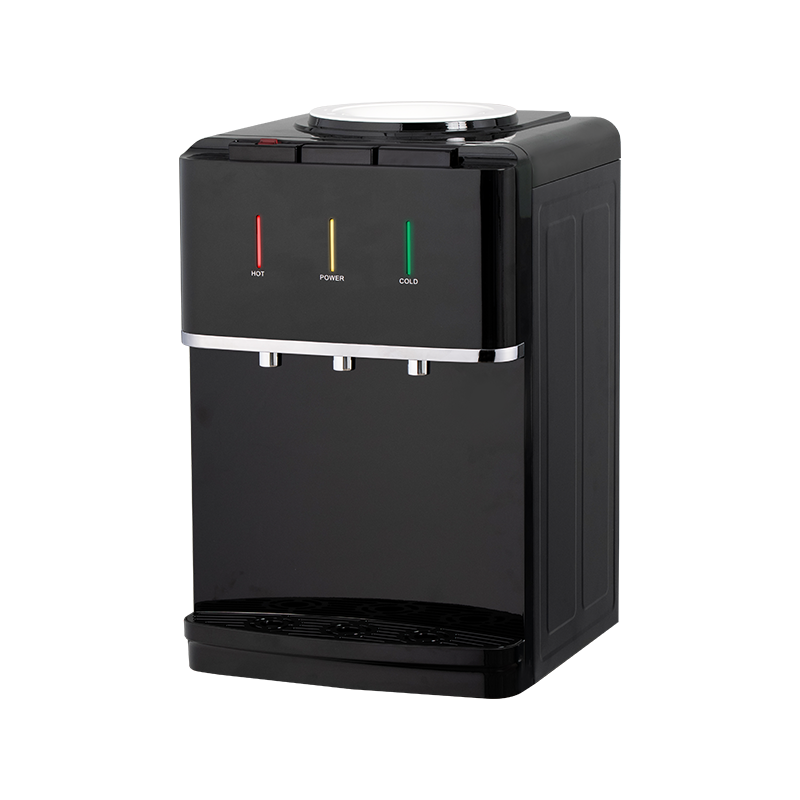
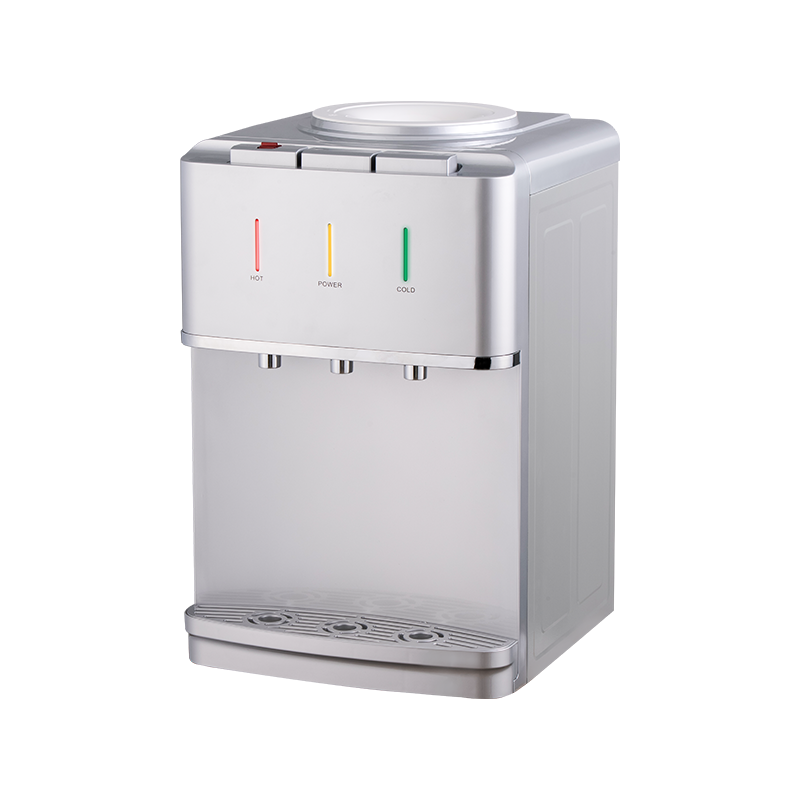
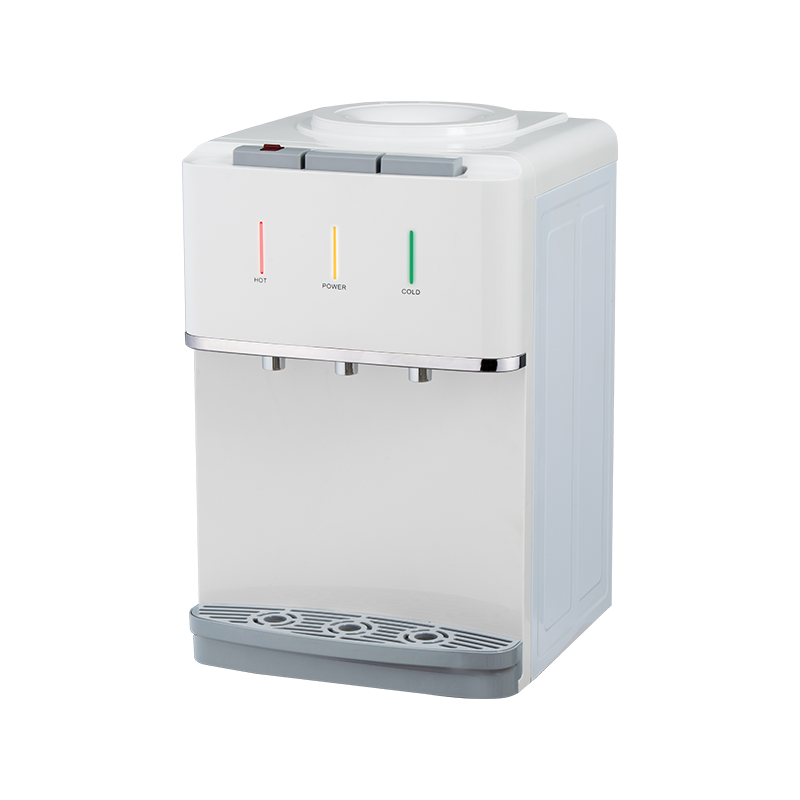
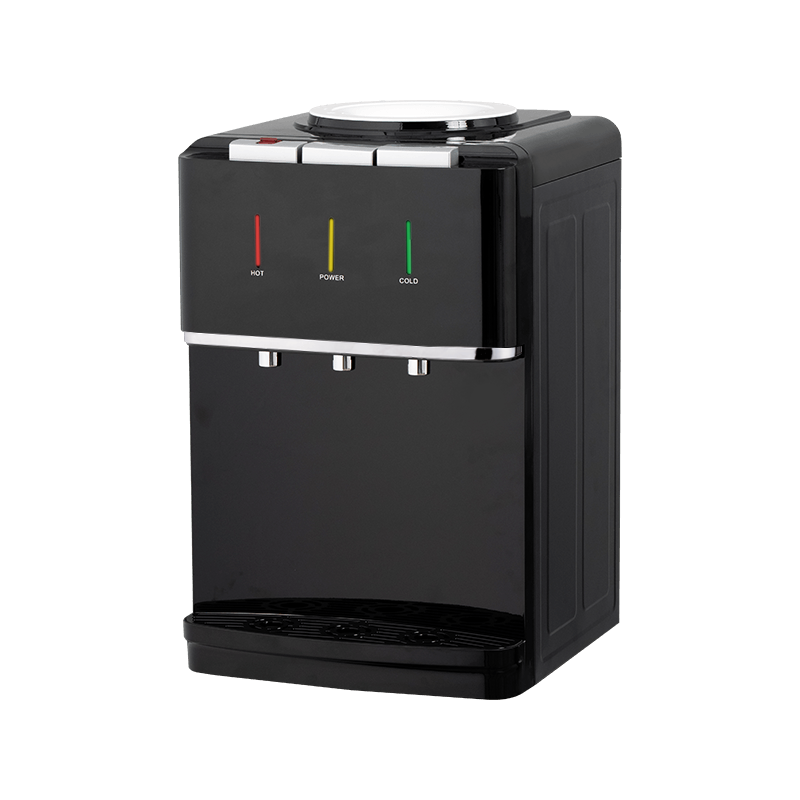
A Desktop Water Dispenser is a compact appliance designed to sit on a flat surface such as a desk, kitchen counter, office credenza, or bedside table, providing immediate access to temperature controlled drinking water from a small format water bottle or from a built in filtration and direct plumbing connection in more advanced models. The defining characteristic of the desktop format is its compact footprint, typically 25 to 35 cm in width and 25 to 40 cm in depth, which allows it to occupy a small portion of any available surface without dominating the working area around it.
Water Bottle Capacity in Desktop Models
Desktop water dispensers are typically designed to accept bottles in the 3.8 liter to 11.4 liter range (1 to 3 US gallons), compared to the 18.9 liter (5 gallon) bottles standard in vertical floor standing dispensers. A 3.8 liter desktop bottle is sufficient for the daily water consumption of one to two people in a personal workspace, with an average individual consuming approximately 2 liters of water per day from a dispenser in a sitting work context. The smaller bottle size is both a practical limitation and a practical advantage: the lighter weight of small bottles (3.8 kg for a full 3.8 liter bottle versus 19 kg for a full 18.9 liter bottle) makes bottle replacement manageable for a single person without the physical strain associated with lifting and inverting a full large bottle onto a floor standing dispenser.
Temperature Capabilities of Desktop Water Dispensers
Desktop water dispensers are available in three functional configurations based on the temperature options they provide:
- Cold water only: The simplest and most energy efficient desktop models use a compressor or thermoelectric cooling element to chill water to between 5 and 10 degrees Celsius. These models consume approximately 40 to 80 watts of power, are very quiet in operation due to the absence of a compressor in thermoelectric designs, and are appropriate for personal use in bedrooms, dormitories, and offices where hot water is not required.
- Cold and hot water: Dual temperature desktop dispensers add a small heating tank that maintains water at 85 to 95 degrees Celsius for instant hot drinks. The heating element typically consumes 500 to 700 watts during the initial heat up period and a much lower standby power to maintain temperature. These models are the most practical choice for individual office workers who want both cold drinking water and water for tea or instant coffee without a separate kettle.
- Cold, ambient, and hot water: Premium desktop dispensers with three temperature options add an ambient (room temperature) dispense function, which is particularly useful for preparing baby formula or medications that should not be mixed with chilled or near boiling water. The three temperature option is a standard feature in many modern desktop models at a modest additional cost over dual temperature designs.
Top Loading vs Bottom Loading Desktop Dispensers
Desktop water dispensers use either a top loading design, where the bottle sits inverted above the water reservoir, or a bottom loading design, where the bottle is placed upright in a concealed lower compartment and a pump draws water upward to the dispense point. Bottom loading desktop dispensers eliminate the need to lift and invert the water bottle, which is the primary physical challenge of top loading designs. For small 3.8 liter to 7.6 liter desktop bottles, the weight difference between top and bottom loading is manageable for most users, but bottom loading designs are noticeably more convenient and are strongly preferred by elderly users and individuals with limited upper body strength or mobility.
Vertical Water Dispenser: Standing Height Access for Shared Use
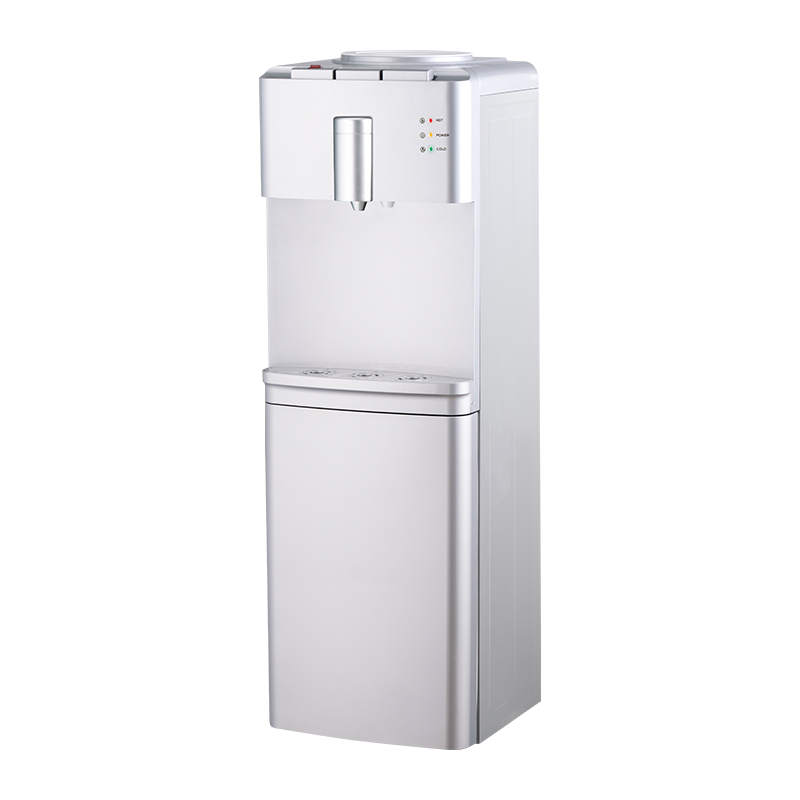
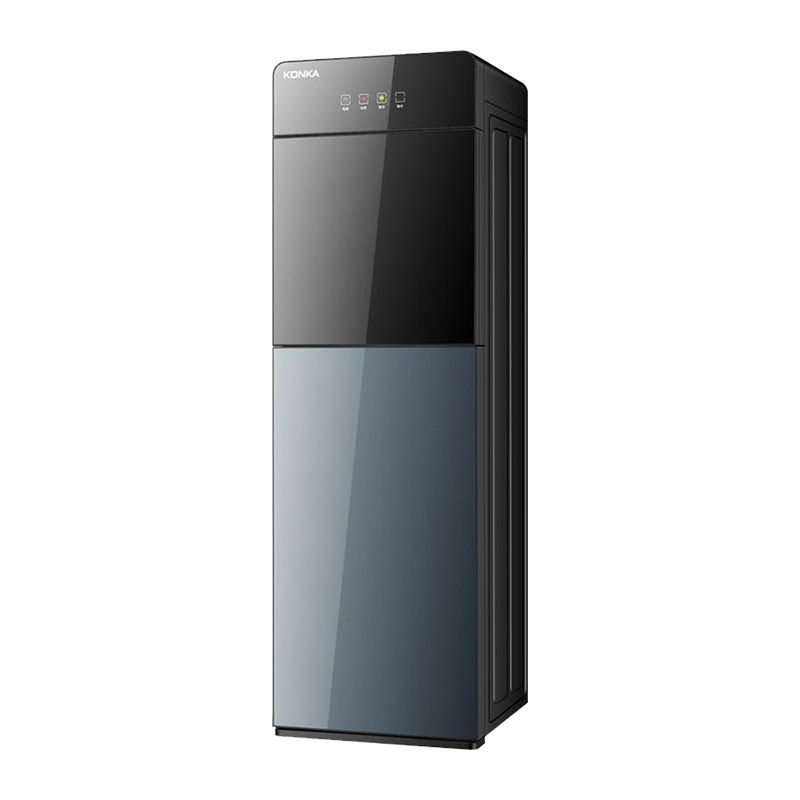
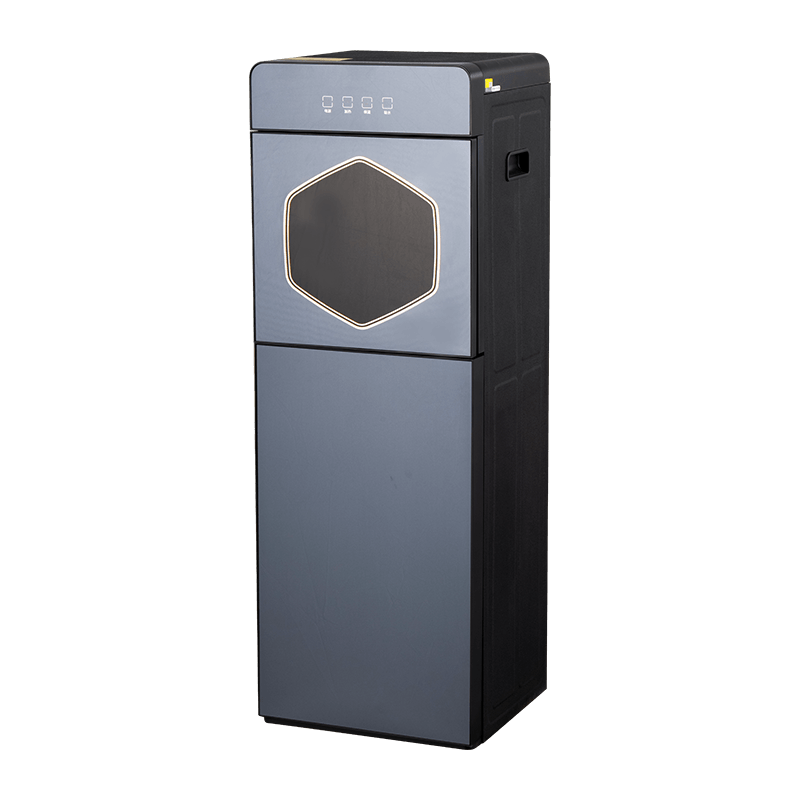
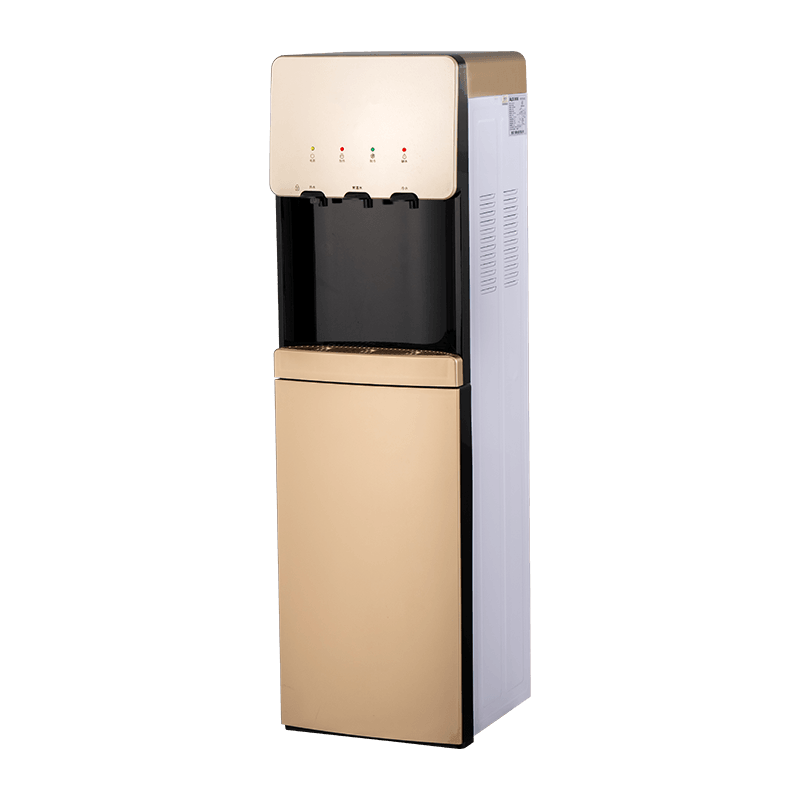
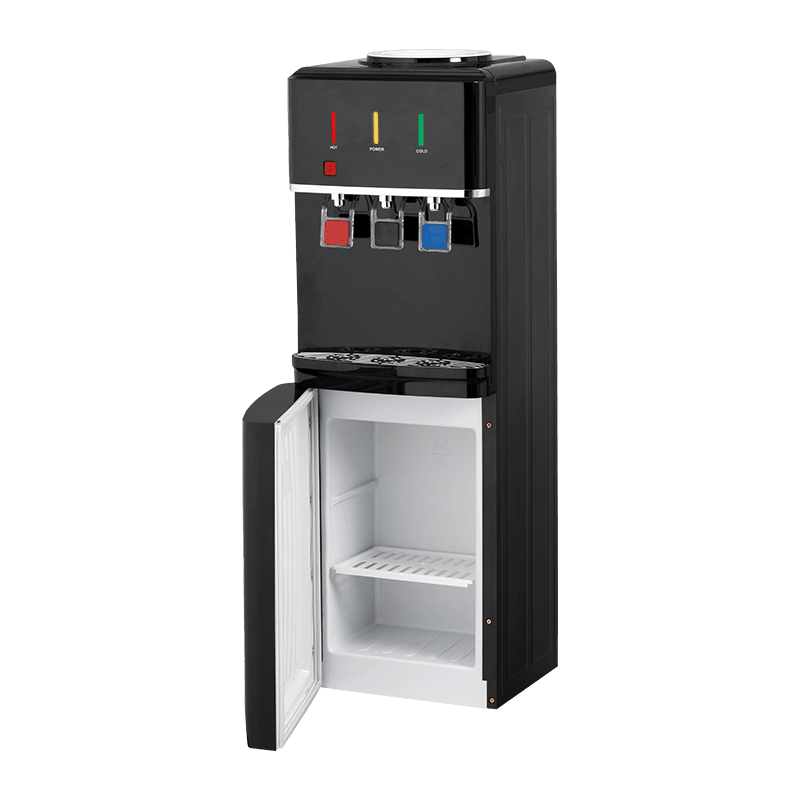
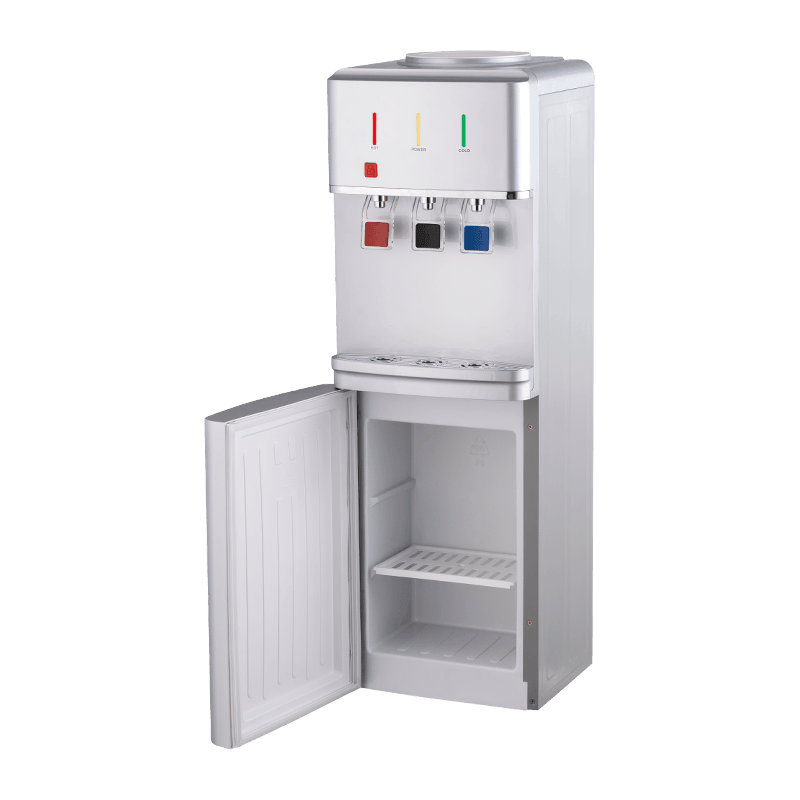
A Vertical Water Dispenser is a floor standing appliance that holds a standard 18.9 liter (5 gallon) water bottle and dispenses chilled and hot water through taps or pushbutton valves at a height convenient for standing adults. The vertical format is the dominant design in offices, hotel lobbies, corporate canteens, and family households where multiple people share the water source throughout the day, and where the larger bottle capacity reduces the frequency of bottle replacement compared to desktop counterparts.
Capacity and Usage Suitability of Vertical Models
The 18.9 liter bottle standard in vertical dispensers provides approximately 9 to 10 days of water for a single individual consuming 2 liters per day, or 1 to 2 days for a small office team of 10 people each consuming the same amount. In practice, vertical dispensers in office environments are typically replaced 2 to 3 times per week, with bottle delivery services managing the supply logistics. For a household or small office of 4 to 6 people, a Vertical Water Dispenser consuming one 18.9 liter bottle every 3 to 5 days provides an economical and convenient water supply when compared to the equivalent cost of purchasing individual bottled water, which would amount to 40 to 50 single use bottles per week to deliver the same volume of water.
Top Loading vs Bottom Loading in Vertical Dispensers
The distinction between top loading and bottom loading designs is more significant for vertical dispensers than for desktop models because the 18.9 liter bottle weighs approximately 19 kilograms when full. Top loading vertical dispensers require the user to lift this full bottle to shoulder height and invert it onto the dispenser probe, which is physically demanding and carries a risk of spilling or injury if the bottle is dropped. Bottom loading vertical dispensers place the bottle in a pull out drawer or door compartment at floor level, where the bottle is slid in upright and a pump moves water to the internal reservoir. Bottom loading Vertical Water Dispensers have become the preferred format in premium and office categories specifically because they eliminate the bottle lifting challenge, and they command a higher market share in countries where workplace health and safety guidelines discourage heavy manual lifting without mechanical assistance.
Energy Consumption and Running Costs
Vertical water dispensers with both cold and hot water capability consume significantly more energy than desktop counterparts due to the larger internal tanks and higher cooling and heating demands. A standard vertical dispenser with compressor cooling and a hot water tank consumes approximately 80 to 150 watts in standby mode and up to 500 to 800 watts during active heating or cooling cycles. Many modern vertical dispensers include an energy saving mode that reduces power consumption during low use periods such as overnight and weekends, which can cut running costs by 30 to 50 percent in an office environment where the dispenser is unattended for 16 hours per day.
Comparing Desktop and Vertical Water Dispensers
| Factor | Desktop Water Dispenser | Vertical Water Dispenser |
|---|---|---|
| Footprint | 25 to 35 cm x 25 to 40 cm (countertop) | 30 to 40 cm x 35 to 45 cm (floor space) |
| Bottle capacity | 3.8 to 11.4 liters | 18.9 liters (standard 5 gallon) |
| Bottle weight (full) | 3.8 to 11.4 kg | Approx. 19 kg |
| Users served per day | 1 to 3 individuals | 5 to 20 or more |
| Energy consumption | 40 to 700 W depending on features | 80 to 800 W standby to active |
| Installation | Countertop or desk surface, no floor space needed | Floor standing, requires floor space and stable surface |
| Best for | Personal use, small rooms, limited space | Shared office, family household, high consumption |
Hygiene, Maintenance, and Safe Use of Water Dispensers
Both Desktop Water Dispensers and Vertical Water Dispensers require regular cleaning and maintenance to prevent bacterial growth in the internal water reservoir, delivery lines, and tap mechanisms. The warm and cool water environments within a dispenser that is infrequently cleaned create conditions where biofilm can form and bacteria including Legionella, coliform bacteria, and other opportunistic pathogens can colonize the internal surfaces if hygiene protocols are neglected.
- Clean the interior reservoir and taps every 6 to 12 weeks. Manufacturers recommend a sanitization cycle using a food safe disinfectant solution such as dilute bleach (sodium hypochlorite at 50 ppm) or citric acid solution. The solution is circulated through the reservoir and dispensed through each tap to contact all internal surfaces, then thoroughly flushed with clean water before the unit is returned to service.
- Wipe the bottle neck and probe before each bottle change. The probe that penetrates the bottle cap and the bottle neck itself are points where external contamination can enter the water supply. Wipe both surfaces with a clean cloth dampened with alcohol or food safe sanitizer before inserting the new bottle.
- Do not allow the water reservoir to run dry repeatedly. Running the hot water tank dry activates the heating element without the cooling effect of water, which can damage the element or cause the thermal fuse to blow. Monitor bottle levels and replace before the reservoir empties completely.
- Position the dispenser away from direct sunlight and heat sources. Both Desktop Water Dispensers and Vertical Water Dispensers perform best in environments between 10 and 40 degrees Celsius ambient temperature. Direct sunlight on the unit raises the temperature of the internal cold water reservoir, reducing cooling efficiency and increasing compressor cycling frequency and energy consumption.
Choosing correctly between a Desktop Water Dispenser and a Vertical Water Dispenser comes down to an honest assessment of the physical space available, the number of people who will use the dispenser daily, and the bottle management that is practical in the specific location. For an individual working at a home desk or in a small private office, the desktop format provides everything needed in a smaller, lighter, and less imposing package. For a shared office kitchen, family living room, or any environment with multiple daily users and adequate floor space, the vertical format delivers the capacity, convenience, and bottle change frequency that makes it the more practical choice for shared use over the long term.