English
 Español
 عربى
عربى 中文简体
中文简体

Choosing a water dispenser involves more than picking the one that looks right on a shelf. The three most common formats available today are the desktop water dispenser, the vertical water dispenser, and the top-mounted water dispenser, and each suits a fundamentally different combination of space, usage volume, and practical priorities. A desktop water dispenser is the right choice for compact spaces and light daily use; a vertical water dispenser is the best all-round solution for offices and family homes where multiple users need both hot and cold water; and a top-mounted water dispenser offers the most affordable entry point for households that want filtered bottled water without spending heavily on equipment. This guide breaks down all three formats in enough practical detail that you can match the dispenser to your actual situation rather than guessing from a product listing.
Desktop Water Dispenser: Compact Performance for Small Spaces
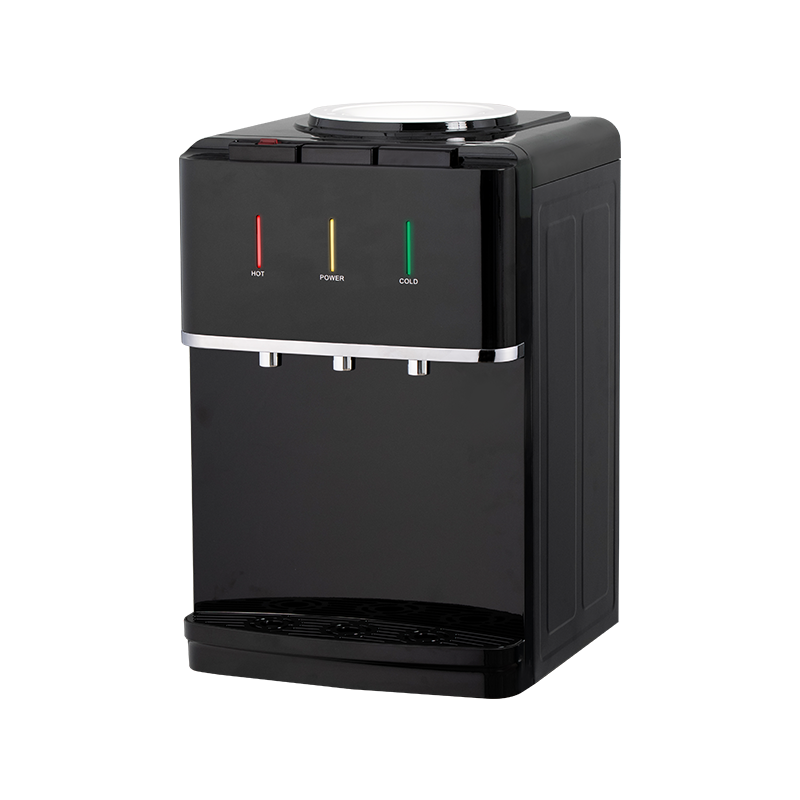
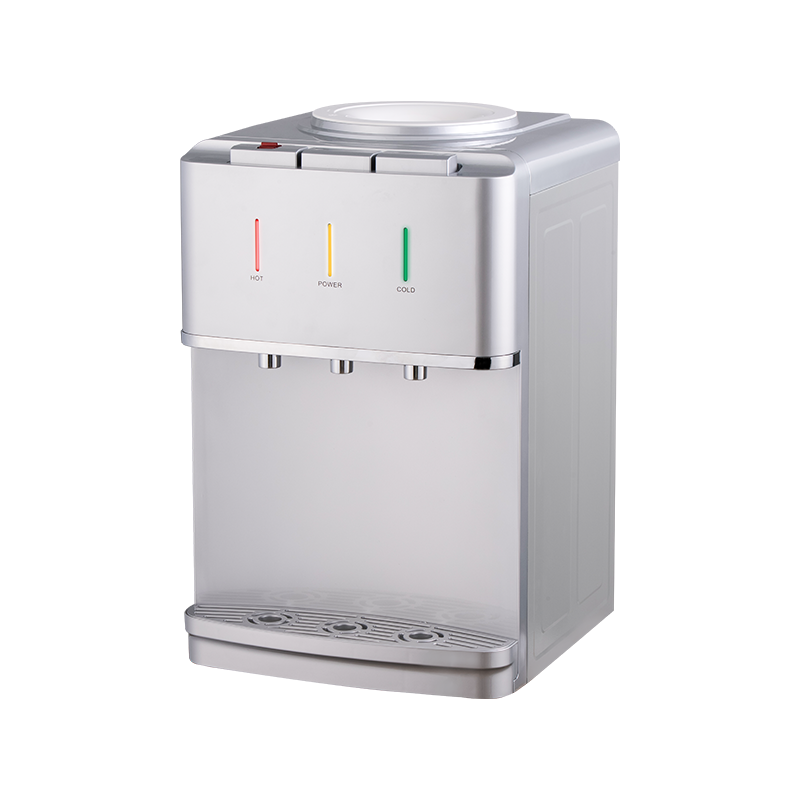
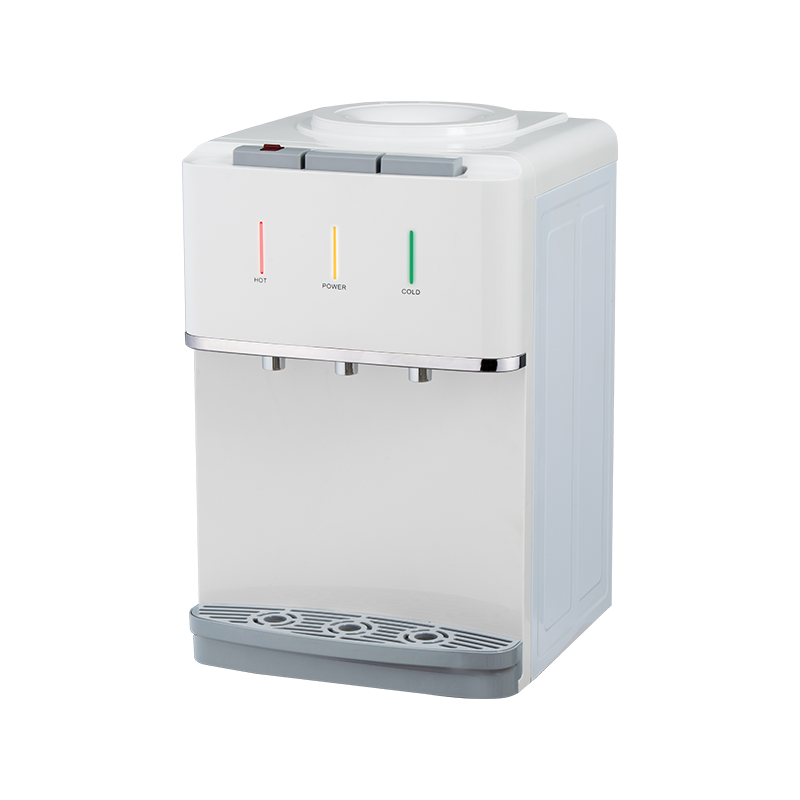
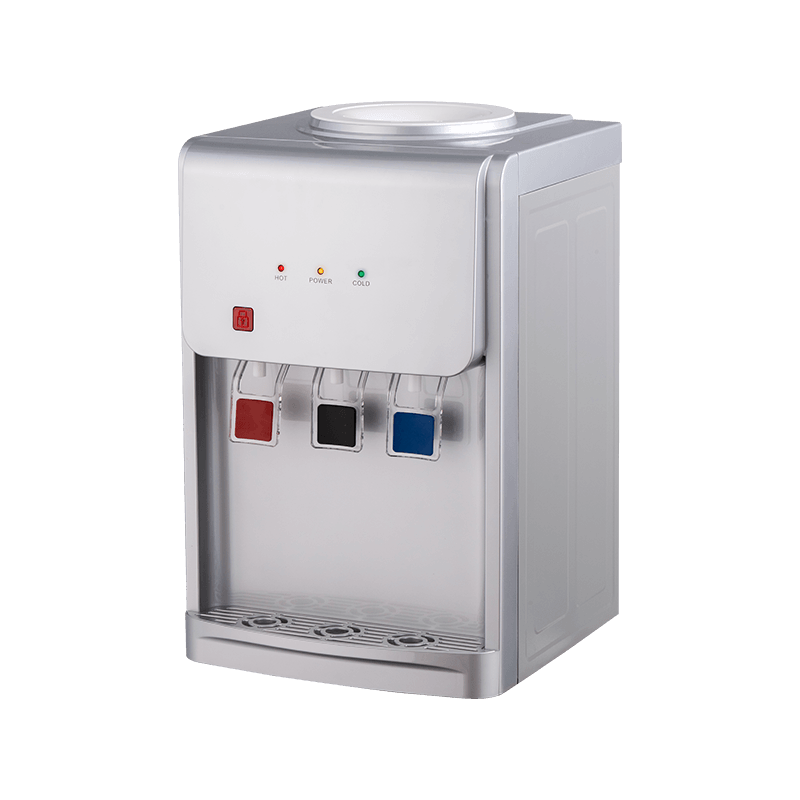
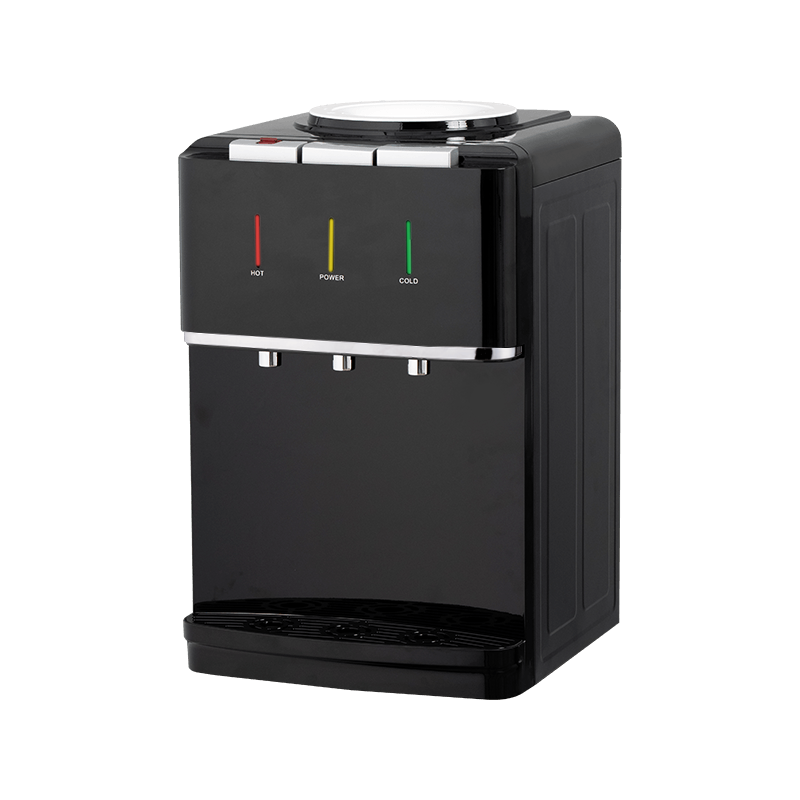
A desktop water dispenser, sometimes called a countertop water dispenser, is a compact unit designed to sit on a desk, kitchen counter, break room shelf, or any raised flat surface. It typically accepts standard 5-gallon (18.9 L) bottles loaded from the top or, in some models, uses a bottom-load mechanism within a shortened cabinet. The defining characteristic is its reduced height, usually between 40 and 60 cm, compared to the full floor-standing formats.
Who Benefits Most from a Desktop Format
Desktop water dispensers serve specific use cases exceptionally well. In a small apartment kitchen where floor space is shared with a refrigerator, oven, and storage, a countertop dispenser on a shelf or table provides access to chilled and heated water without claiming any floor area at all. Similarly, in a single-person office or private study, the desktop model delivers the same core function as a full vertical unit at a lower footprint and lower cost. Hotels frequently use desktop dispensers in guest rooms or small service areas where floor-standing equipment would feel oversized and obtrusive.
The practical limitation of most desktop water dispensers is water capacity per refill session. Because the unit is compact, the internal hot and cold tanks are proportionally smaller, with hot water tanks often holding 0.5 to 1.0 L and cold water tanks holding 1.5 to 3.0 L. For a single user making tea, coffee, or drinking cold water through the day, this is adequate. For a household of four or a group of colleagues expecting near-continuous availability, the recovery time between uses can become noticeable.
Features Available in Desktop Models
- Hot and cold dispensing: Most desktop models include both heating and cooling elements, providing water at temperatures suitable for hot beverages (typically 85 to 95 degrees Celsius) and chilled water (typically 5 to 10 degrees Celsius).
- Child safety lock on hot tap: A standard safety feature on quality desktop dispensers that prevents accidental hot water dispensing, particularly relevant where children may be present at counter height.
- Night mode or energy saving function: Some desktop dispensers allow the heating and cooling elements to be switched to a low-power standby mode overnight or during periods of non-use, reducing electricity consumption without requiring manual disconnection.
- Integrated filtration: A growing number of desktop water dispensers incorporate an inline carbon block or multi-stage filter between the bottle connection and the dispensing taps, providing an additional layer of taste improvement and contaminant reduction beyond the quality of the bottled water itself.
- Touchless or button-press dispensing: Electronic dispensing mechanisms triggered by button or motion sensor rather than manual push taps are available on mid-range to premium desktop models, improving hygiene in shared environments.
Desktop Dispenser Pricing
Entry-level desktop water dispensers with basic hot and cold function start at approximately $40 to $80. Mid-range models with faster heating, energy-saving modes, and better build quality typically range from $100 to $200. Premium desktop units with touch dispensing, integrated filtration, and stainless steel panels range from $200 to $350. For most single-user and light household applications, the mid-range tier delivers the best balance of reliability and features without excessive cost.
Vertical Water Dispenser: The Best All-Round Solution for Higher-Volume Use
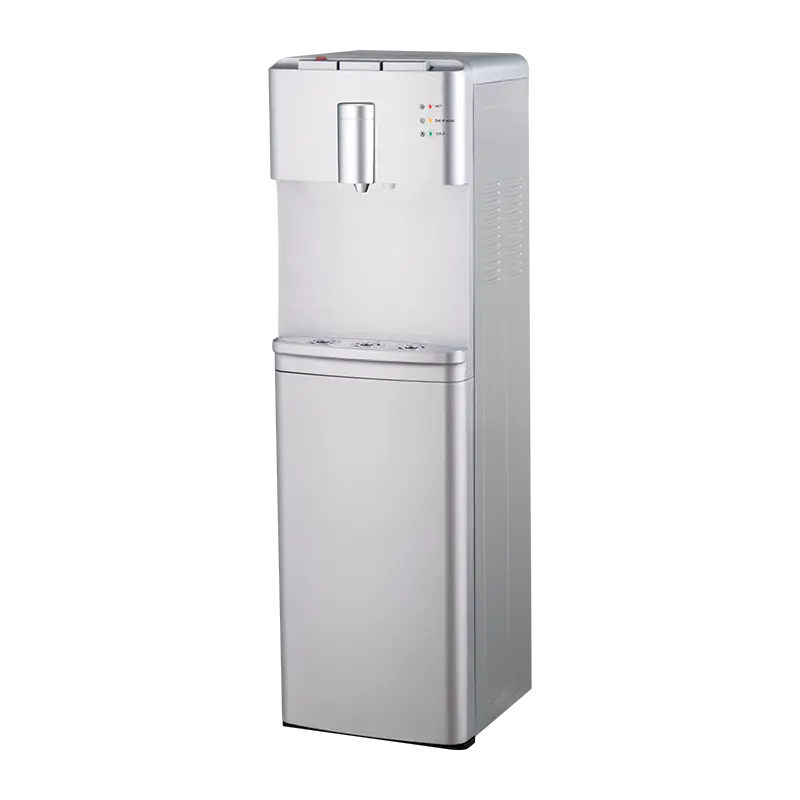
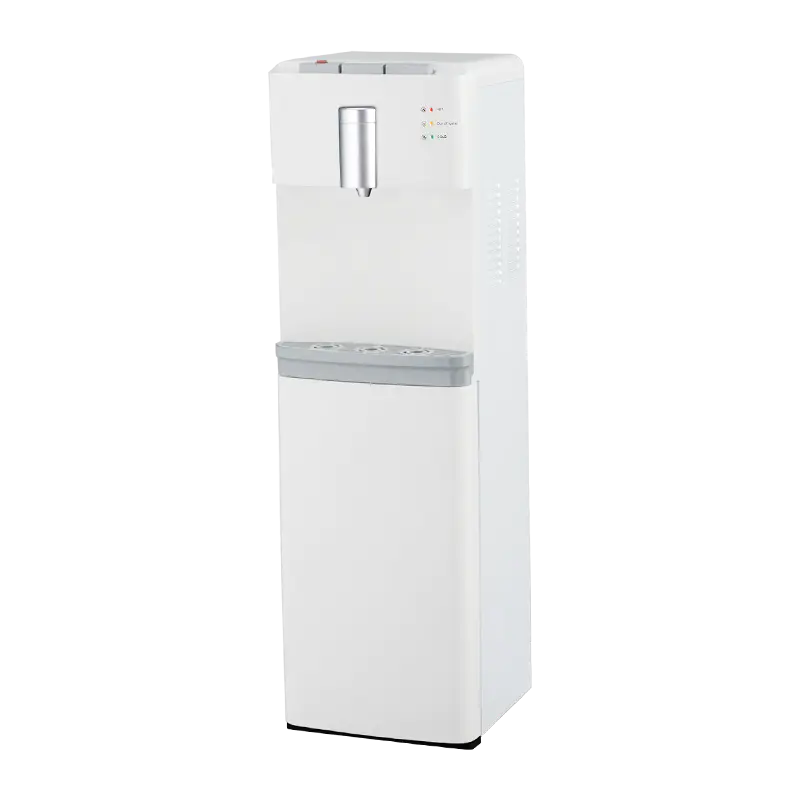
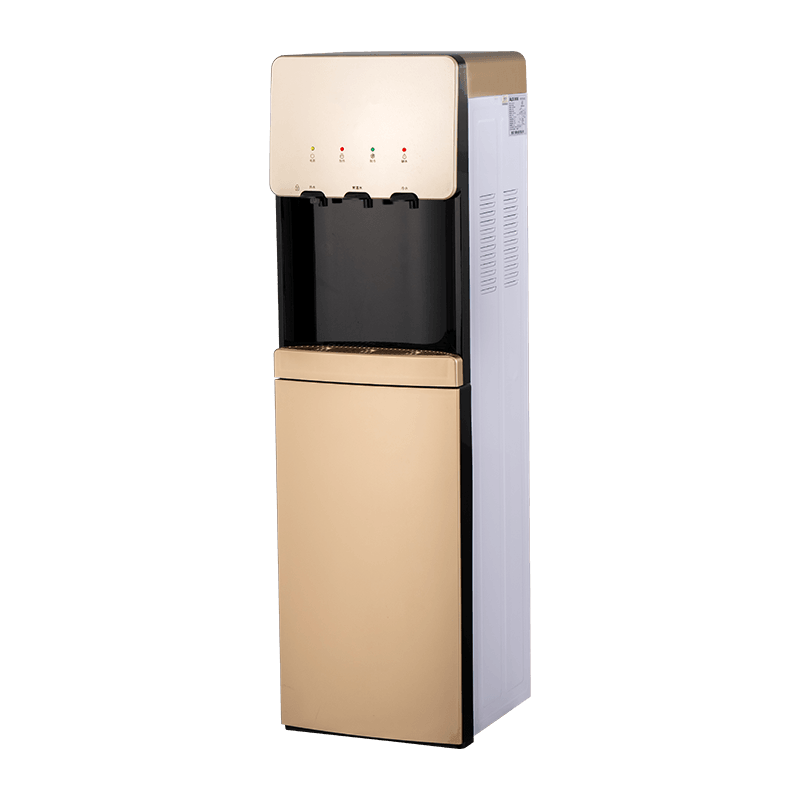
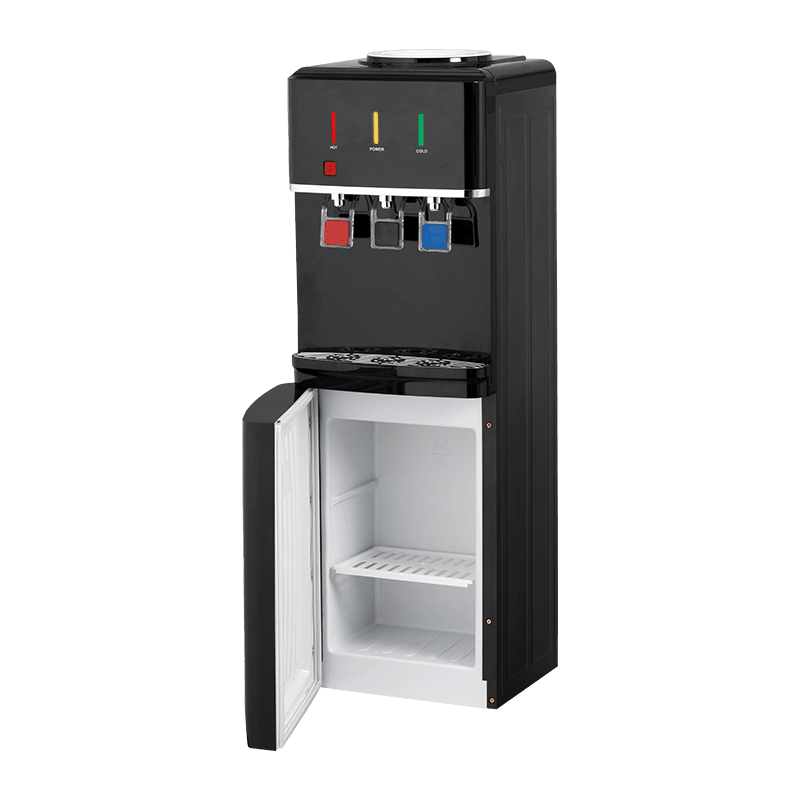
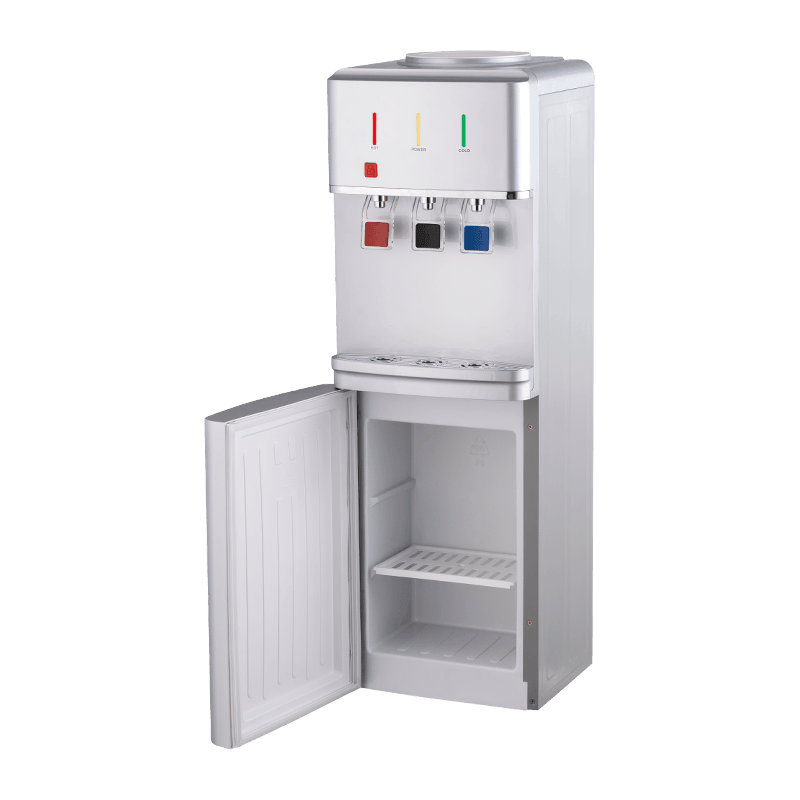
A vertical water dispenser is a freestanding floor-standing unit, typically between 100 and 140 cm in height, that houses the cooling and heating system, the water bottle, and the dispensing taps within a single upright cabinet. It is the format most commonly seen in offices, medical waiting rooms, gyms, and family kitchens where multiple users require regular access to both hot and cold water throughout the day. The vertical format accommodates a larger internal tank capacity, a more powerful heating element, and a more capable compressor cooling system than any countertop format can accommodate at the same price point.
Top-Load vs Bottom-Load Vertical Dispensers
Vertical water dispensers are available in two bottle-loading configurations that differ meaningfully in ergonomics and practical convenience:
- Top-load vertical dispenser: The water bottle is inverted and placed into a sealed collar at the top of the unit. Water gravity-feeds downward into the internal reservoir. Top-load models are typically less expensive because the loading mechanism is simpler, but lifting a full 18.9 L bottle (approximately 19 kg when full) overhead to install it requires physical strength and carries a back injury risk that is frequently underestimated at the point of purchase.
- Bottom-load vertical dispenser: The bottle is placed upright inside a cabinet compartment at the base of the unit, and a pump draws water up to the heating and cooling tanks. Bottle changes require only lifting the bottle to floor level and rolling it into the cabinet, making the process accessible regardless of height or upper body strength. Bottom-load models cost 15 to 30% more than equivalent top-load units but are strongly preferred for elderly users, smaller households, and any environment where the person changing the bottle is not reliably large or strong.
Tank Capacity and Recovery Time in Vertical Dispensers
One of the primary advantages of the vertical format over desktop models is the larger internal tank capacity and the more powerful heating and cooling systems that the larger chassis accommodates. Typical vertical dispensers feature hot water tanks of 1.5 to 5.0 L heated to 90 to 95 degrees Celsius, and cold water tanks of 3.0 to 7.0 L chilled to 5 to 10 degrees Celsius. The compressor-based refrigeration used in most quality vertical models cools more effectively and recovers temperature faster after dispensing than the thermoelectric cooling used in many desktop and budget models. For an office environment where ten people each use the dispenser multiple times per day, the faster recovery time of a compressor-cooled vertical dispenser means consistently cold water is available throughout the day rather than only in the first few uses after an overnight cooling cycle.
Additional Features in Vertical Dispensers
- UV sterilization: Some premium vertical dispensers circulate water through a UV-C LED sterilization module at regular intervals, reducing bacterial counts in the internal water tanks. This is particularly valuable in environments where water sits in the dispenser for extended periods between uses.
- Sparkling water function: High-end vertical dispensers with integrated CO2 cartridge systems dispense carbonated water alongside still cold and hot options, eliminating the need for separate sparkling water products in offices and hospitality settings.
- Digital temperature display and control: Electronic control panels on premium vertical models allow users to select precise hot water temperatures rather than a single preset, which is useful in workplaces where both green tea (optimally at 70 to 80 degrees Celsius) and black tea or coffee (optimally at 90 to 95 degrees Celsius) are regularly made.
- Self-cleaning function: Automated self-cleaning cycles using ozone or silver ion sterilization are available on mid-premium vertical dispensers, reducing the frequency of manual deep-cleaning required to maintain hygiene standards in the internal water pathway.
- Cabinet storage below dispensing area: Many vertical dispensers include a lockable storage cabinet beneath the taps in the lower section of the unit, useful for storing spare water bottles, cups, or tea supplies in compact office environments.
Vertical Dispenser Pricing
Top-load vertical dispensers start at approximately $80 to $150 for basic models. Mid-range bottom-load vertical dispensers with compressor cooling, energy-saving modes, and child locks typically range from $200 to $400. Premium vertical dispensers with UV sterilization, digital controls, self-cleaning, and premium finishes reach $400 to $800 or above. For a household of four or a small office, a mid-range bottom-load model in the $250 to $350 range provides the best combination of daily performance and long-term reliability.
Top-Mounted Water Dispenser: The Affordable Entry Point with Practical Trade-Offs
A top-mounted water dispenser, also called a top-load or standard-load dispenser, is the most widely recognized format in the water dispenser category. The water bottle sits upright and inverted on top of the unit with the bottle neck inserted into a sealed probe collar that punctures the bottle cap or engages with a pre-fitted plug. Water flows by gravity into the internal reservoir as the taps dispense it.
Why Top-Mounted Dispensers Remain Popular Despite the Loading Challenge
The top-mounted water dispenser's enduring market presence despite the well-known inconvenience of lifting a full bottle overhead is explained primarily by price. A functional top-mounted dispenser with both hot and cold dispensing can be purchased for as little as $50 to $100, making it accessible to consumers who want the convenience of filtered bottled water without a significant equipment investment. For households that schedule water deliveries regularly, the bottle-loading effort is a brief inconvenience once every week or two rather than a daily friction point, and many users find this an acceptable trade-off for the cost saving.
The visible bottle sitting above the unit also provides an immediate visual indicator of remaining water level without any monitoring system or indicator light, which some users find practically useful. When the bottle is visibly low, ordering the next delivery is an immediate reminder that requires no electronic notification or memory.
Sanitation Considerations Specific to Top-Mounted Dispensers
The top-load probe collar where the bottle neck connects to the dispenser is an area that requires particular attention in regular cleaning routines. Dust, airborne particles, and contact with bottle surfaces during loading can introduce contamination to this interface, and if the collar is not periodically sanitized, the water passing through it on its way to the reservoir carries that contamination into every glass dispensed. Most dispenser manufacturers recommend cleaning the collar and probe area with a diluted bleach solution or manufacturer-approved sanitizing solution at every bottle change. Studies of office water dispensers have found bacterial counts exceeding safe thresholds in over 25% of units that were not regularly cleaned, a finding that applies disproportionately to top-mounted designs where the loading interface is more directly exposed to the environment.
Top-Mounted vs Bottom-Load: When Each Makes Sense
The choice between a top-mounted and a bottom-load (vertical) dispenser often reduces to three practical questions:
- Who will change the bottle? If bottle changes will always be handled by a physically capable adult without back or joint concerns, the top-mounted format is manageable. If elderly family members, smaller adults, or anyone with physical limitations may need to change the bottle, a bottom-load vertical dispenser is significantly safer and more practical.
- What is the budget? If the total budget for the dispenser is under $150, the top-mounted format provides the most features at that price. At budgets above $200, bottom-load vertical dispensers become accessible and the ergonomic advantage justifies the incremental cost for most buyers.
- How important is aesthetics? A full 18.9 L bottle mounted visibly above a dispenser is a prominent visual element in any room. In professional offices, reception areas, or home interiors where clean lines are a priority, the bottom-load vertical format that conceals the bottle entirely is considerably more visually refined.
Top-Mounted Dispenser Pricing
Basic top-mounted water dispensers with hot and cold function start at $40 to $70. Mid-range models with better temperature performance, child safety locks, and improved build quality range from $80 to $180. A top-mounted dispenser above $200 competes with entry-level bottom-load vertical models and offers diminishing return on the format's inherent advantages, at which point most buyers are better served by the bottom-load configuration.
Direct Comparison: Desktop vs Vertical vs Top-Mounted Water Dispenser
| Attribute | Desktop Dispenser | Vertical Dispenser | Top-Mounted Dispenser |
|---|---|---|---|
| Typical Height | 40 to 60 cm | 100 to 140 cm | 90 to 120 cm (plus bottle height) |
| Floor Space Required | None (countertop) | Moderate (30x30 cm base) | Moderate (30x30 cm base) |
| Bottle Loading Ease | Moderate (countertop height) | Easy (bottom-load) or Difficult (top-load) | Difficult (full overhead lift) |
| Hot Water Tank Capacity | 0.5 to 1.0 L | 1.5 to 5.0 L | 1.0 to 3.0 L |
| Cold Water Tank Capacity | 1.5 to 3.0 L | 3.0 to 7.0 L | 2.0 to 5.0 L |
| Cooling System | Thermoelectric (most models) | Compressor (mid to high end) | Thermoelectric or Compressor |
| Visible Bottle | Usually visible (top-load) | Hidden (bottom-load) or visible (top-load) | Fully visible above unit |
| Typical Price Range | $40 to $350 | $80 to $800+ | $40 to $180 |
| Best For | Small spaces, single users | Offices, families, high-use settings | Budget-conscious, light household use |
Electricity Consumption Across All Three Formats
Running cost is a practical consideration that is frequently overlooked at the time of purchase but becomes very apparent when the electricity bill arrives. Water dispensers run continuously to maintain their hot and cold water at the set temperature, and this baseline energy consumption adds up over a year of use.
Typical Power Consumption by Format
Energy consumption figures for water dispensers are typically expressed as rated heating power plus cooling power:
- Desktop water dispenser: Heating element typically 350 to 500W; thermoelectric cooling typically 60 to 90W. Annual energy consumption for a unit running continuously with standard usage is approximately 150 to 250 kWh per year, equivalent to a refrigerator of similar size.
- Vertical water dispenser: Heating element typically 500 to 1,000W; compressor cooling typically 80 to 150W. Annual consumption for a unit with energy-saving mode enabled at night is typically 200 to 350 kWh per year. Without energy saving, consumption can reach 400 to 500 kWh annually.
- Top-mounted water dispenser: Similar to desktop in basic models at 350 to 550W heating and 60 to 100W cooling. Annual consumption is comparable to desktop units at 150 to 280 kWh per year for standard use.
Enabling night or weekend energy-saving mode on any dispenser that offers this function can reduce annual electricity consumption by 20 to 40%, which represents a meaningful saving over the lifetime of the product. This feature should be treated as a standard expectation rather than a premium option when evaluating models in the mid-range tier and above.
Hygiene and Maintenance: What Every Format Requires
Regardless of format, a water dispenser left without regular cleaning becomes a source of bacterial contamination rather than a source of clean water. The internal water pathway, tanks, and tap mechanisms all require periodic sanitization that goes beyond the surface wiping that most users perform routinely.
Cleaning Frequency Recommendations
The National Sanitation Foundation and most dispenser manufacturers recommend a full internal sanitization cycle every 6 to 8 weeks for dispensers in regular household or office use. The process involves draining the tanks, running a diluted food-safe sanitizer solution through the full water pathway including taps, allowing it to dwell for the recommended contact time, then flushing thoroughly with clean water before returning the unit to service. This cycle takes approximately 30 to 45 minutes and can be performed by the owner with a basic sanitizing kit available from most water delivery companies.
External Tap and Drip Tray Maintenance
The area most visible and most frequently contaminated in daily use is the tap exterior and the drip tray below the dispensing area. These should be wiped down at least weekly with a food-safe antibacterial cloth or spray. The drip tray collects overflow water that can become a bacterial growth medium if allowed to stand for extended periods. Remove and rinse the drip tray completely at least once per week in all three dispenser formats.
Making the Final Choice: A Practical Decision Guide
After comparing formats across all the dimensions above, the decision simplifies to a set of practical questions about your specific situation:
- Do you have available counter space or only floor space? Counter space only and under two users points strongly to a desktop water dispenser. Floor space available and more than two users points to a vertical model.
- Who will change the water bottle and how often? If bottle changes are infrequent (every 10 to 14 days) and always handled by a physically capable adult, the top-mounted format is manageable. If bottle changes are frequent or may be handled by anyone in the household regardless of physical condition, the bottom-load vertical dispenser eliminates a real safety and ergonomic concern.
- What is the daily hot and cold water demand? One person making three or four cups of tea per day and drinking 1.5 L of cold water is well within desktop capacity. A household of four with frequent hot drink use throughout the day needs the larger tank capacity and faster recovery of a vertical unit with a compressor cooling system.
- What is the budget and what are the aesthetic requirements? Under $120 and no strong aesthetic preference: top-mounted dispenser is the most practical choice. $200 and above with preference for a cleaner look: bottom-load vertical dispenser. Counter preference with $150 to $300 available: mid-range desktop with bottom-load bottle configuration where available.
- Is this for a home or an office? For an office with five or more users, the vertical dispenser is essentially the only format that delivers adequate capacity and recovery speed for practical daily use. For home use, all three formats are viable depending on the household size and specific answers to the questions above.
The vertical water dispenser in bottom-load configuration represents the best choice for the majority of households and small offices that want reliable, convenient access to both hot and cold water without physical strain or capacity limitations. The desktop water dispenser serves compact spaces and individual users with equal effectiveness at lower cost. The top-mounted water dispenser remains the most affordable entry point for any household that prioritizes low equipment cost over ergonomic convenience. All three formats deliver the core function well when maintained regularly and matched to the right use context.