English
 Español
 عربى
عربى 中文简体
中文简体

Access to clean, temperature controlled drinking water is a fundamental requirement in both residential households and modern workplace environments. While filtration pitchers and under sink purification systems are popular, the vertical water dispenser remains a staple appliance for those who require instant, high volume hot and cold water. These freestanding units provide a centralized hydration station, utilizing large three or five gallon water bottles to supply clean drinking water without relying on complex plumbing installations.
When shopping for a new vertical water dispenser, consumers are immediately faced with a primary architectural decision, which is choosing between a top loading design and a bottom loading design. Each configuration possesses a distinct set of mechanical principles, physical requirements, and aesthetic qualities that directly influence daily usability.
Choosing the wrong style can lead to long term physical strain, aesthetic dissatisfaction, or unnecessary maintenance challenges. This comprehensive guide explores the unique characteristics, engineering differences, and practical advantages of both systems, helping you determine which configuration is best suited for your specific household or office setup.
The Mechanics and Design of Top-Mounted Water Dispenser Units
The top mounted water dispenser is the traditional design that has populated offices and homes for decades. Its straightforward mechanical structure makes it a highly recognizable and reliable appliance, though it demands a specific level of physical effort from the user.
Gravity Fed Water Delivery and Physical Operation
The core operational principle of a top mounted water dispenser is gravity. In this configuration, the heavy water bottle is inverted and placed directly onto the collar at the top of the machine. The neck of the bottle sits on a specialized hollow spike, which punctures the bottle cap and allows water to flow downward into internal reservoirs under the natural force of gravity.
Because gravity does the work of moving the water from the bottle to the heating and cooling tanks, these machines do not require an internal electric water pump to dispense liquid. When a user presses the dispensing lever or button, a mechanical valve opens, allowing the water to pour out of the nozzle.
This simple gravity fed design offers a major advantage in terms of mechanical reliability, as there are fewer moving parts that can wear out or break over time. Furthermore, in the event of a power outage, many top loading units can still dispense room temperature or cold water that is already stored in the reservoirs, as the dispensing mechanism itself does not require electrical power to function.
Ergonomic and Physical Demands of Loading
While the gravity fed mechanism is highly efficient, the physical process of loading a new bottle is the most significant drawback of a top mounted water dispenser. A standard five gallon water bottle weighs approximately forty two pounds when completely full. To replace an empty bottle, a user must lift this heavy, sloshing, and slippery container to chest or shoulder height, invert it quickly, and align the bottle neck perfectly with the small opening on top of the dispenser.
This lifting motion requires a high degree of physical strength and proper technique to avoid serious injury. For elderly individuals, people with chronic lower back pain, or those with limited upper body strength, this task is extremely difficult and potentially dangerous.
Additionally, the quick inversion of a heavy, unsealed bottle often leads to accidental water spills, splashing the user and wetting the surrounding floor, which can create a slipping hazard on tile or hardwood surfaces.
The Engineering of Bottom-Mounted Water Dispenser Systems
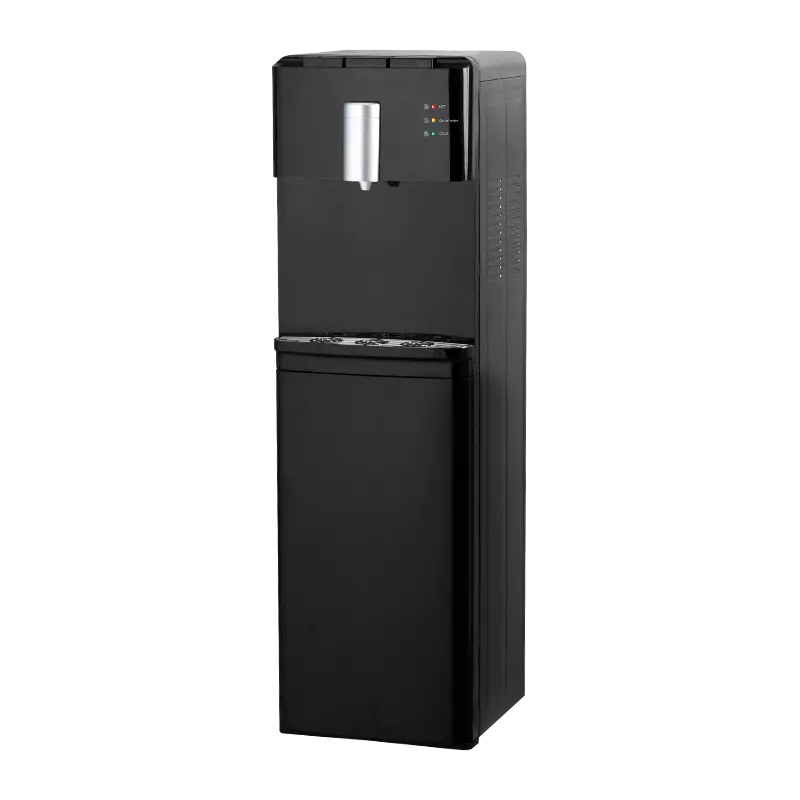
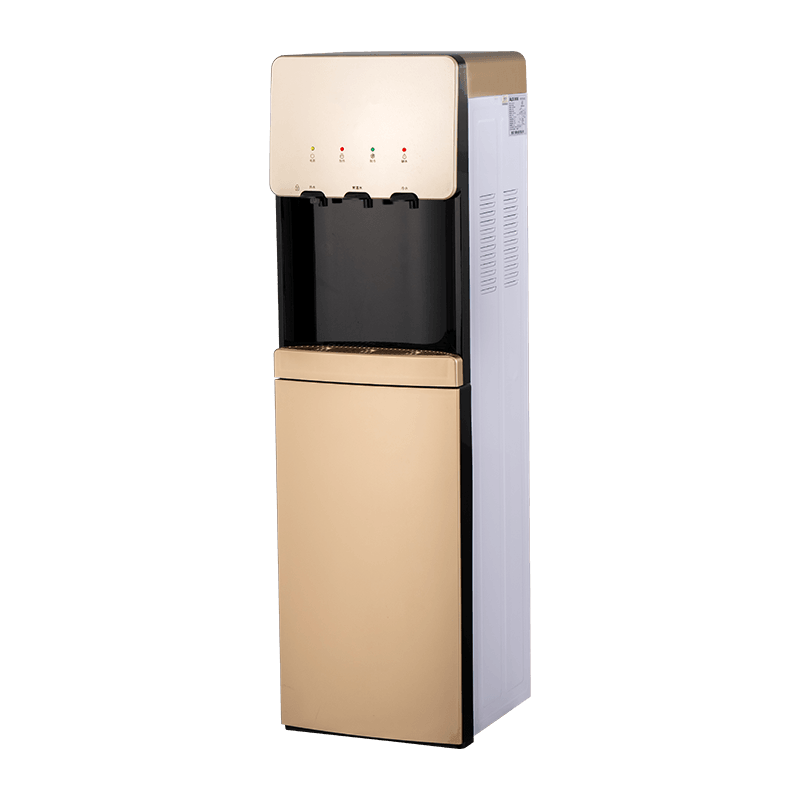
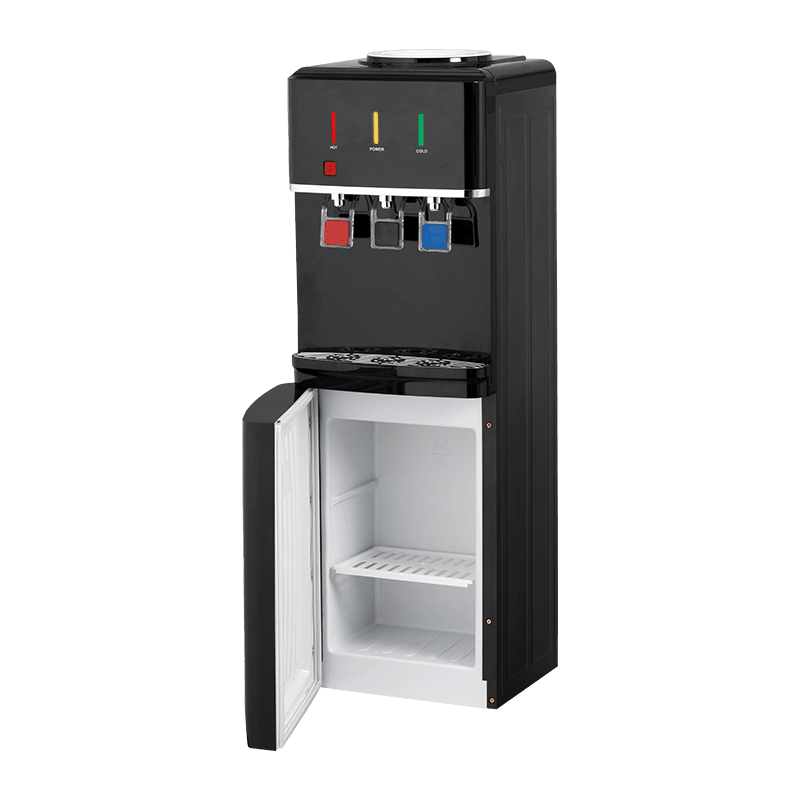
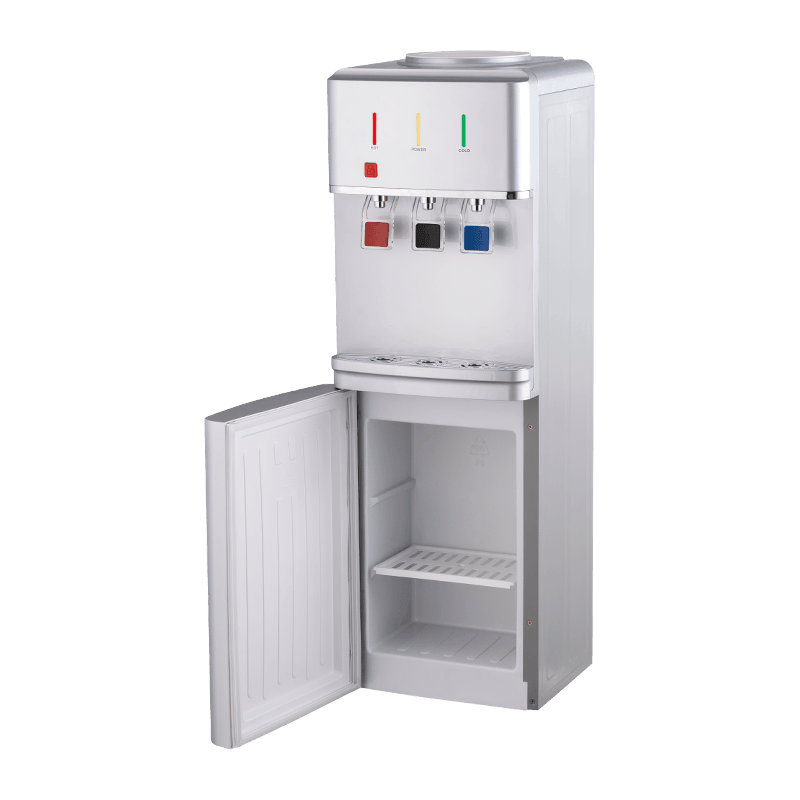
To address the ergonomic challenges of traditional models, appliance manufacturers engineered the bottom mounted water dispenser. This modern configuration relocates the water bottle to a hidden cabinet at the base of the machine, transforming how water is loaded and stored.
Motorized Pump Extraction and Electronic Water Delivery
Because a bottom mounted water dispenser stores the water bottle at floor level, it cannot rely on gravity to move water into the dispensing tanks. Instead, this system utilizes a sophisticated motorized suction pump and a rigid extraction probe. To load a new bottle, the user simply opens the bottom cabinet door, slides the bottle out, removes the cap, and inserts the extraction probe directly into the upright bottle.
The probe is connected to a flexible, food grade silicone hose that runs up to an electric water pump inside the machine. When a user activates a dispensing button, the transmitter sends a signal to the electric pump, which generates a vacuum to draw the water upward from the bottle and into the stainless steel heating and cooling reservoirs.
This reliance on a motorized system means that the dispenser is completely dependent on electrical power. In the event of a power outage, a bottom loading unit will not be able to dispense any water, even if the bottle inside is completely full, because the electric pump requires active power to extract the liquid.
Structural Convenience and Ergonomic Benefits
The primary selling point of a bottom mounted water dispenser is its exceptional ergonomic convenience. Because the bottle remains at floor level throughout the entire process, there is absolutely no heavy lifting required. Users only need to tilt the bottle slightly to slide it into the bottom cabinet, making this design highly accessible for individuals of all ages and physical abilities.
Furthermore, because the bottle is never inverted, the risk of messy water spills and splashes is completely eliminated.
From a structural safety perspective, keeping the heavy forty two pound water bottle at the base of the machine lowers the overall center of gravity of the vertical water dispenser. This low center of gravity makes the appliance highly stable and significantly reduces the risk of the unit being tipped over by active children or pets, which is a critical safety consideration for busy family households.
Comparison of Dispenser Types Across Key Metrics
The following table provides a comprehensive, qualitative comparison of top loading and bottom loading vertical water dispensers, focusing on usability, aesthetics, and maintenance requirements.
|
Usability and Performance Factors |
Top-Mounted Water Dispenser |
Bottom-Mounted Water Dispenser |
|---|---|---|
|
Ergonomic Loading Effort |
High; requires lifting forty two pounds to shoulder height |
Extremely low; bottle is slid into place at floor level |
|
Spill and Splash Risk |
Moderate to high during bottle inversion |
Negligible; bottle remains upright at all times |
|
Aesthetic Integration |
Low; exposed plastic bottle disrupts room decor |
High; bottle is hidden behind a sleek cabinet door |
|
Power Outage Usability |
Can dispense ambient water without electrical power |
Cannot dispense water without active electrical power |
|
Operational Noise Level |
Silent water delivery; occasional bubbling sounds |
Audible humming or buzzing from the electric pump |
|
Water Extraction Efficiency |
Complete; gravity drains almost every drop |
Minor waste; pump probe may leave some residual water |
|
Physical Tipping Safety |
Top heavy design; higher risk of tipping over |
Base heavy design; exceptionally stable and safe |
Aesthetic and Space Integration in Modern Environments
The visual impact of an appliance is an important consideration for modern interior design, whether you are furnishing a professional corporate office or a minimalist home kitchen.
Visual Clutter and Bottle Exposure
One of the most immediate differences between these two styles is how they affect the visual harmony of a room. A top mounted water dispenser leaves the large, blue plastic water bottle completely exposed on top of the unit. As the water level decreases, condensation, scuff marks on the plastic, and floating air bubbles are visible to everyone in the room. This exposed bottle design is often considered an eyesore, particularly in upscale homes, modern offices, and reception areas where a clean, professional aesthetic is highly prioritized.
A bottom mounted water dispenser solves this visual problem by enclosing the water bottle entirely within a lower storage cabinet. The exterior of the dispenser presents a clean, uniform, and continuous profile, often finished in brushed stainless steel, piano black, or clean white polymer.
This sleek appearance allows the vertical water dispenser to blend seamlessly with other high end appliances, such as modern refrigerators and dishwashers, enhancing the overall design of the space rather than detracting from it.
Physical Footprint and Height Clearance
The placement of the water bottle also affects the physical dimensions and spatial requirements of the appliance. Because a top loading dispenser must accommodate a tall bottle on its crown, the overall height of the unit is significantly increased. A standard top loading unit with a five gallon bottle installed can easily reach a height of over five feet. This tall profile can limit where the dispenser can be placed, as it may not fit comfortably beneath low hanging kitchen cabinets, decorative wall shelves, or slanted ceilings.
In contrast, a bottom loading dispenser has a fixed, consistent height that is usually around three to four feet, as the bottle is contained inside. This compact, low profile design allows for greater placement flexibility, allowing the unit to sit neatly under standard wall cabinets or in tight corner spaces without creating visual or physical obstruction.
Sanitation, Maintenance, and Water Quality Control
Maintaining a clean water pathway is essential for preventing the growth of bacteria and ensuring that your drinking water remains fresh and taste free.
Open Reservoir Exposure and Algae Growth
In a top mounted water dispenser, the water reservoir is semi open to the environment during the bottle changing process. Every time an empty bottle is removed, the collar and the puncture spike are exposed to airborne dust, pet dander, and microscopic mold spores present in the room. If these contaminants enter the reservoir, they can colonize the inner chambers of the machine.
Furthermore, because the plastic bottle is completely transparent and exposed to ambient room light, any light penetrating the water can trigger the growth of green algae if the dispenser is placed near a sunny window.
To prevent these water quality issues, top loading units require regular, manual sanitization every three to six months, which involves draining the system and flushing the reservoirs with a mild bleach or citric acid solution.
Closed System Hygiene and Probe Sanitization
A bottom mounted water dispenser utilizes a closed system, which naturally reduces the exposure of the internal reservoirs to ambient air and dust. However, the extraction probe that is inserted into the water bottle is a critical point of vulnerability.
Every time a bottle is changed, the probe is handled by the user, creating a risk of transferring skin oils and bacteria to the sterile water supply.
Additionally, the flexible silicone tubing that connects the probe to the pump can develop a microfilm of bacteria over time if not properly maintained.
To ensure water safety in a bottom loading unit, users must clean the extraction probe with sanitizing wipes or food grade alcohol spray during every bottle change, and the internal pump system must be flushed periodically. Many premium bottom loading models now feature integrated ultraviolet self cleaning systems, which use UV light inside the cold water tank to automatically destroy waterborne pathogens without requiring manual chemical flushes.
Water Extraction Efficiency and Residual Waste
The efficiency with which a dispenser utilizes the purchased water supply is an important economic factor that accumulates over years of continuous use.
Maximum Drainage via Gravity
Gravity is a highly efficient force when it comes to draining liquids. In a top loading vertical water dispenser, the inverted position of the bottle ensures that almost one hundred percent of the water drains naturally into the cooling and heating reservoirs.
There is virtually zero residual water left in the bottle when it is time for a replacement, meaning you get the full value of every gallon of bottled water you purchase.
This high extraction efficiency is a key advantage for budget conscious users who want to avoid wasting water or paying for unused resources over time.
Suction Limitations and Residual Bottom Water
Bottom loading systems are mechanically limited in their ability to extract every single drop of water from the bottle. The rigid extraction probe must be designed with a small gap at the bottom to allow water to enter the tube smoothly under suction.
If the probe sat completely flush against the plastic bottom of the bottle, it would create a seal and block the flow of water entirely, potentially overheating and damaging the electric pump motor.
Consequently, a bottom mounted water dispenser will almost always leave a small amount of residual water at the bottom of the bottle when the sensor indicates that the system is empty.
While this residual waste is usually minor, typically representing a cup or two of water per five gallon bottle, it can accumulate over months of heavy usage, resulting in a slight loss of value compared to the complete drainage achieved by gravity fed systems.
Noise Levels and Acoustic Considerations
The operational noise of household and office appliances is an increasingly important factor for maintaining a quiet, stress free living and working environment.
Silent Gravity Flow versus Motorized Pump Humming
In terms of acoustic performance, the top mounted water dispenser is significantly quieter than its bottom loading counterpart. Because gravity moves the water silently, the only sound a top loading unit makes during water delivery is the occasional, gentle glugging or bubbling sound as air enters the bottle to replace the dispensed liquid.
This silent operation makes top loading models highly suitable for quiet environments, such as home offices, study rooms, bedrooms, and libraries, where sudden mechanical noises can be highly distracting.
A bottom loading unit requires an electric motor to run every time water is dispensed. When you press the button, the pump activates immediately, producing a distinct humming or buzzing sound that persists until you release the button.
While modern manufacturers have made great strides in dampening this pump noise using rubber mounts and insulated cabinet walls, the mechanical vibration remains audible.
If you are sensitive to appliance noise, or if the dispenser is placed in a quiet open plan living space, the regular humming of the pump can become a minor annoyance over time.
Practical Selection Guide for Different Environments
To help you make the final decision, it is useful to match the specific characteristics of these appliances with the demographics and layout of your space.
The Ideal Match for Corporate and Public Offices
In a professional office environment, aesthetics and convenience are typically the highest priorities. Employees and visitors appreciate a clean, clutter free space, making the sleek, hidden bottle design of a bottom loading dispenser the highly superior choice.
Furthermore, from a workplace safety and liability perspective, eliminating the need for staff members to lift forty two pound water bottles prevents potential back injuries and reduces the risk of messy water spills in high traffic hallways.
The increased initial cost of a bottom loading unit is easily absorbed by a corporate budget, and the convenience of easy bottle changes ensures that hydration remains a seamless part of the workday.
The Best Choice for Budget Conscious Households
For student apartments, vacation cabins, or budget conscious households, the traditional top mounted water dispenser remains an attractive and highly practical option. The lower purchase price of top loading models makes them highly accessible, and their mechanical simplicity guarantees a long operational lifespan with minimal repair costs.
If the physical strength required to lift the bottles is not a concern for the household members, a top loading unit provides a highly reliable, energy efficient, and cost effective way to enjoy clean, temperature controlled drinking water without the need for complex motorized parts.
Safety Considerations for Homes with Children and Pets
For families with young children or active pets, safety is a critical factor that goes beyond simple convenience. Top loading dispensers are inherently top heavy, especially when a full five gallon bottle is mounted on top. If a child attempts to climb the dispenser or if a large pet collides with it, there is a genuine risk of the entire unit tipping over, which can cause severe injury and significant water damage to the home.
A bottom loading dispenser, with its heavy bottle stored securely at the base, is exceptionally stable and virtually impossible to tip over during normal household activity.
Additionally, many modern bottom loading models feature advanced child safety locks on the hot water dispensing button, preventing toddlers from accidentally releasing boiling water and suffering painful scald burns, providing parents with invaluable peace of mind.